The Twentieth Sunday in Ordinary Time [C]
Jeremiah 38:4-6,8-10 + Hebrews 12:1-4 + Luke 12:49-53
August 17, 2025
When I was a boy and a new school year would start, my new teacher would ask my name. When I told her, without fail she would say, “Oh! You’re Angie and Janelle’s little brother!” And then she would add, “Did you know that Angie accomplished this and that in high school? And did you know that Janelle accomplished that and this in high school?” Well, of course I knew, because every night for 18 years at the supper table my brother and I heard all about our sisters’ latest accomplishments (and their latest boyfriends, and their latest fashion choices).
A brother or sister often wrestles with the fact that he’s so much like his siblings, yet does not want to be just a carbon copy of his siblings. He wants to stand on his own two feet and distinguish himself as an individual.
This is just as true in the spiritual life as in the life of the family, the domestic church. That’s what Saint Paul is talking about in today’s Second Reading when he writes to the Hebrews that “[s]ince we are surrounded by so great a cloud of witnesses, let us rid ourselves of every burden and sin that clings to us[,] and persevere in running the race that lies before us[,] while keeping our eyes fixed on Jesus, the leader and perfecter of faith.”
+ + +
Within the Church, this “cloud of witnesses” is another way to describe our “siblings in the Catholic Faith”. In the Apostles’ Creed, we call them the “communion of saints”.
In today’s Second Reading, St. Paul preaches about the connection between the communion of saints and the divine virtue of faith. In the verses leading up to the Second Reading, St. Paul offered examples of what the virtue of faith looked like in the lives of several Old Testament patriarchs: Abel, Enoch, Noah, and most especially, Abraham.
In his description of Abraham, St. Paul uses a particular phrase over and over to describe what faith helped Abraham accomplish. St. Paul writes: “By faith Abraham obeyed when he was called to go out to a place” unknown to him. “By faith he sojourned in the promised land as in a foreign country”. St. Paul goes on until he reaches the greatest example: “By faith Abraham, when put to the test, offered up Isaac” in sacrifice.[1]
These verbs “obeyed”, “sojourned”, and “offered” are all action verbs. In fact, the virtue of faith is not faith until it moves into action. St. James insists on this even more bluntly than St. Paul. In the Letter of James he rhetorically asks: “What does it profit, my brethren, if a man says he has faith but has not works? Can his faith save him?” “[F]aith by itself, if it has no works, is dead.”[2]
+ + +
As we in the 21st century listen to the Second Reading, we ought to recognize how blessed we are. We are blessed because we have more “siblings in the Faith” than the author of the Second Reading did. We can reflect upon our elder siblings in the Faith from the twenty centuries of the Church’s history: from our Blessed Mother and St. John the Beloved Disciple to St. John Paul II and the soon to be canonized saints: Pier Giorgio Frassati and Carlo Acutis. All of the saints—all who make up the “cloud of witnesses”—show what it means to put faith into action.
Last Sunday—August 10th—was the feast day of an older sibling who shed his blood for Christ. Saint Lawrence was a deacon of the Church of Rome. He personally served Pope Sixtus II, as well as the poor of Rome. Because he refused to violate his faith when the pagan empire demanded, he was burned to death in the year 258.
In the Breviary on St. Lawrence’s feast day, the Church prays from a sermon that St. Augustine preached about St. Lawrence. St. Augustine lived not too long after St. Lawrence, but after Christianity had become the official religion of the empire. St. Augustine’s congregation were the younger siblings, while St. Lawrence was the older brother in the faith who had won the crown of martyrdom during pagan rule. Listen to what St. Augustine preached about being an “ordinary Christian”:
“I tell you again and again, my brethren, that in the Lord’s garden are to be found not only the roses of his martyrs. In [the Lord’s garden] there are also the lilies of the virgins, the ivy of wedded couples, and the violets of widows. On no account may any class of people despair, thinking that God has not called them.
“Let us understand, then, how a Christian must follow Christ even though he does not shed his blood for Him, and his faith is not called upon to undergo the great test of the martyr’s sufferings. The apostle Paul says of Christ our Lord: ‘Though he was in the form of God He did not consider equality with God a prize to be clung to. … But He emptied Himself, taking on the form of a slave, made in the likeness of men’.
“Christ humbled Himself. Christian, that is what you must make your own. ‘Christ became obedient.’ How is it that you are proud? When this humbling experience was completed and death itself lay conquered, Christ ascended into Heaven. Let us follow Him there”.[3]
+ + +
“Christ humbled Himself.” Those words of St. Augustine point us in the right direction. Those words—“Christ humbled Himself”—show us how to root the divine virtue of faith more deeply into our lives.
The virtue of humility helps us realize that it’s not possible to be too small for God to worry about. In fact, God wants us to be small: like little children. Jesus actually warned that “unless you become like little children, you shall not enter the kingdom of heaven.”[4] God wants us, in all our littleness, to run the good race of faith, and to put our faith into action. It doesn’t matter if we are not great. God only needs our faith to be great, so that He accomplish through us whatever He wills.
___________________________________
[1] Hebrews 11:8,9,17. There is a strange discrepancy in English translations of Hebrews 11:11. The NAB (which the Roman Missal in the USA currently follows) reads: “By faith he received power to generate, even though he was past the normal age—and Sarah herself was sterile—for he thought that the one who had made the promise was trustworthy.” Yet the RSV, Second Catholic Edition reads: “By faith Sarah herself received power to conceive, even when she was past the age, since she considered him faithful who had promised.”
[2] James 2:14,17.
[3] St. Augustine of Hippo, Sermon 304§1-4, quoted in the Ordinary Form Breviary, Office of Readings for the feast of St. Lawrence, Deacon & Martyr (August 10).
[4] Matthew 18:3.
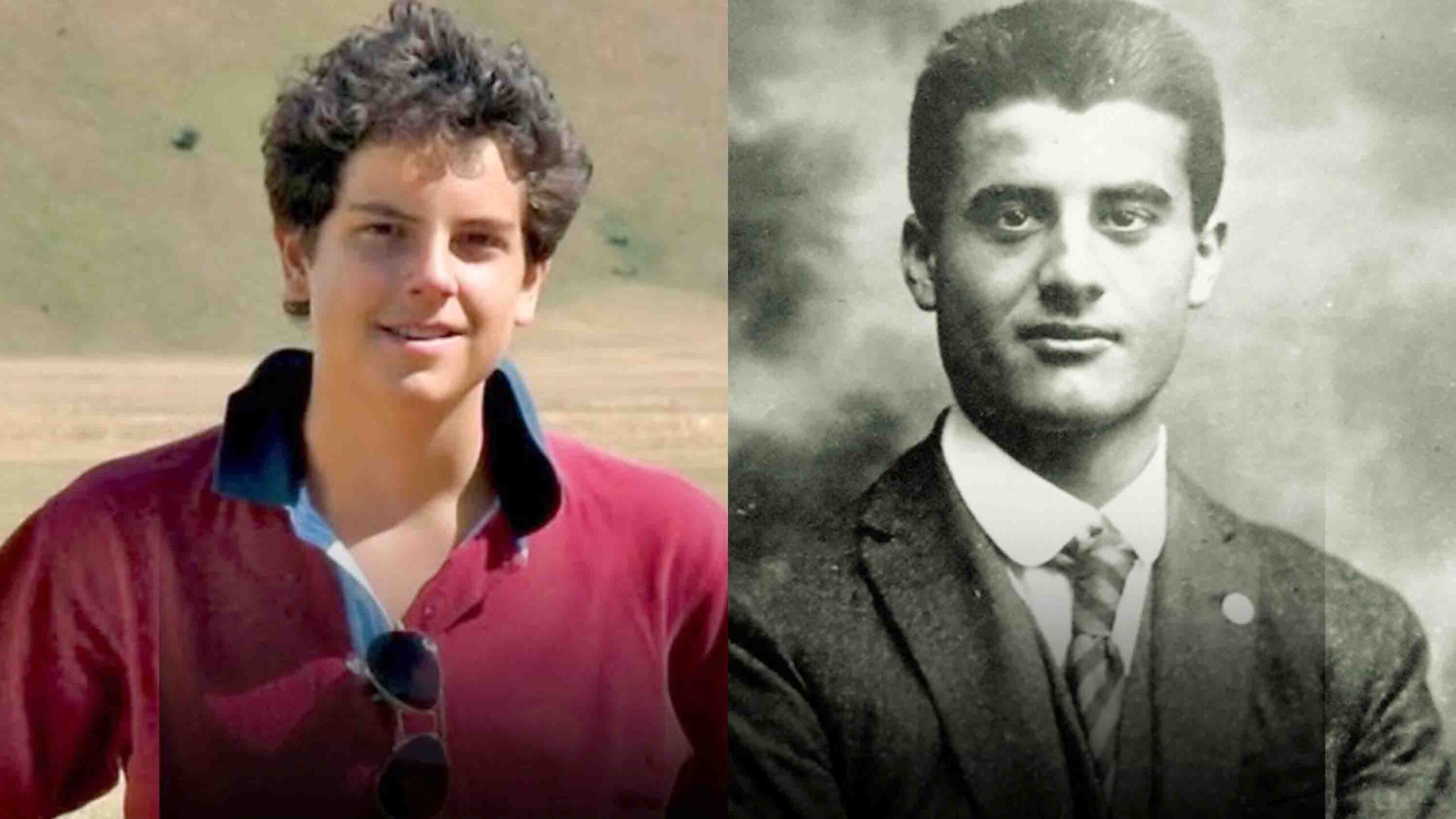
On September 7, 2025, Blessed Carlo Acutis and Blessed Pier Giorgio Frassati will be canonized.
Read more HERE.
 Reflections on the Sacred Liturgy