The Twenty-fourth Sunday in Ordinary Time [B]
Isaiah 50:5-9 + James 2:14-18 + Mark 8:27-35
There are two types of death. One is much worse than the other. Lots of folks work hard to avoid the one type of death, but not the other, which is strange. It’s strange because the death they work to avoid is actually unavoidable. Yet the death they don’t worry about is completely avoidable.
The first death is the death of our body. This is the death that God Himself suffered in the person of Jesus Christ on Good Friday. This death is unavoidable. You cannot run from it. Inevitably, your body will die. Just look at a crucifix: there is your proof. Even God died in the flesh.
This is the death of which Isaiah prophesies in today’s First Reading. It’s not a coincidence that today’s First Reading is also proclaimed at Mass on Palm Sunday, in connection with the Passion narrative. Isaiah’s prophecy in the First Reading clearly foreshadows the Passion and Death of Jesus Christ.
To reflect more deeply upon this, we ought to remember that Jesus had a faithful Jewish upbringing. It’s likely that as the Blessed Virgin Mary and St. Joseph brought Jesus up, the child Jesus memorized large parts of the Scriptures. Many years later, during the years of His public ministry, it’s likely that Jesus, while walking the dusty roads of Judea, Samaria and Galilee, meditated on the words of Isaiah that we heard a few minutes ago. Jesus could see that these words referred to His own experiences of rejection: for example, when He was expelled from the synagogue in His hometown, and when He was rebuked by the Scribes and the Pharisees.
Finally, as Jesus spent those three hours on the Cross at the top of Calvary, the words of Isaiah undoubtedly ran through His mind: “The Lord God opens my ear that I may hear; / and I have not rebelled, / have not turned back.” Jesus on Good Friday is completely faithful to the will of God the Father.
By contrast, Peter in today’s Gospel Reading is clearly not faithful to the will of God. Peter’s lack of fidelity stems from his confusion about the two different types of death.
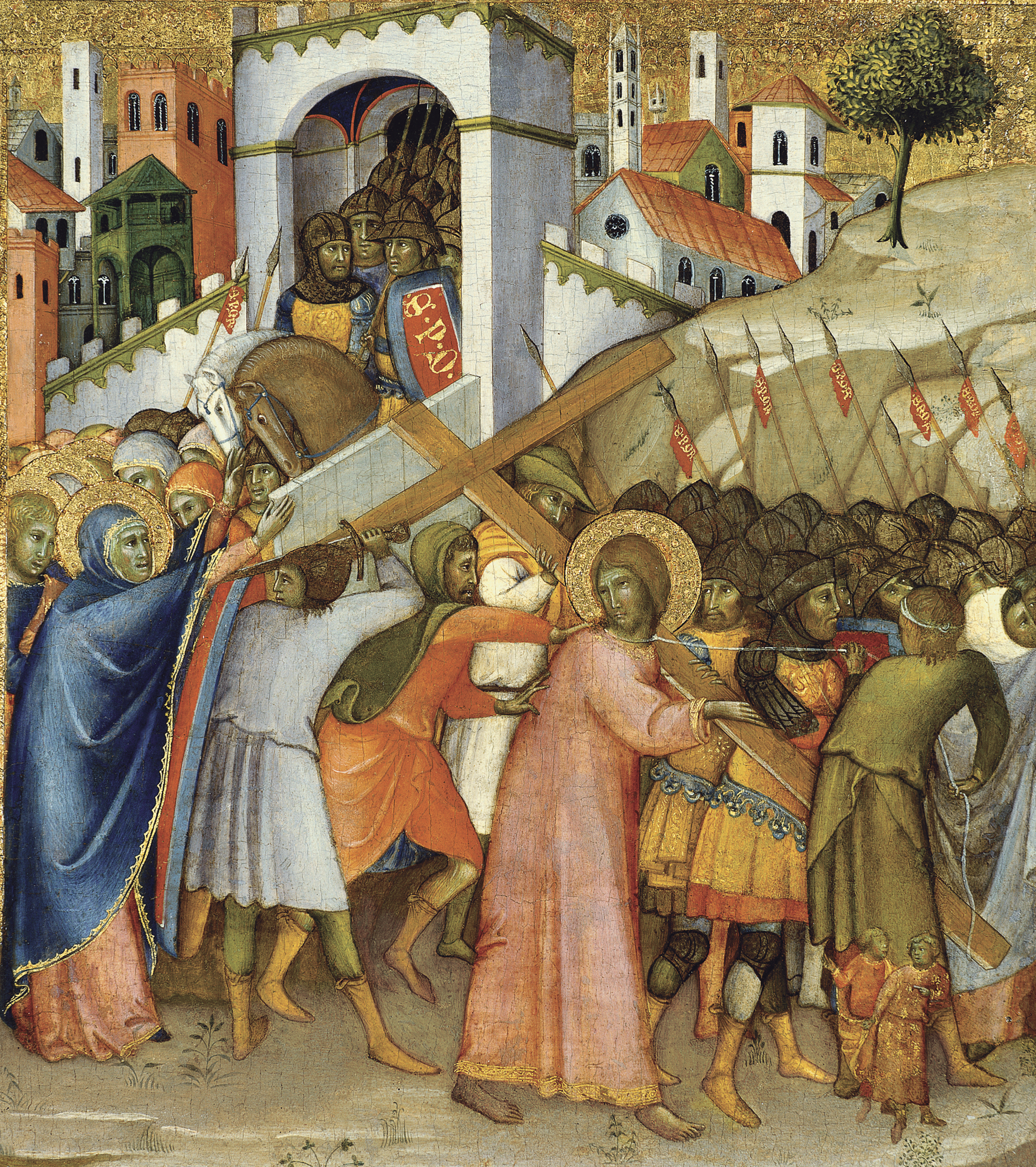
In turn, you need to ask if you will be faithful to the will of God. In today’s Gospel Reading Jesus makes a demand of you: “Whoever wishes to come after me must deny himself, take up his cross, and follow me.” Do you, who call yourself a Christian, hear what Christ is saying to you? Or are you like Peter? Are you tempted to turn your back on the words spoken by Jesus?
Along the way to Caesarea Philippi, Jesus asks those following Him exactly who it is that they think they’re following. Peter responds, “You are the Christ.” Here’s where Peter’s trouble begins.
Peter has spoken the right words, but for the wrong reason. It’s true that this Christ—this Anointed One—has come down from Heaven to save God’s People from certain death. But Peter does not understand which death Christ has come to save us from.
Jesus begins teaching His disciples that the Son of Man must suffer greatly, be rejected, be killed, and rise after three days. “He spoke this openly.” But the ears of Peter are not open. Peter turns his back on these words of Christ, and actually begins to rebuke the Son of God. Peter cannot believe that the Christ must suffer greatly and die. Peter cannot believe that any good can come out of human death. Peter cannot believe that out of human death can come a share in the life of God.
Are you like Peter? What do you make of death? Do you believe that Christ suffered for us, but not with us? If you’re older, you might remember the commercial for a product called Dow Scrubbing Bubbles. The tag line was, “We work hard so you don’t have to.” Is this how we think the Christian Faith works? If Jesus came to earth today and made a commercial to advertise His Gospel, would he say, “I suffered greatly and died so you don’t have to”?
On the Cross, Christ destroyed the power of death by dying Himself. When He died, death split in two. Christ separated the death of the body from the death of the soul, so that the soul’s death would not inevitably follow the body’s death. Christ didn’t die so that you wouldn’t have to. Christ died so that the death that you will inevitably face—the death of the body—would not be the last word.
When you were baptized, and God the Father adopted you as His own child, you took on Christ’s life as your own, which also means taking on His death. This is true because the meaning of Christ’s life—the mission of Christ’s life on this earth—was to destroy death. So if you wish to share in Christ’s life, you must accept His mission—His death—as your own. In other words, you must not rebel against the words that Christ speaks today: “Whoever wishes to come after me must deny himself, take up his cross, and follow me. For whoever wishes to save his life will lose it, but whoever loses his life for my sake and that of the gospel will save it.”
+ + +
There are two types of death: the death of the body, and the death of the soul. The death of the body is unavoidable, while the death of the soul is completely avoidable. The death of the body, which many people try so hard to avoid, is in fact the door that Christ has opened to eternal life. Yet the death that people don’t worry much about is a death that lasts forever.
There is an old saying: “If you are not struggling in your spiritual life, then one of two things is true: either you are dead, or your soul is.” We need to make sure that we’re working to avoid the death that is eternal, and to follow the Person whose death is the path to eternal life.
 Reflections on the Sacred Liturgy