The Eighteenth Sunday in Ordinary Time [B]
Exodus 16:2-4,12-15 + Ephesians 4:17,20-24 + John 6:24-35
“I am the Bread of Life; whoever comes to me will never hunger, and whoever believes in me will never thirst.”
Today is the second of five Sundays when we hear from the sixth chapter of Saint John’s account of the Gospel. In this chapter, St. John the Evangelist records both the miracles and the teaching of Jesus that point towards the Eucharist. Last Sunday we heard Jesus miraculously multiple five loaves of bread, and as a consequence of this sign, the crowd wanted to carry Jesus off to make Him their King. In spite of their desire, last week’s Gospel passage ended when Jesus, surely frustrated by the crowd misunderstanding His miracle, fled to a mountain alone.
Before we reflect on this Sunday’s passage, stop and consider Jesus’ flight to the mountain. Please consider that Jesus might at times act towards you as He acted towards that crowd. Consider that Jesus might flee from you for the same reason that He fled that crowd. If we don’t take this personally, we won’t appreciate fully the rest of John 6.
First of all, we ought to recognize that everything that Jesus did and does is loving. Even when Jesus spoke strictly to others, it was with love in His heart for the one to whom He spoke, and with a desire for that person to turn over his or her life fully to God. Likewise, when Jesus at the end of last Sunday’s passage fled the crowd for the mountain, it was a loving action. But, we might wonder, how could leaving someone be a loving act? Consider just two reasons from the spiritual and moral life.
In the spiritual life, one of the causes of what sometimes is called “spiritual dryness” or “spiritual desolation” is that God wants your desire for Him to grow. The old saying “Absence makes the heart grow fonder” applies to the spiritual life. At times, God will absent Himself from the Christian’s soul to make her longing for Him grow stronger. This type of God leaving us in no way implies that there’s anything wrong with the state of our soul.
However, the other type of God leaving us does implies that we’ve done something wrong. I’m not talking here about someone committing mortal sin, in which case all grace in the soul is gone. Instead, I’m talking about God choosing to leave the Christian’s soul because of what that Christian wants from God: that is, because of the Christian’s desires.
This is why Jesus fled for the mountain alone at the end of last Sunday’s passage. In this Sunday’s passage, Jesus speaks to this point also. God wants us to want Him for the best possible reason, not just to fill our stomachs, or heal our illnesses. As each of us grows in the Christian life, we have to allow God to purify our motives and desires. We have to ask God to help us to love Him only for His sake, and not for our own sake. Only the disciple with a pure heart shall see God, and only the disciple with a more pure heart shall have God abide within his soul.
So with that as a backdrop, consider what we heard today from John 6.
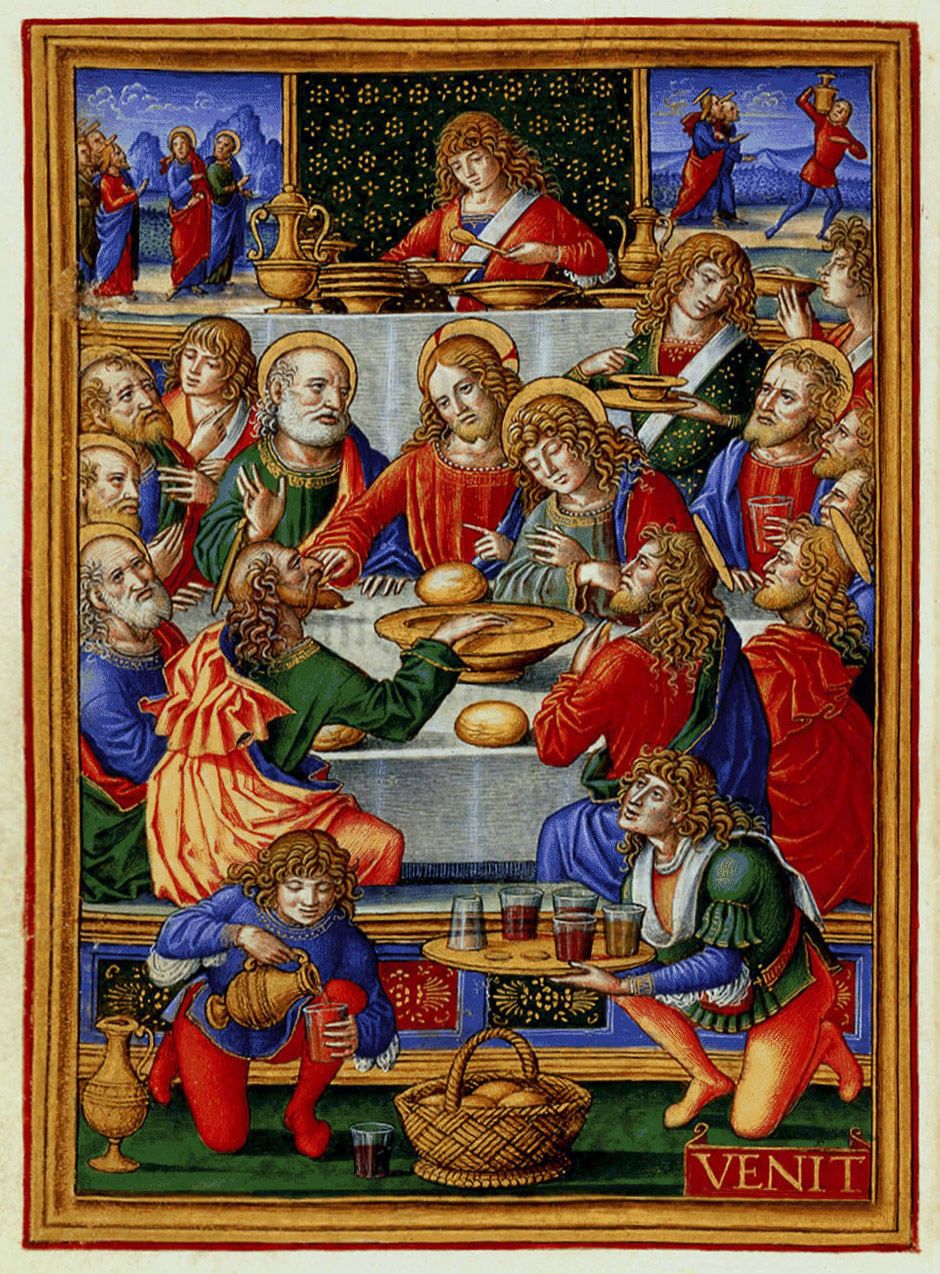
When the crowd saw that neither Jesus nor His disciples were at the place where Jesus had eaten the bread, they went looking for Him. We see this crowd hungering for something. In last Sunday’s Gospel passage, the crowd hungered for bread. This Sunday, we see the crowd hungering for Jesus. They want to learn from Jesus how never to hunger again.
In this passage, we hear the crowd speak to Jesus four times. The first three times they ask questions; the fourth time they make a request. The first question they ask is, Rabbi (meaning, “Teacher”), when did you come here? The crowd is confused about the origin of Jesus, but Jesus confronts them with the fact that they are only concerning themselves about their physical hunger. He tells them, as He tells each of us, You should not be working for perishable food, but for food that remains unto life eternal, food which the Son of Man will give you. Jesus shifts attention from the physical hunger He satisfied through the miracle He offered to them shortly before, to the spiritual hunger He will meet through the Sacrifice of His Body and Blood which He will offer to them some time later.
Well, this seems all right to the crowd. They want in on the deal, so they ask Jesus their second question: What must we do to perform the works of God? Jesus’ response is brief and to the point. This is the work of God: have faith in the One He sent. In other words, they do not themselves have the means to satisfy this spiritual hunger: there is no spiritual refrigerator, supermarket, or field for them to go to. Their spiritual hunger is not only for something to fill the emptiness inside their souls, but also for something to fill the emptiness around them. For there is nothing around them capable of sustaining them eternally.
But the response of the crowd at this point is to demand a sign from Jesus, so that they’ll know He is worthy of their faith. They’re looking for a sign like the one their ancestors received in the desert during the Exodus, when bread rained down from Heaven. Jesus explains, however, that while this sort of physical bread can sustain one during one’s days in this world, it only has meaning in this world. The daily bread Jesus offers from God the Father, a spiritual bread, is the food that is capable of making the Exodus from earth to Heaven.
In any case, we have during these five weeks the words and deeds of Jesus recorded in the sixth chapter of Saint John’s Gospel account, and I encourage you to spend time in meditation on what Jesus wants us to want most during our earthly days. The Most Blessed Sacrament of the Eucharist fulfills the deepest need we have. If, like the crowd in the Gospel, we continue to have a hard time believing that truth, Jesus will nonetheless continue to invite us here. He will continue to teach us throughout our earthly days that our lives find real meaning only through His life. He’s continue to teach us that all the earthly things that we think are important, and for which we hunger, are important only inasmuch as they lead us to love God and others more deeply.
 Reflections on the Sacred Liturgy