Homily for the feast of St. John, Apostle & Evangelist December 27, 2023
Holy Mother Church privileges St. John’s Gospel account. At the Sacred Liturgy, she reserves the proclamation of John for the more important times of the Church year. While the Gospel accounts of Matthew, Mark, and Luke share many passages in common, much of St. John’s Gospel account is found only in John. In case you’re considering a New Year’s resolution of reading more Sacred Scripture in the new year, and in case you’re trying to decide which book of the Bible to start with, let me give you three reasons for giving your attention and reflection to the Gospel according to John.
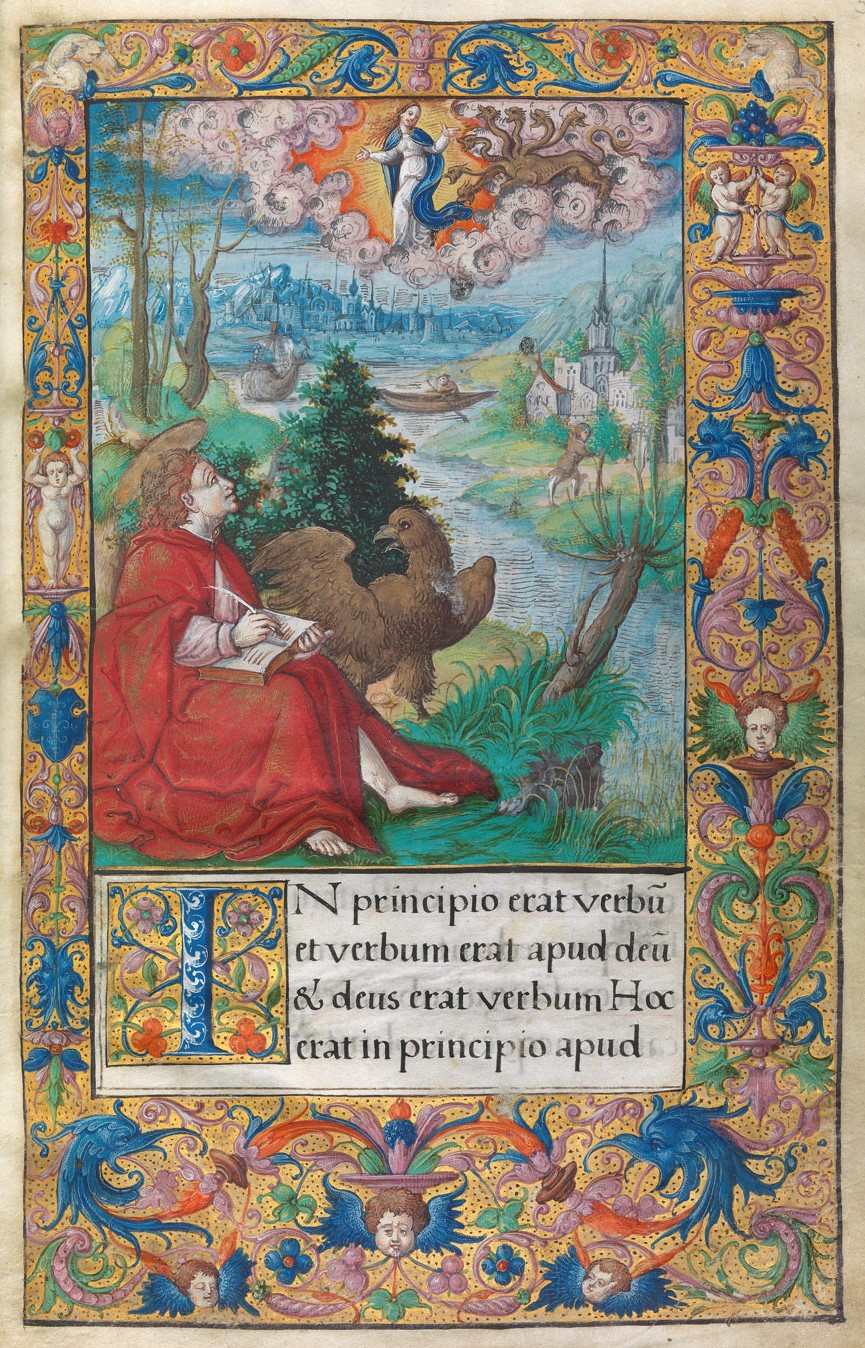
The first is the start of St. John’s Gospel account, sometimes called the “prologue” of John. It’s the first eighteen verses of John 1. If you’re old enough to remember the Latin Mass celebrated before Vatican II, you might recall that this prologue of St. John’s Gospel account was read at the end of every celebration of Holy Mass. The high point of the prologue is verse 14, which is both profoundly incarnational and Eucharistic: “And the Word became flesh and dwelt among us, full of grace and truth; we have beheld his glory, glory as of the only Son from the Father.” You can read this brief prologue of just eighteen verses in a few minutes, yet you can meditate upon the meaning of these verses for many, many hours.
A second unique feature of St. John’s Gospel account is the sixth chapter of John. The entire chapter is 71 verses long, but the heart of the chapter is what’s usually called “The Bread of Life Sermon”. In this sermon, not found in Matthew, Mark, or Luke, Jesus gives us His most profound teaching about His Real Presence in the Eucharist. Reading through this chapter in private devotion is usually best done with a commentary from a solid Catholic scholar (such as the Ignatius Study Bible). Nonetheless, every hour spent meditating upon John 6 allows one to grow deeper in devotion to the Most Blessed Sacrament.
A third unique feature of St. John’s Gospel account is John’s account of the Last Supper. St. Matthew records his account of the Last Supper in eleven verses; St. Mark, in ten verses; St. Luke, in 25 verses. But St. John’s account of the Last Supper is found in five entire chapters, consisting of 155 verses. Put another way: St. John’s Gospel account consists of 21 chapters, and five of these 21 chapters are devoted to John’s account of the Last Supper.
All three of these features of St. John’s Gospel account show how deeply Eucharistic the fourth Gospel is. If you want to grow in your understanding of and devotion to Jesus in the Most Holy Sacrament of the Eucharist, then the Gospel according to St. John is the place to start.
With prayers today on his feast day for the repose of the soul of my father, John Riley Hoisington.
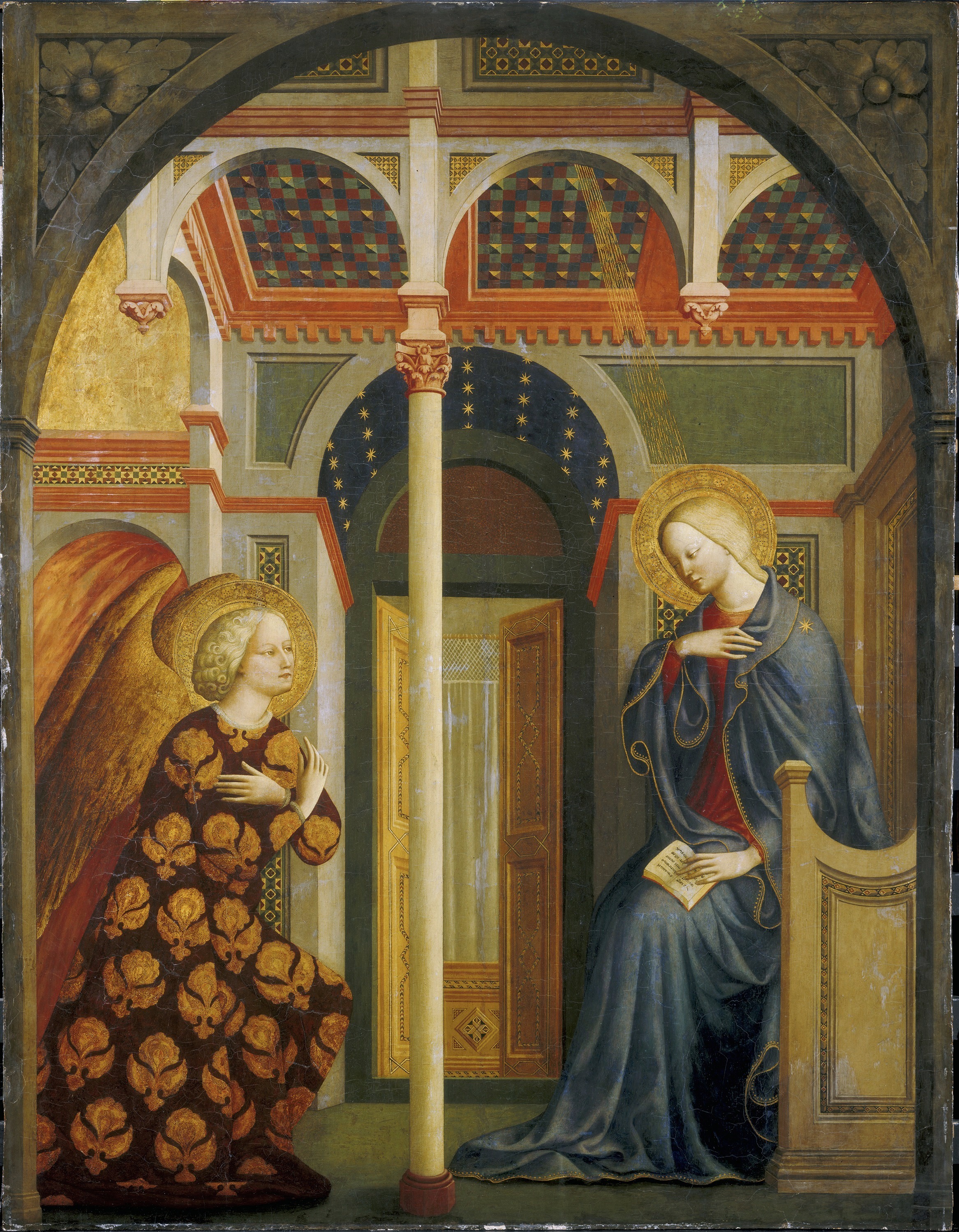
It’s easy to see how today’s Gospel passage can cause confusion. This passage describes the sacred event of the Annunciation: the First Joyful Mystery of the Rosary. We see St. Gabriel the Archangel and the Blessed Virgin Mary in this scene. St. Gabriel announces to Mary what God the Father wants to bring about through Mary. For her part, Mary gives her consent, declaring, “Behold, I am the handmaid of the Lord. May it be done to me according to your word.” Those beautiful words, spoken by the most beautiful woman to walk this earth, are the heart of today’s Solemnity of the Immaculate Conception.
However, the confusion that some people have about the Immaculate Conception is that they think that the conception being celebrated today is the conception of Jesus in the womb of the Blessed Virgin Mary. It’s hard to blame them. There are at least three reasons for this confusion.
First, the Gospel passage proclaimed on the Holy Day of the Immaculate Conception describes the sacred event of Mary conceiving Jesus. Second, this Holy Day falls near the start of the Season of Advent, and it makes perfect sense to prepare for the celebration of Christ’s birth by meditating upon His conception nine months earlier.
Nonetheless, in spite of the reasons for thinking that the Immaculate Conception refers to Jesus being conceived by Mary, the Immaculate Conception is in fact the mystery of Mary being conceived by her mother, St. Anne. What is the heart of this mystery?
The third reason for confusion is that some people think that the word “Immaculate” in the phrase “Immaculate Conception” is a synonym for “virginal”, because—as we heard in today’s Gospel passage—Mary conceived Jesus while still a virgin.
But that’s not what the word “Immaculate” means in terms of the Immaculate Conception of Mary. The conception of Mary within her mother St. Anne occurred through a natural act of married love between Mary’s parents, St. Anne and St. Joachim. The word “Immaculate” in the phrase “Immaculate Conception” refers to the fact that when Mary was conceived within St. Anne, God the Father made certain that Mary did not contract Original Sin.
Today’s First Reading reminds us of the commission of the Original Sin by Adam and Eve. From Adam and Eve, through every century of human history, from generation to generation, each human person, at the moment when she or he was conceived, inherited Original Sin. Original Sin is simply part and parcel of human nature: not as God created man “in the beginning”, but as man chose for himself when man—male and female—chose to commit the Original Sin.
From the first moment of human life—at conception—the human soul is weak and wounded. The human soul needs a Savior. The human person needs a Savior.
In fact, Mary needed a Savior. This is important to recall when reflecting upon the mystery of the Immaculate Conception, because some of our separated brethren within the Body of Christ make a false claim about Mary. They state that belief in Mary’s being preserved from Original Sin means that the salvation that Jesus won for fallen man was not universal: in other words, that Mary had no need for Jesus.
However, on the contrary, we have Mary’s own testimony in the Bible. At the scene of the Visitation—recorded in the first chapter of St. Luke’s Gospel account—Mary sings the hymn called the Magnificat, which starts with Mary declaring: “My soul magnifies the Lord, and my spirit rejoices in God my Savior, for he has regarded the low estate of his handmaiden.”[1]
Mary speaks of her “Savior”, because Mary was saved by God from sin. But she was not saved from sin like you and I, through the grace of Baptism and Confession.
Consider an example of what it means to be saved. Imagine this: imagine that you’re standing at the edge of a very large lake. In front of you is a pier that extends a long way into the lake. At the end of the pier, the water is fifty feet deep.
Now imagine that two friends are with you. These persons are both blind, and unable to swim. Now you’re setting up your campsite, when suddenly you hear a splash: one of your friends walked all the way to the end of the pier and fell into the water. Naturally, you run to the end of the pier, dive in, and drag the friend to safety. You have saved your first friend from drowning.
The next day, you’re scavenging near the campsite for firewood. At one point you pause, and look up. Your other friend has walked down the pier, and is close to its end. You make a mad dash for the pier, and you reach its end just as your friend is about to step off and fall into the fifty-foot deep water. You grab your friend by the back of his shirt and pull him back to safety before he can fall in. You have saved your second friend from drowning.
That second friend is like the Blessed Virgin Mary, who was saved by preventing her from ever falling into sin. The rest of the human race is offered salvation in the first way, by being pulled out of sin after having already fallen into it. Mary was never stained by sin, but she was saved from it.
Nonetheless, while it’s important to understand how God saved Mary, especially in order to dialogue with our separated brethren, it’s far more important to understand why God saved Mary in this unique way.
Why did God give Mary the gift of an immaculate conception? Why did God want Mary to be “full of grace”, as St. Gabriel describes Our Lady when he addresses her? We need first to reflect upon this salutation.
St. Gabriel says, “Hail, full of grace! The Lord is with you.” In modern English, we don’t use the word “hail” very much, except in regard to precipitation. As a form of greeting, the word “hail” is not just old fashioned, but antique. In modern English, we would never address someone by saying, “Hail, Joe”, or “Hail, Mary”. Instead, we would say, “Hey, Joe”, or “Hello, Mary”. The first word catches the other’s attention, and the second addresses the other by name.
However, St. Gabriel does not use the name of Mary to address her. We might overlook this, because we so often pray the prayer called the “Hail, Mary”. This prayer adds the name of Mary to St. Gabriel’s salutation. The prayer begins: “Hail, Mary, full of grace, the Lord is with you.” But in the biblical account, as we just heard in today’s Gospel Reading, St. Gabriel does not use the name of Mary to address her. Instead, he simply says, “Hail, full of grace! The Lord is with you.”
At first hearing, this might seem odd. The phrase “full of grace” certainly describes Mary accurately. But we don’t go around addressing people by saying, “Hey, six-foot-two”, or “Hello, 120 pounds.” Rather, we address people by name, saying, “Hey, Joe”, or “Hello, Mary”. So why does St. Gabriel address Our Lady with the words “Hail, full of grace!”?
It’s almost as if St. Gabriel is using this phrase “full of grace” as Mary’s name. It’s almost as if this phrase “full of grace” identifies Mary. It’s almost as if this phrase “full of grace” is the reason why Mary was born, and conceived, immaculately. Mary is “full of grace” for this moment that we witness in today’s Gospel Reading.
The Blessed Virgin Mary was immaculately conceived, and filled by God with grace, for the moment of the Annunciation. We might want to say that Mary was “full of grace” for the sake of her entire vocation, which began at the moment of the Annunciation, and then extended throughout her earthly life, and continued (and continues) after the end of her earthly life and her assumption into Heaven.
However, the rest of her vocation—the Visitation, the Nativity of her Son, the Sorrows of Jesus’ infancy and public ministry, her intercession at the wedding at Cana, her fidelity at Calvary, and her maternal care and prayer for the Church starting on the day of Pentecost—was entirely dependent upon this moment of the Annunciation. This moment was for Mary what the decision in the Garden was for Eve. But Mary’s choice was the opposite of Eve’s. Through Eve’s choice, sin entered the world, while through Mary’s choice, the Word of God became Flesh and dwelt among us.
This is why throughout history, the Church has addressed Our Lady as the New Eve. Mary is our Mother, but she is also our model. She is “full of grace”, and the first of those graces was the grace of her Immaculate Conception. By means of God’s graces, Mary models for us the way of discipleship, the way to accept Christ into our lives. The first step upon that way is for us to say at the start of each day: “Behold, I am the handmaid of the Lord. May it be done to me according to your word.”
[1] Luke 1:46-48. See Acts 4:12.
The Annunciation by Masolino da Panicale (c. 1383 – c. 1447)
 Reflections on the Sacred Liturgy