
Friday of the 6th Week in Ordinary Time [I]


Friday of the 6th Week in Ordinary Time [I]
Genesis 11:1-9  +  Mark 8:34—9:1
February 17, 2023

“Whoever wishes to come after me must deny himself, take up his cross, and follow me.”

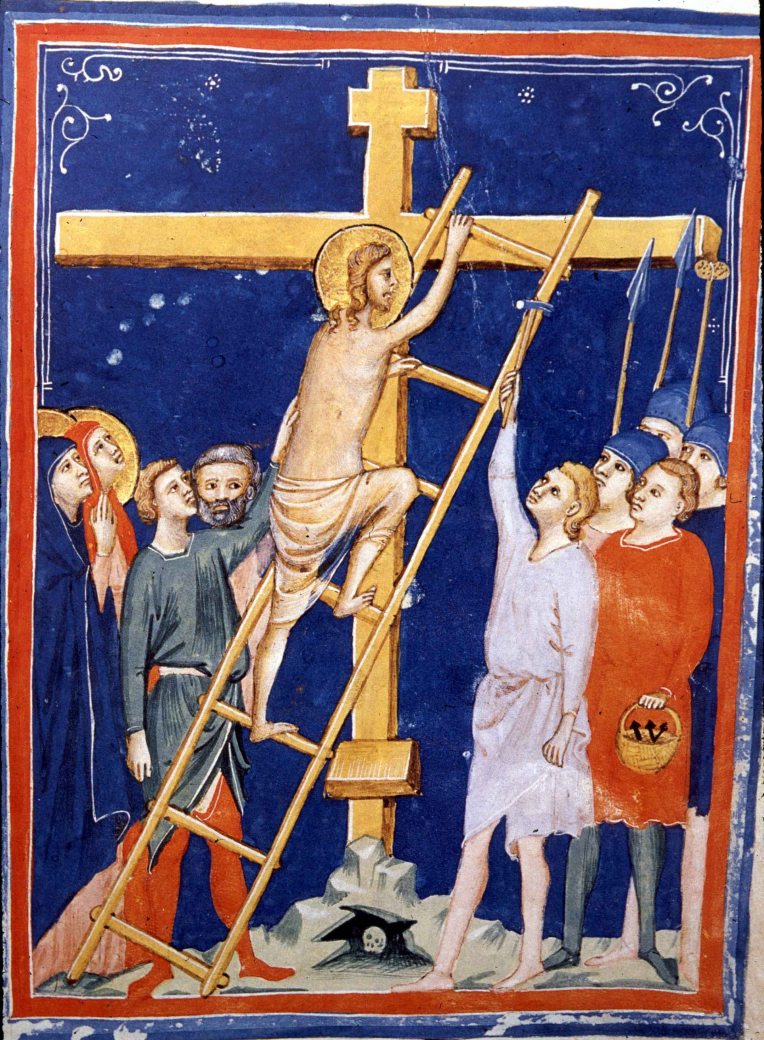
In the Gospel today we hear Jesus say, “Whoever wishes to come after me must deny himself, take up his cross, and follow me.”  Do you, who call yourselves Christians, hear what the Word made Flesh is saying to you?  Or do you want to turn your back on the words spoken by Jesus Christ?

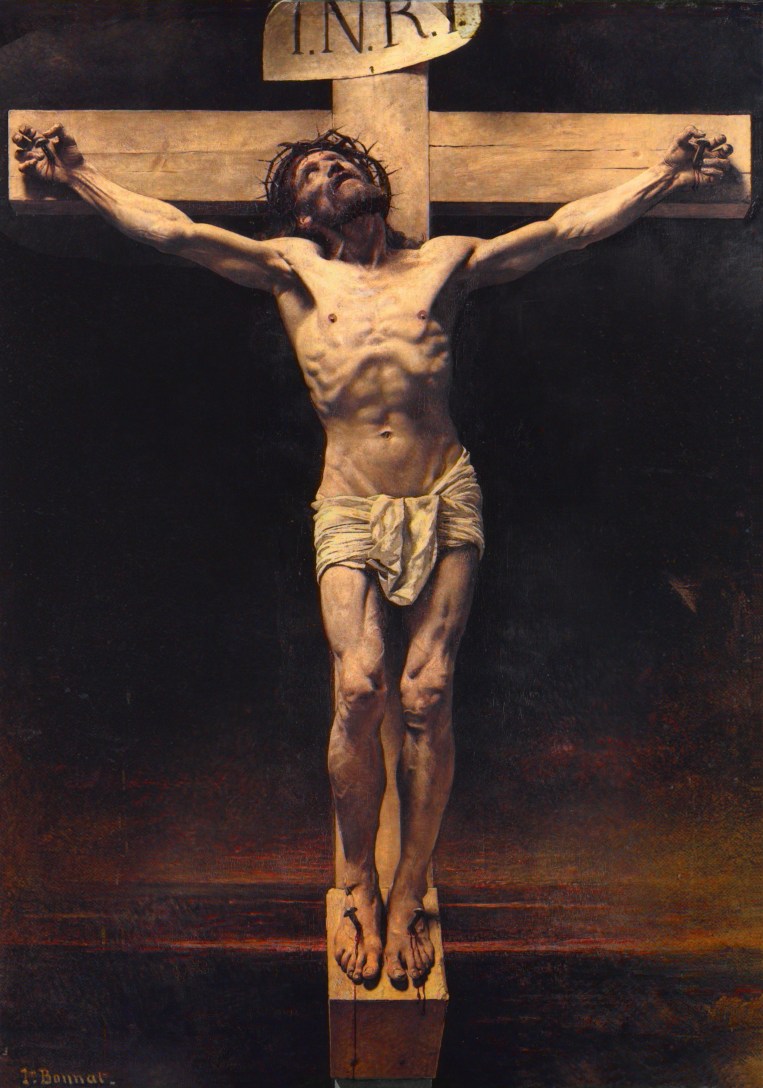
Christ died because death is the only way to destroy death’s power.  On the Cross, Christ destroyed the power of death by dying Himself.  When God Himself died, death split in two.  Christ separated the death of the body from the death of the soul, so that the one would not inevitably follow the other.  Christ didn’t die so that you wouldn’t have to.  Christ died so that the death that you will inevitably face—the death of the body—will not be an eternal one:  the death of the soul.

There are two types of death, the death of the body, and the death of the soul.  One is much worse than the other.  Many people spend a lot of time avoiding the one, but not the other, which is strange.  This is strange because the death of the body is unavoidable, while the death of the soul is completely avoidable.  The death they try so hard to avoid is the door that Christ has made the gateway to eternal life, while the death they don’t worry much about is a death that never ends:  a death that is eternal.
OT 06-5

Thursday of the 6th Week in Ordinary Time


Thursday of the 6th Week in Ordinary Time
Mark 8:27-33

He began to teach them that the Son of Man must suffer greatly and be rejected ….

Asking the right question is extremely important in many situations that we face in life.  It’s also important to ask the right type of question.  For instance, there are questions that ask “How?”, calling for technological answers.  On the other hand, “Why?” questions deal with meaning:  they call for deeper answers.

We find Jesus Christ in today’s Gospel account asking his disciples to tell Him who they think He really is.

Jesus had two reasons for asking His question.  One was to have His disciples give some serious thought to just who they thought they were following.  The other was to take the opportunity to teach them about what was going to happen to Him.  In other words, where was He going?  By extension, where would they end up if they kept following Him?

Is Jesus an interesting historical figure?  Is He, as the Muslims say, a great prophet?  Is he one among many in a long line of Jewish rabbis?

Or is He unique?  Is Christ Jesus God in the Flesh, in order that we can see Him, know Him, and love Him as one of us:  in other words, God so that He can save us, and man so that we can receive His divinity through His humanity?  Christ Jesus is God the Son, the Second Person of the Blessed Trinity, made incarnate, made human flesh and blood for us.  It is, then, His suffering greatly and being rejected that makes possible this “great exchange”:  our sinfulness for God’s own divine life.

Thursday of the 6th Week in Ordinary Time [I]


Thursday of the 6th Week in Ordinary Time [I]
Genesis 9:1-13  +  Mark 8:27-33
February 16, 2023

He began to teach them that the Son of Man must suffer greatly and be rejected ….

Asking the right question is extremely important in many situations that we face in life.  It’s also important to ask the right type of question.  For instance, there are questions that ask “How?”, calling for technological answers.  On the other hand, “Why?” questions deal with meaning:  they call for deeper answers.

We find Jesus Christ in today’s Gospel account asking his disciples to tell Him who they think He really is.

Jesus had two reasons for asking His question.  One was to have His disciples give some serious thought to just who they thought they were following.  The other was to take the opportunity to teach them about what was going to happen to Him.  In other words, where was He going?  By extension, where would they end up if they kept following Him?

Is Jesus an interesting historical figure?  Is He, as the Muslims say, a great prophet?  Is he one among many in a long line of Jewish rabbis?

Or is He unique?  Is Christ Jesus God in the Flesh, in order that we can see Him, know Him, and love Him as one of us:  in other words, God so that He can save us, and man so that we can receive His divinity through His humanity?  Christ Jesus is God the Son, the Second Person of the Blessed Trinity, made incarnate, made human flesh and blood for us.  It is, then, His suffering greatly and being rejected that makes possible this “great exchange”:  our sinfulness for God’s own divine life.

Wednesday of the 6th Week in Ordinary Time


Wednesday of the 6th Week in Ordinary Time
Mark 8:22-26

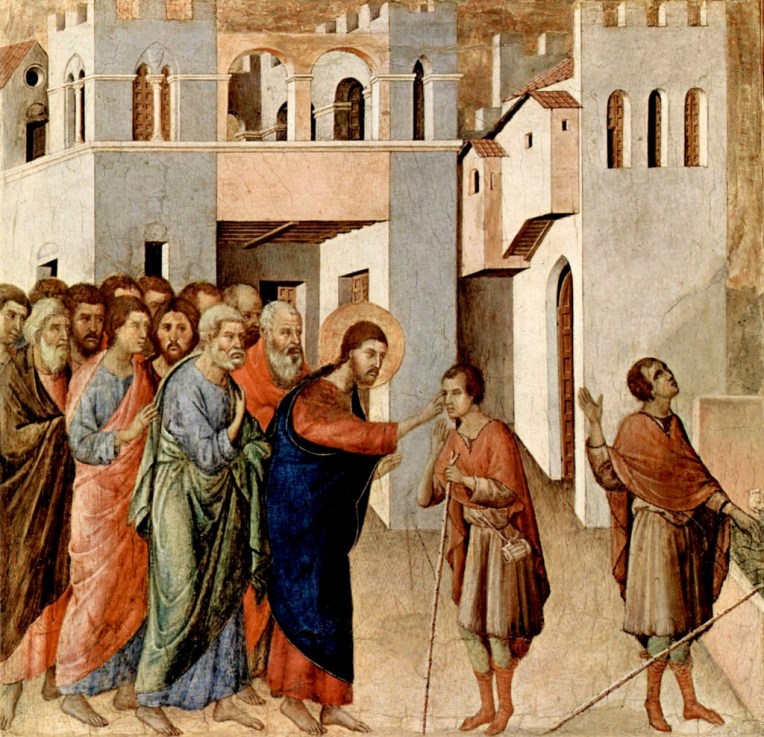
Then He laid hands on the man’s eyes a second time and he saw clearly ….

An obvious question leaps out from today’s Gospel narrative.  Why did Jesus have to lay hands upon the blind man twice for him to see clearly?  Doesn’t the fact that He did reveal some weakness or impotence on the part of Jesus?

There is an assumption within this latter question:  that Jesus could not have healed the blind man by a single laying on of hands.  But if Jesus could have done this, why did He not?

This question (neither Jesus Himself nor the evangelist specifies why Jesus laid hands upon the blind man twice) points to a general theological principle about God:  that is, that God does not always effect His Providential Will in the most direct manner possible.  In other words, God does not always choose to manifest His power in the briefest, most direct and most “efficient” manner possible.

This principle does not answer the question of why God acts as He does.  But the truth behind this principle is related to another:  that God sometimes chooses as the agents of His Will not the strongest, brightest, or best qualified.  God has a love for the poor, the simple, and the feeble.

To return again to today’s Gospel narrative:  perhaps Jesus wanted to foster perseverance within the blind man.  Perhaps Jesus wanted the blind man to desire healing more deeply.  Perhaps Jesus wanted the blind man to appreciate fully the gift he was being given.  Regardless, the unfolding of God’s Providential Will, whether or not it takes the form we think it should, reveals God’s love to us even in the manner in which it’s revealed.

Wednesday of the 6th Week in Ordinary Time [I]


Wednesday of the 6th Week in Ordinary Time [I]
Genesis 8:6-13,20-22  +  Mark 8:22-26
February 15, 2023

Then He laid hands on the man’s eyes a second time and he saw clearly ….

An obvious question leaps out from today’s Gospel narrative.  Why did Jesus have to lay hands upon the blind man twice for him to see clearly?  Doesn’t the fact that He did reveal some weakness or impotence on the part of Jesus?

There is an assumption within this latter question:  that Jesus could not have healed the blind man by a single laying on of hands.  But if Jesus could have done this, why did He not?

This question (neither Jesus Himself nor the evangelist specifies why Jesus laid hands upon the blind man twice) points to a general theological principle about God:  that is, that God does not always effect His Providential Will in the most direct manner possible.  In other words, God does not always choose to manifest His power in the briefest, most direct and most “efficient” manner possible.

This principle does not answer the question of why God acts as He does.  But the truth behind this principle is related to another:  that God sometimes chooses as the agents of His Will not the strongest, brightest, or best qualified.  God has a love for the poor, the simple, and the feeble.

To return again to today’s Gospel narrative:  perhaps Jesus wanted to foster perseverance within the blind man.  Perhaps Jesus wanted the blind man to desire healing more deeply.  Perhaps Jesus wanted the blind man to appreciate fully the gift he was being given.  Regardless, the unfolding of God’s Providential Will, whether or not it takes the form we think it should, reveals God’s love to us even in the manner in which it’s revealed.

Tuesday of the 6th Week in Ordinary Time


Tuesday of the 6th Week in Ordinary Time
Mark 8:14-21

He said to them, “Do you still not understand?”

Frustration in and of itself must not be a sin, or Jesus—according to the portraits painted by the evangelists—would not be divine.  We see such a portrait in today’s Gospel passage.  This passage ends with a question from Jesus.  While we can be sure that Jesus’ next action involved compassion, we might instead back up and reflect on this passage in terms of ourselves, inasmuch as we often imitate the disciples in this passage.

There are two things lacking in these disciples.  First, they “had forgotten to bring bread”.  This is a practical omission on their part, and surely each of us can relate to it.  But this is not Jesus’ real concern.

Instead, when Jesus enjoins the disciples to “guard against the leaven” of the Pharisees and Herod, the disciples take Jesus’ words literalistically rather than as an analogy.  In other words, the disciples were so concerned with physical hunger that they couldn’t see past it.  They couldn’t see that Jesus was speaking about something far more important:  the spiritual means by which the Pharisees and Herod, on one hand, and Jesus on the other, considered spiritual growth to take place.  Pray today that your very real practical concerns about life might never obscure the even more important spiritual needs that require your tending today, not with the leaven of the Pharisees, but with the leaven of the Eucharist.

Sts. Cyril, Monk, & Methodius, Bishop


Sts. Cyril, Monk, & Methodius, Bishop
Genesis 6:5-8;7:1-5,10  +  Mark 8:14-21
February 14, 2023

He said to them, “Do you still not understand?”

Frustration in and of itself must not be a sin, or Jesus—according to the portraits painted by the evangelists—would not be divine.  We see such a portrait in today’s Gospel passage.  This passage ends with a question from Jesus.  While we can be sure that Jesus’ next action involved compassion, we might instead back up and reflect on this passage in terms of ourselves, inasmuch as we often imitate the disciples in this passage.

There are two things lacking in these disciples.  First, they “had forgotten to bring bread”.  This is a practical omission on their part, and surely each of us can relate to it.  But this is not Jesus’ real concern.

Instead, when Jesus enjoins the disciples to “guard against the leaven” of the Pharisees and Herod, the disciples take Jesus’ words literalistically rather than as an analogy.  In other words, the disciples were so concerned with physical hunger that they couldn’t see past it.  They couldn’t see that Jesus was speaking about something far more important:  the spiritual means by which the Pharisees and Herod, on one hand, and Jesus on the other, considered spiritual growth to take place.  Pray today that your very real practical concerns about life might never obscure the even more important spiritual needs that require your tending today, not with the leaven of the Pharisees, but with the leaven of the Eucharist.

Monday of the 6th Week in Ordinary Time


Monday of the 6th Week in Ordinary Time
Mark 8:11-13

He sighed from the depth of His spirit and said, “Why does this generation seek a sign?”

Do we search for heavenly signs as assurance that we are on the right path in life?  Today’s Gospel passage, brief and to the point, ought to make us realize how pointless such a search is.  Jesus’ sigh—”from the depth of His Spirit”—speaks volumes.  His departure from the midst of the Pharisees show his recognition that even His divine words do nothing for one unwilling to listen in to Him in faith.  Christ asks us to dedicate each day to him in faith.

A life which is not dedicated to God ends up being a selfish life, a life that excludes both God and one’s brothers and sisters.  This sort of life is opposed to both arms of Jesus’ Cross, which form His single command to His disciple to follow Him.  The horizontal arm is the call to love our neighbors as oneself.  The vertical arm is the call to love the Lord with all our heart, soul and mind.  Living out the latter opens our hearts to further grace from the God who is love.  The Sign of the Cross is the sign that every generation needs to seek.

The selfishness of sin shows our need to cooperate with God’s grace to conquer the power of sin.  Sin is conquered first through faith, further through hope, and perfectly through charity.  We are invited to share in this perfect love of God through the Holy Mass.  When we are sent forth from Mass, we take and offer this same love to our brothers and sisters within our daily lives.

Monday of the 6th Week in Ordinary Time [I]


Monday of the 6th Week in Ordinary Time [I]
Genesis 4:1-15,25  +  Mark 8:11-13
February 13, 2023

He sighed from the depth of His spirit and said, “Why does this generation seek a sign?”

Do we search for heavenly signs as assurance that we are on the right path in life?  Today’s Gospel passage, brief and to the point, ought to make us realize how pointless such a search is.  Jesus’ sigh—”from the depth of His Spirit”—speaks volumes.  His departure from the midst of the Pharisees show his recognition that even His divine words do nothing for one unwilling to listen in to Him in faith.  Christ asks us to dedicate each day to him in faith.

A life which is not dedicated to God ends up being a selfish life, a life that excludes both God and one’s brothers and sisters.  This sort of life is opposed to both arms of Jesus’ Cross, which form His single command to His disciple to follow Him.  The horizontal arm is the call to love our neighbors as oneself.  The vertical arm is the call to love the Lord with all our heart, soul and mind.  Living out the latter opens our hearts to further grace from the God who is love.  The Sign of the Cross is the sign that every generation needs to seek.

The selfishness of sin shows our need to cooperate with God’s grace to conquer the power of sin.  Sin is conquered first through faith, further through hope, and perfectly through charity.  We are invited to share in this perfect love of God through the Holy Mass.  When we are sent forth from Mass, we take and offer this same love to our brothers and sisters within our daily lives.