January 5

St. John Neumann, Bishop
January 5
1 John 3:11-21  +  John 1:43-51

“Before Philip called you, I saw you under the fig tree.”

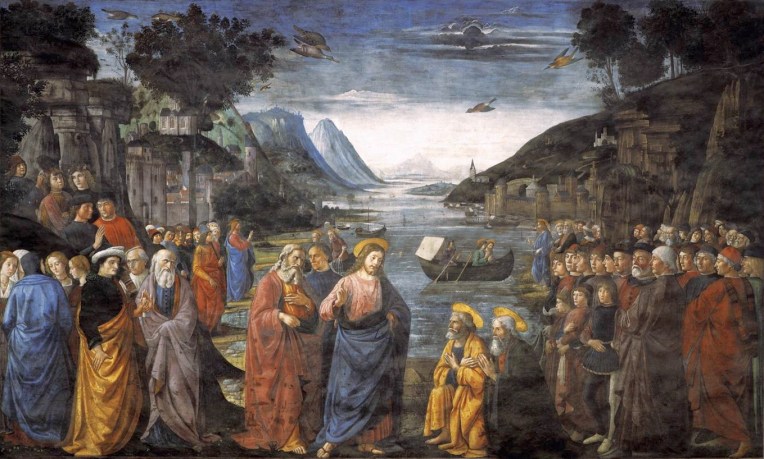
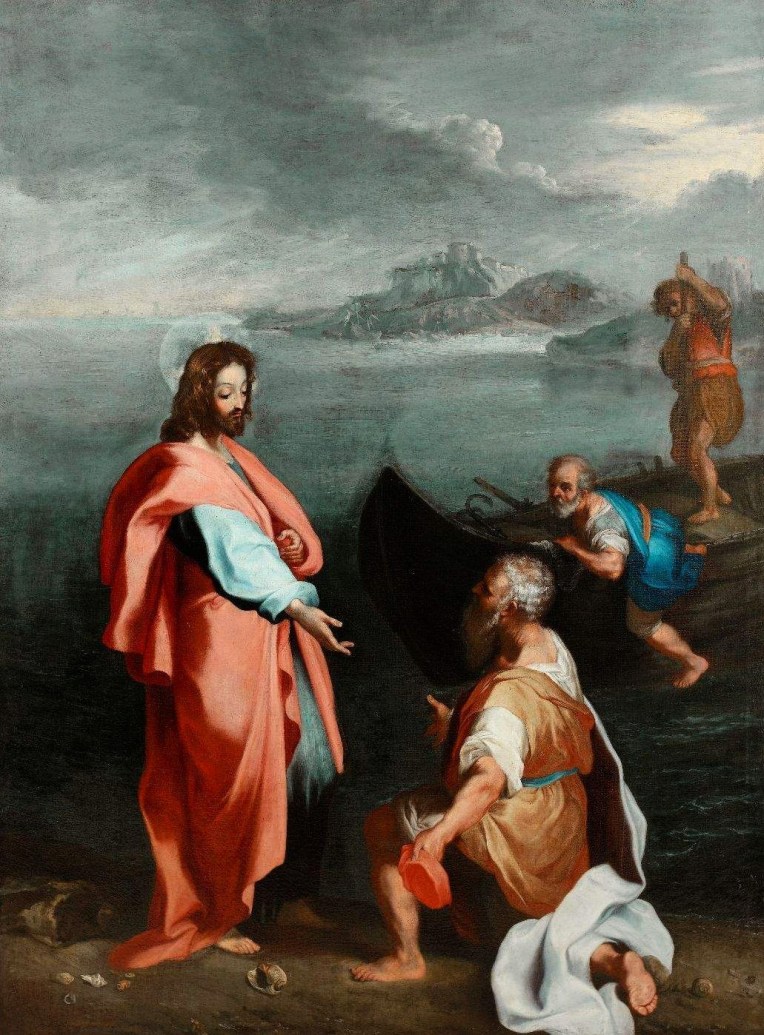
As in yesterday’s Gospel Reading, we hear Jesus in today’s Gospel passage calling men to follow Him.  Today’s Gospel passage is from the first chapter of St. John’s Gospel account.  Jesus is only at the beginning of His three years of public ministry.  But in a way, you might say that what Jesus is doing in this week’s Gospel passages is a preparation for Pentecost.

Pentecost is sometimes thought of as the “birthday of the Church”.  Yet the day of Pentecost as recorded in Acts 2 could not have happened without the “first steps” that Jesus makes in this week’s Gospel passages.  Jesus knew that the simple men He chose would—almost to a man—suffer martyrdom many years later because of serving as the pillars of His Church.  Jesus knew how Philip and Nathanael would eventually die, even if they did not.  But their journey to sacrificing their very lives for Christ began with a few simple words:  “Come and see.”

There is a further point to take note of.  This point concerns the general theme of vocations.  Note that in the Gospel Reading, Philip calls Nathanael first, and then Jesus calls Him.  This sequence of events highlights an important truth of our Catholic Faith:  that God chooses—wills—to work through simple human persons like you and me.  God chooses to work through intermediaries:  “middlemen”, if you prefer.  God can choose to accomplish His will however He wishes, but often, He wishes that you and I be instruments of His will by inviting others to follow after Jesus.


January 4

St. Elizabeth Ann Seton, Religious
January 4
1 John 3:7-10  +  John 1:35-42

“Come, and you will see.”

Christmastide is about new life.  Yet we might be tempted to think of this Christmas Season only in terms of the birth of the Christ Child.  If we were to do so, we would overlook much of the richness of this holy season.

In the Ordinary Form of the Roman Catholic liturgical calendar, the last day of Christmastide is the feast of the Baptism of the Lord.  This gives us a clue to one of the major themes of Christmastide, the expression of which makes up much of the season’s richness.

In a word, much of Christmastide celebrates the new life that comes from one’s “vocation”.  The event of Jesus’ Baptism in the Jordan River is the “inauguration”, if you will, of Jesus’ public ministry:  His vocation to save fallen man.  In the latter days of Christmastide, including in today’s Gospel Reading, we hear of the vocations—the callings—of several of Jesus’ key disciples.  In turn, their vocation stories ought to help each of us stop and reflect upon our own vocations:  our own share in the saving mission of Jesus’ Church.

The Epiphany of the Lord

The Epiphany of the Lord
Isaiah 60:1-6  +  Ephesians 3:2-3,5-6  +  Matthew 2:1-12

“We saw his star at its rising and have come to do him homage.”

+     +     +

references to the Catechism of the Catholic Church cited for this Sunday by the Vatican’s Homiletic Directory:

CCC 528, 724: the Epiphany
CCC 280, 529, 748, 1165, 2466, 2715: Christ the light of the nations
CCC 60, 442, 674, 755, 767, 774-776, 781, 831: the Church, sacrament of human unity

+     +     +

Secular culture takes what is three-dimensional and flattens it.  Christians, then, must be alert to secularism’s encroachment upon Christian culture.  If, for example, Christians adopt secularism’s counterfeits of Christmas and Easter, not only do Santa Claus and the Easter Bunny become the seasons’ patron saints.  The seasons themselves become distorted, so that Christmas begins on the day after Thanksgiving and ends on December 25th.

By contrast, the Church calls Christians to order their lives in a way that recognizes December 25th as the first full day of Christmastide, and the day of celebrating the first of several mysteries that the Church ponders throughout Christmastide.  Among all these mysteries, the Nativity and the Epiphany of the Lord are the two most important.

The Nativity focuses upon the divine Gift given by God the Father to fallen man.  The Epiphany also focuses upon the gifts that men offer to God in return.  We might say that the Epiphany is the Church’s first focus upon the stewardship of grateful disciples.

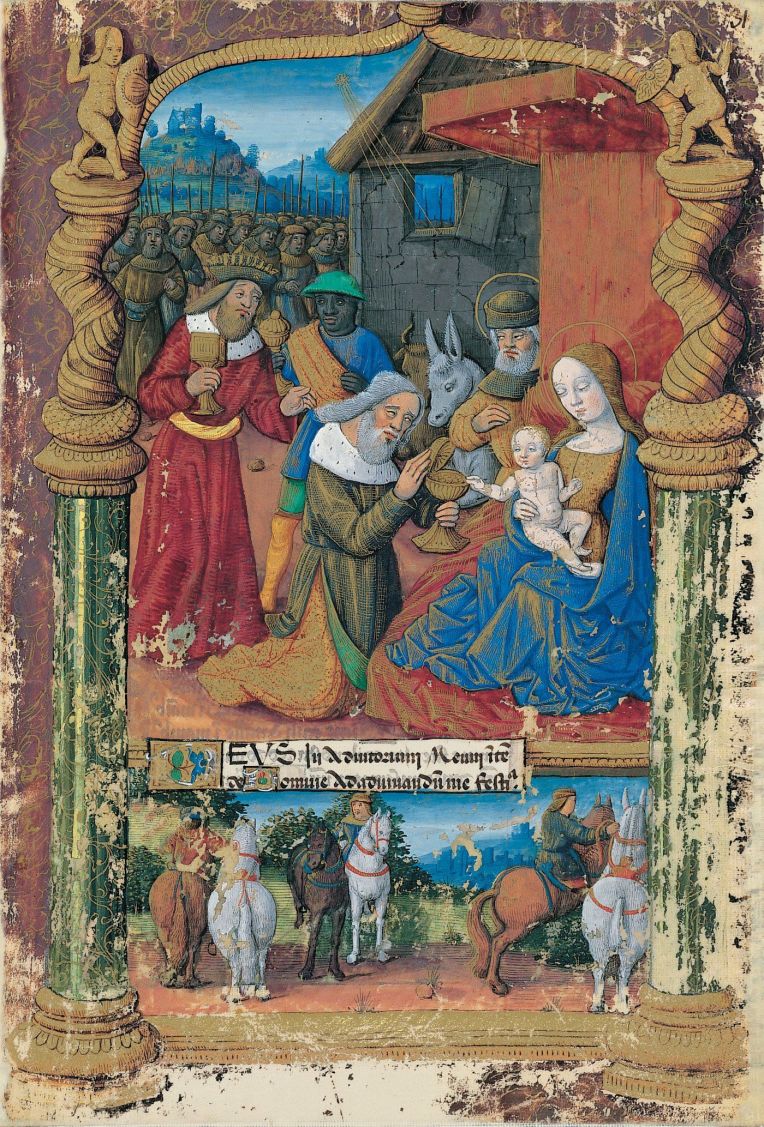
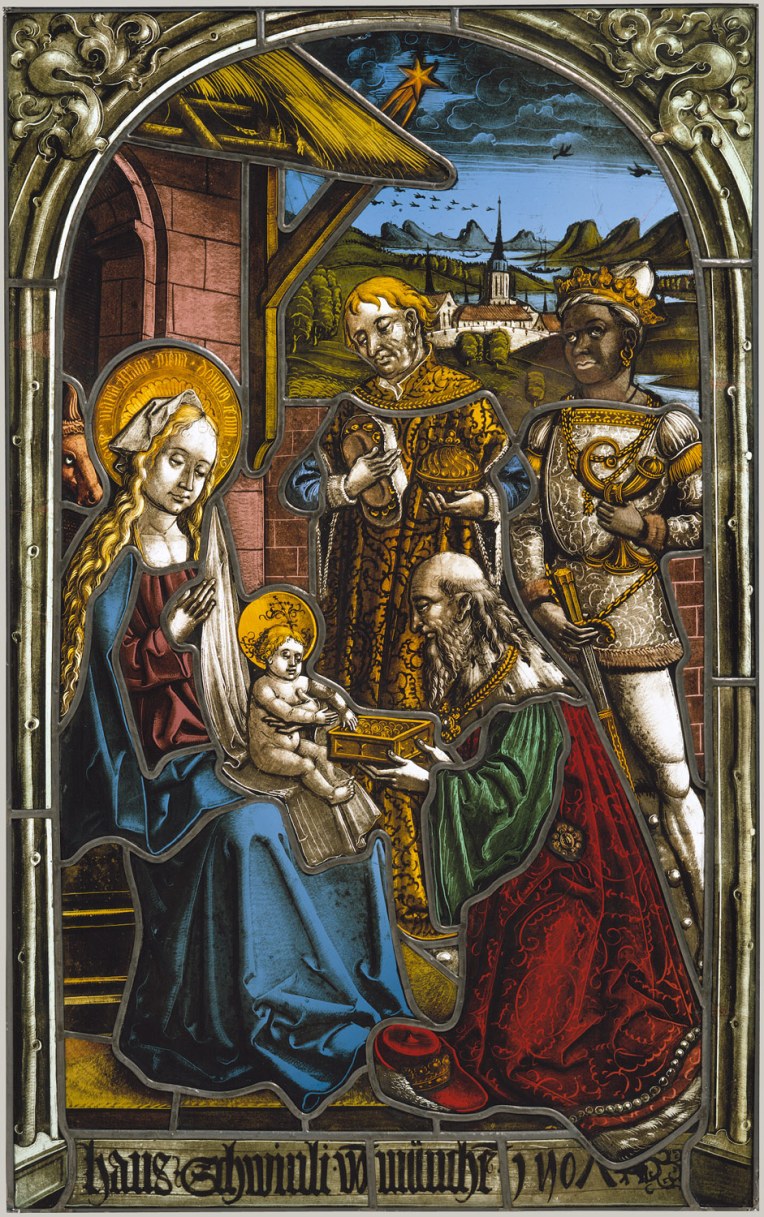
In this Sunday’s Gospel Reading, we hear three wise men arriving before the manger.  They are willing to sacrifice of themselves in order to find a newborn King.  Here we see a sign of their wisdom:  their willingness to make profoundly personal sacrifices in addition to the material objects they offer in sacrifice.

Few persons don’t want to be rich.  However, there are many people who believe they’re rich, but who have become satisfied with riches that—in the end—aren’t going to do them real good.

Humility is what we see in the three wise kings.  They were willing to leave the splendor and riches of their earthly kingdoms in order to enter a grotto where animals lived, in order to prostrate themselves before a child born of a peasant girl.

Picture this:  these three wise kings fall to the ground in adoration before the newborn Jesus in a stable, where the hay of the animals was mixed with the animals’ waste.  Would you be humble enough to kneel in that hay?

Look at these three wise kings.  Look at their sacrifices.  Consider two aspects of the sacrifices that the kings make.

The first aspect is their journey.  It is long and fraught with peril, much like the journey of discipleship.  These three leave behind the lands where they rule, where they are in control, in order to bow down before the Ruler of Heaven and Earth.  They make this perilous journey in order to follow Him wherever He asks them to go for His sake.

The second aspect of their sacrifices are the objects that the three wise kings take from their treasuries and place before the new-born King.  These splendid objects reflect their human wealth.

Yet these gifts are given as a response to a greater Gift.  These gifts are more a reflection of the One to whom they’re given than of those who give them.  So also in the practice of stewardship, while one’s giving is in proportion to one’s means, it’s also meant to be given in proportion to the goodness of the One to whom we give.

The gifts the three wise men give to Jesus reflect the divine Person to whom they are giving their gifts.  The gold and frankincense reflect Jesus’ kingship and divinity.  These gifts are foretold in the First Reading from the Prophet Isaiah.

But Isaiah does not prophesy about the gift of myrrh.  Myrrh is a resin used to prepare corpses for burial.  What an odd gift for a newborn!  Can you imagine someone today showing up at a baby shower with a gift obtained from a mortuary?  Nonetheless, the gift of myrrh reflects the wisdom of the three wise men.

It’s often said that God is never outdone in generosity.  That truth is reflected in the gift of myrrh.  God the Father had given the Gift of His Son.  In response, the three wise men give three gifts to the Holy Family.  Yet Christmastide is only the start of the Gospel story, and a preparation for the climax reached during Holy Week.  On Mt. Calvary, God the Son will offer in sacrifice the Gift of His Body and Blood, soul and divinity.  The gift of Good Friday is the source and summit of the Christian life, the gift that gives infinite depth to the journey of discipleship.
The Most Holy Name of Jesus

The Most Holy Name of Jesus
January 3
1 John 2:29—3:6  +  John 1:29-34

“Now I have seen and testified that He is the Son of God.”

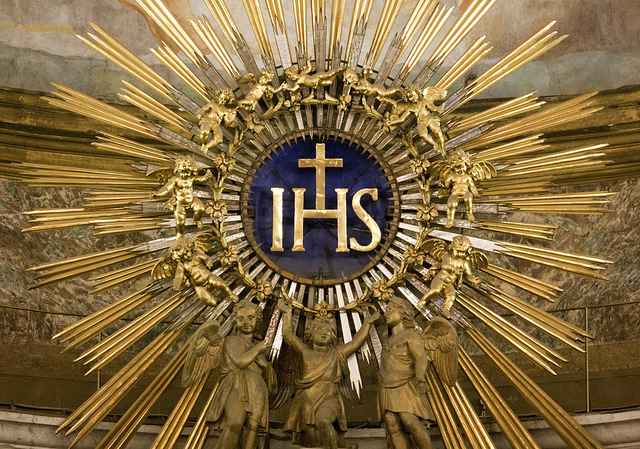
The feast of the Most Holy Name of Jesus holds, in the Church’s liturgical calendar, the humble rank of an optional memorial.  At most Masses celebrated today, even if the proper prayers—the Collect and so on—for the feast are prayed, the Scripture readings that are proper to the feast will not be.  Nevertheless, the entire season of Christmastide celebrates the mystery found in the Most Holy Name of Jesus.

The name “Jesus” literally means “God saves”.  The Most Holy Name of Jesus reveals to fallen man that God saves.  The divine person of Jesus Christ, in all that He does and says during His days on earth, reveals to fallen man that God saves.

Of course, God the Father did not have to send His Son into our world in order to save fallen man.  God the Father could, in justice, have left fallen man to its fallen state.  Having chosen, however, to save man, God the Father could have chosen any number of ways in which to save man.  He was not limited to the choice of sending His divine Son to offer His Body and Blood, soul and divinity on the Cross.  God the Father could have chosen any number of simple ways in which to forgive fallen man.  Yet the Incarnation, Passion, Death, Resurrection, and Ascension of Jesus Christ reveals the full depth of God the Father’s love for us fallen creatures.

Most Holy Name of Jesus 2

Sts. Basil the Great & Gregory Nazianzen, Bishops & Doctors of the Church

Sts. Basil the Great & Gregory Nazianzen, Bishops & Doctors of the Church
January 2
1 John 2:22-28  +  John 1:19-28

All the ends of the earth have seen the saving power of God.

Just as Eastertide culminates in the feast of Pentecost, so Christmastide culminates in the feast of the Epiphany.  The purpose of a liturgical season is not to celebrate a single feast—in the case of Christmastide, the Nativity—over and over again.  The season’s purpose is gradually to shift one’s focus from one feast to another feast.  A liturgical season is a panorama of feasts.

You can hear such a shift in today’s scriptures.  For example, the refrain of today’s Responsorial is:  “All the ends of the earth have seen the saving power of God.”  This refrain could just as fittingly be proclaimed on Pentecost Sunday as on the feast of the Epiphany.  In turn, that fact points out that the culminating feasts of Christmastide and Eastertide—that is, the Epiphany and Pentecost—have an important point in common:  “the nations”.  Everything that God seeks to accomplish throughout salvation history is for “the nations”, not merely for a single nation or people.  This is the mission of the Church that Jesus founded.  The Church’s mission is “catholic”:  which is to say, “universal”.

However, there’s an additional contrast to be noted when reflecting upon this Responsorial refrain.  Not only must “the nations” be contrasted against any single nation or people of the earth.  Within the current Western culture, it’s important to reflect upon how “the nations” stand in contrast to the individual.  God Himself wills that no individual enter into covenant—that is, relationship—with Him unless it be through His people.  His people are all “the ends of the earth”, where His Church continues the saving work of Jesus Christ.

Format change in February 2023

The reflection for the day before Ash Wednesday (February 21, 2023) will be the last post that subscribers will receive.

On February 14th, this website will shift to a new format.  Starting on that day, archived reflections will be organized by menus.  The main menu will route you to the various seasons of the Church year, and each season will have further menus directing you to specific, archived reflections.  When these menus first appear in February, only Lent and Eastertide will be available.  Archived reflections for each season will eventually be available through the menus.