Tuesday of the Second Week of Advent

Tuesday of the Second Week of Advent
Isaiah 40:1-11  +  Matthew 18:12-14

“… it is not the will of your heavenly Father that one of these little ones be lost.”

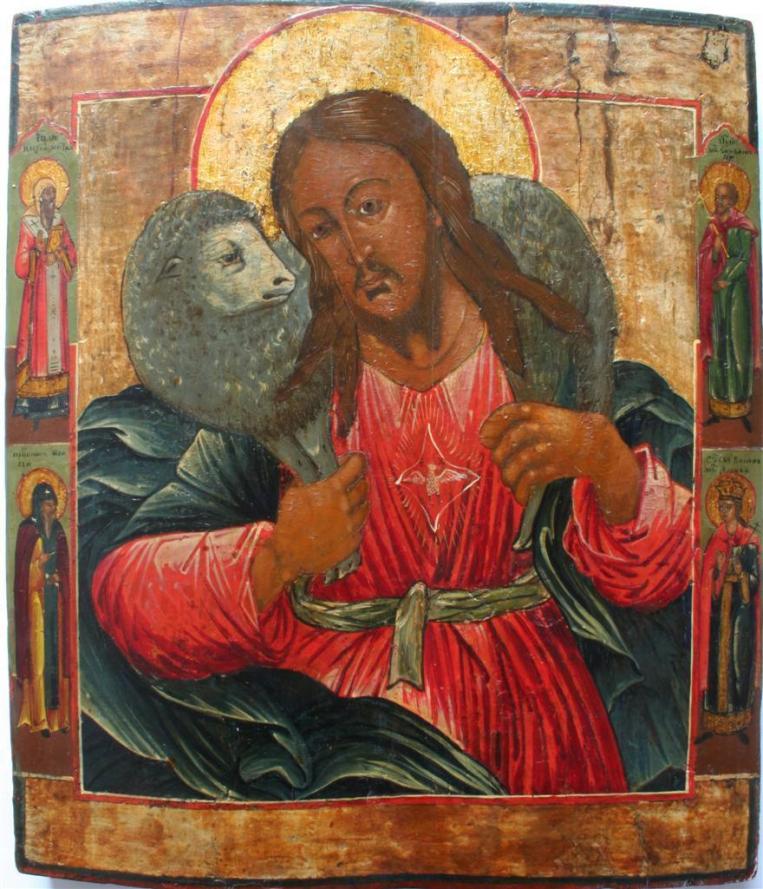
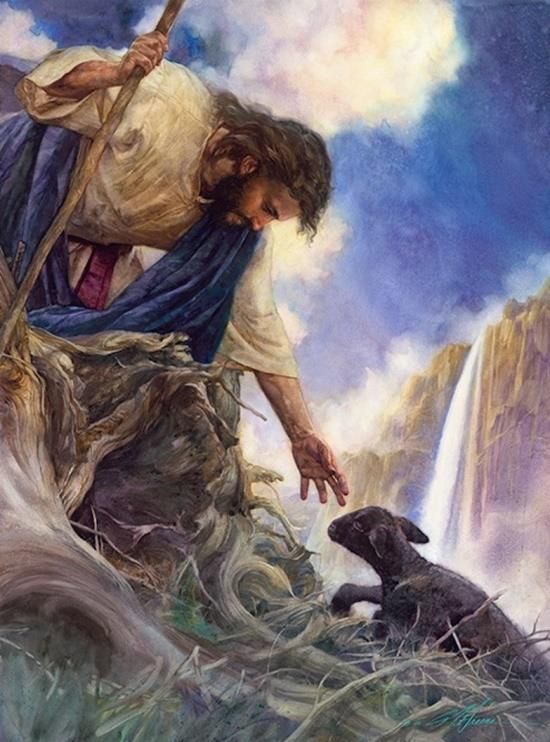
It’s always comforting to think of the Good Shepherd.  But why does the Church evoke this image today on a weekday of Advent?

In today’s brief Gospel Reading, Jesus speaks to the motive of His Incarnation.  While there have been theologians who have speculated that the Son of God would have become human even had mankind never sinned, in the actual course of salvation history, man did sin.  In response to man’s sin, God could have freely chosen to abandon His fallen creature.

Instead, God chose from Heaven to act like a Good Shepherd.  He descended from the perfection of Heaven in order to enter a world of sin and darkness.  The sacrifice of His whole self—Body and Blood, soul and divinity—within that world reflects the love of God’s divine nature, which through the Incarnation you and I have the chance to enter into for eternity.
Monday of the Second Week of Advent

Monday of the Second Week of Advent
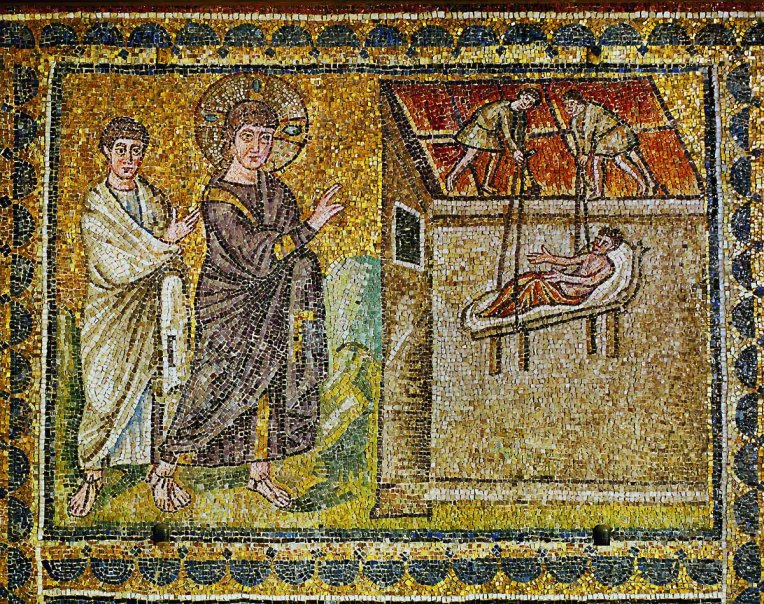
Isaiah 35:1-10  +  Luke 5:17-26

The desert and the parched land will exult; the steppe will rejoice and bloom.

In today’s First Reading from the thirty-fifth chapter of Isaiah, “the desert” is a focus.  This focus is apt for the first two weeks of Advent, when St. John the Baptist is so often at the forefront of the scripture passages we hear.  The desert, after all, is where John the Baptist dwells.  In the desert he carries out his ministry of preaching and baptizing, both of these for the sake of repentance.

Yet in spite of the desert’s connection with solitude and penance, and as fruitful as this point can be for our Advent meditation, today’s First Reading describes the desert for a different purpose.  Isaiah describes the desert for the sake of illustrating, in a phrase, the “reversal of fortune” that the Lord’s merciful love will effect when He comes.

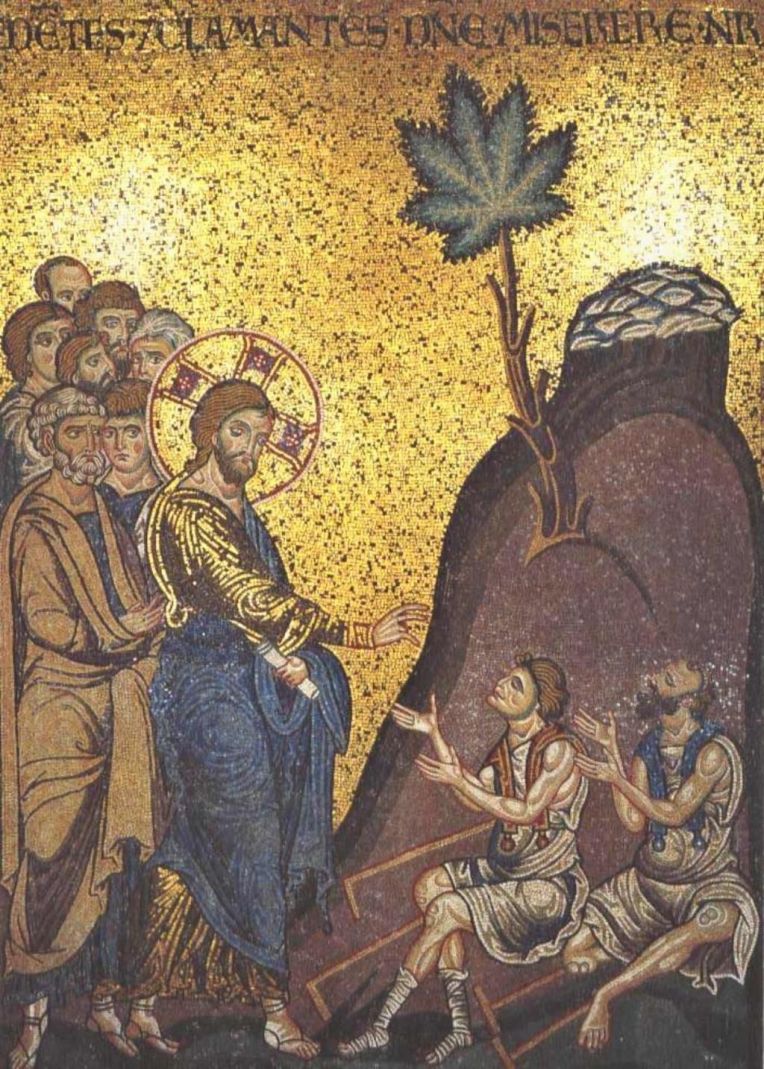
The desert is a place where little to nothing grows.  Yet when the Lord come, “the parched land will exult”, “will bloom with abundant flowers, and rejoice with joyful song.”  This is not the only reversal of fortune that Isaiah foretells in this passage.  Through the Lord’s power “the eyes of the blind be opened, the ears of the deaf be cleared”, and “the lame leap like a stag”.  The Lord brings life to what seems dead, as the birth of Jesus offers hope for new life to fallen man.

Saturday of the First Week of Advent

Saturday of the First Week of Advent
Isaiah 30:19-21,23-26  +  Matthew 9:35—10:1,5,6-8

… they were troubled and abandoned, like sheep without a shepherd.

This morning’s Gospel Reading bears imagery that foreshadows Lent, the Sacred Triduum, and Eastertide.  Catholics instinctually understand that Advent prepares Christians for Christmastide, and that Lent prepares them for Eastertide.  Less understood is that Advent and Christmastide, considered as a single block of time, prepares Christians for Lent and Eastertide.

The evangelist tells us that the crowds were “like sheep without a shepherd”.  Jesus, of course, is the Good Shepherd [see John 10:11,14].  His noblest act of shepherding took place on Calvary, when He sacrificed His life for His flock.

Jesus’ vocation of Self-sacrifice on Calvary is the chief reason why God the Father sent His Only-Begotten to earth.  It’s important not to lose sight of this during Advent and Christmastide.  God the Father sent His Son to be both shepherd and sheep.  Indeed, He shepherds us by becoming one of the sheep:  by being born as one of us, so that on the Cross He could offer to the Father the sacred humanity He received from the Blessed Virgin Mary.

Friday of the First Week of Advent

Friday of the First Week of Advent
Isaiah 29:17-24  +  Matthew 9:27-31

The Lord is my light and my salvation.

Advent corresponds roughly with the final weeks when the day grows shorter (at least, in the Northern Hemisphere).  There’s a great deal of imagery in the scriptures and liturgies of Advent that relates to the human struggle with darkness.  For example, the feast day of Saint Lucy—whose name comes from the Latin word for light, and whose feast is celebrated in many countries with a brilliant display of candles—falls close to the midpoint of Advent.  On the following day the Church celebrates the feast of St. John of the Cross, a Doctor of the Church whose writings explore the “dark night of the soul”.

The refrain to today’s Responsorial is:  “The Lord is my light and my salvation.”  To reflect upon the Lord God Himself as “light” is infinitely more significant than reflecting upon the earth’s annual descent into darkness, or even upon the human darkness that one experiences while undergoing spiritual purification and growth in the divine virtue of faith.

The notion of the Lord God as light transcends any other notion of light that human persons experience.  One way to appreciate this difference is to notice how Psalm 27 continues its description of the Lord.  This Lord whom the Psalmist has just described as “light” is the object of the Psalmist’s sight.  Consider how unusual that is.

In ordinary human life, light serves to illuminate physical objects.  A man would be thought odd if he stared at a light bulb, and reckless if he stared at the sun.  But in Psalm 27 the Psalmist describes the Lord as the focus of his sight:  “One thing I ask of the Lord; / this I seek: / To dwell in the house of the Lord / all the days of my life, / That I may gaze on the loveliness of the Lord / and contemplate his temple.”  One might consider these verses as the Old Testament’s clearest description of what the Church calls the “Beatific Vision”.  To be a saint in Heaven is to gaze forever at the Lord, who is pure light.