Wednesday of the Third Week of Advent Isaiah 45:6-8,18,21-25 + Luke 7:18-23
“In the Lord shall be the vindication and the glory of all the descendants of Israel.”
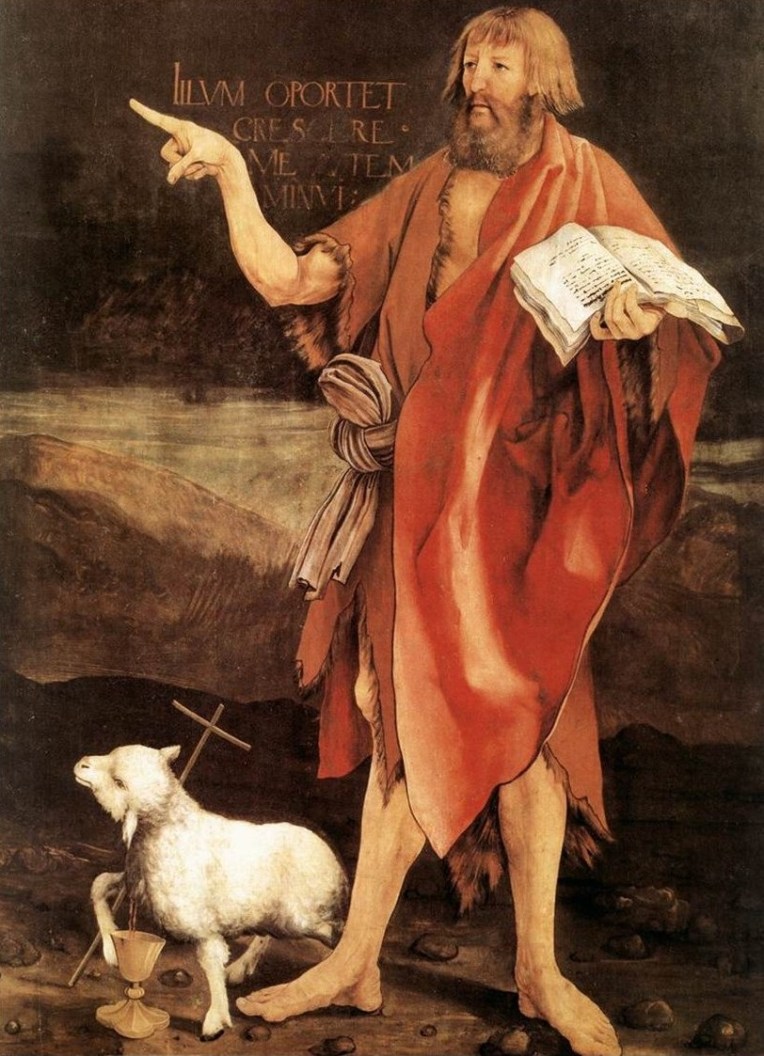
Confusion sometimes arises from the question that John the Baptist in today’s Gospel Reading instructs his disciples to ask Jesus. People wonder: “Doesn’t this question—‘Areyou the one who is to come, or should we look for another?’—suggest that John the Baptist wasn’t really familiar with his cousin Jesus, and was even uncertain about the role of Jesus in the Lord God’s plan for Israel?” The answer, of course, is “No.” But why then does John instruct his disciples to ask this question?
By way of answering, we might point out that John isn’t sending his disciples for his own sake, but for theirs. John wants each of them to encounter Jesus and hear Jesus’ answer to the question as a sort of initiation into a relationship with Jesus.
However, one might in response ask a further question. “Why, then, did Jesus answer the disciples’ question by saying, ‘Go and tell John what you have seen and heard ….’?” The fact is that these disciples need for the time being to remain under the instruction of John the Baptist.
Jesus does not say to these disciples what He said to Peter and Andrew: “Come, follow me.” These disciples, like us during Advent, need to sit at the feet of John the Baptist and allow his message to sink more deeply into our hearts before we can be true disciples of the Lord Jesus.
CCC 496-507, 495: Mary’s virginal motherhood CCC 437, 456, 484-486, 721-726: Mary the Mother of Christ by the Holy Spirit CCC 1846: Jesus as Savior revealed to Joseph CCC 445, 648, 695: Christ the Son of God in his Resurrection CCC 143-149, 494, 2087: the “obedience of faith”
Ask for a sign from the Lord, your God; let it be deep as the netherworld, or high as the sky!
Signs, symbols, oracles, portents: man has since time immemorial sought assurance from God of His providential will. King Ahaz in the First Reading is going against the grain in refusing to ask “for a sign from the Lord”, especially since the Lord Himself directed Ahaz to do so. Yet in spite of the stubbornness of Ahaz, the Lord gives him a stunning sign: “that the virgin shall conceive, and bear a son, and shall name him Emmanuel.”
This sign has three parts. The first is that “the virgin shall conceive”. This seems to be a paradox that goes against the very laws of nature. Yet God, who is the Author of all creation—both natural and supernatural—can work within His creation as He wills. What seems to us to be an act against the natural order can be an instance of God working supernaturally within the natural order. This particular act stresses that God is the Author of all life.
The sign’s second part is that the virgin shall “bear a son”, and the third that the virgin “shall name him Emmanuel”. These latter two parts reveal more to us about the particular life that God has created. God’s creation is the son of the virgin, and so he is human. As her son, he is named by the virgin. But the name she gives him reveals something extraordinary about this life, beyond the extraordinary means of his creation.
His name is Emmanuel, a Hebrew word which means “God with us”. This phrase encompasses a broad range of possible meanings. At its lower end, the phrase could mean simply that this human being named “Emmanuel” reminds us, or teaches us, of God’s presence in our collective midst. However, at the opposite end of this range of meanings is the teaching of the Gospel and Christ’s Church.
The person of Jesus of Nazareth, while truly the son of Mary—and so truly human—is also the son of God: “One in Being” with God the Father, as we profess. Jesus is fully human and fully God. Yet the Incarnation is but the prelude to the divine work that God will accomplish in Jesus at the end of His human life.
With that as a backdrop, we can reflect upon the Gospel Reading setting the stage for the Nativity. The Reading’s focus is Saint Joseph and his vocation as the foster-father of Jesus. Consider Joseph’s vocation in light of the two names by which his foster-child is described here: Jesus and Emmanuel.
The name “Jesus” means “God saves”, while “Emmanuel” means “God with us”. Taken together, they dispel two contrary beliefs: that God will save us only at a distance; and that God comes into our midst only to condemn us. Instead, these two names together confirm that God is with us in order to save us.
In Joseph’s dream, the angel of the Lord demands two things from Joseph. The first is not to “be afraid to take Mary… into [his] home”. The second is to “name [Mary’s son] Jesus”. Both commands imply acceptance. Generally, they imply acceptance of God’s providential Will. Specifically, they imply acceptance of Mary and Jesus as Joseph’s own. In spite of the apparent shame caused by Mary—because of her seeming infidelity—God calls Joseph to protect Mary as her husband, and to stand with her in accepting with patience the unfolding of God’s Providence.
In spite of Mary’s apparent betrayal of her betrothal to Joseph, God asks Joseph to name Mary’s son. This act itself, independent of the name Joseph would give the child, is significant. This act had legal significance within the culture of Joseph. By this act, Joseph would have been claiming the child as his own. In making this claim, Joseph undoubtedly would have invited shame upon himself, as many would have seen this act as an admission that he had fathered a child outside of a fully ratified marriage.
Part of the irony of this passage, then, is that Mary and Joseph, by their submission to God’s providential Will, foreshadow the life of Jesus. Mary and Joseph are scorned and cast aside as sinners precisely because of their faithfulness to what God wants to accomplish through Christ. We ought to expect this in our lives as disciples, as well.
Tuesday of the Third Week of Advent Zephaniah 3:1-2,9-13 + Matthew 21:28-32
“Which of the two did his father’s will?”
Like the one proclaimed on Thursday of the First Week of Advent [Mt 7:21,24-27], today’s Gospel Reading from the twenty-first chapter of Matthew focuses upon good works. Both of these passages contrast mere words with resolute works. Yet there’s a further similarity that’s even more important.
In the passage from Matthew 7, Jesus insists that for one to enter Heaven, one must do the will of God the Father. In today’s Gospel Reading, Jesus proclaims a parable at whose center is a father with two sons. The human father in this parable is a symbol of God the Father.
This focus of God the Father can help you see that it’s not your own human will that’s key in your life. The key is the will of God the Father. This is the same Father who within salvation history loved His erring children—those resembling the first son in today’s parable—enough to send His only divine Son to die for them. The Father “willed” that His Only-Begotten, the one who in all things does His Father’s will—even on Calvary—sacrificed His life for the sinful son, who is you and me.
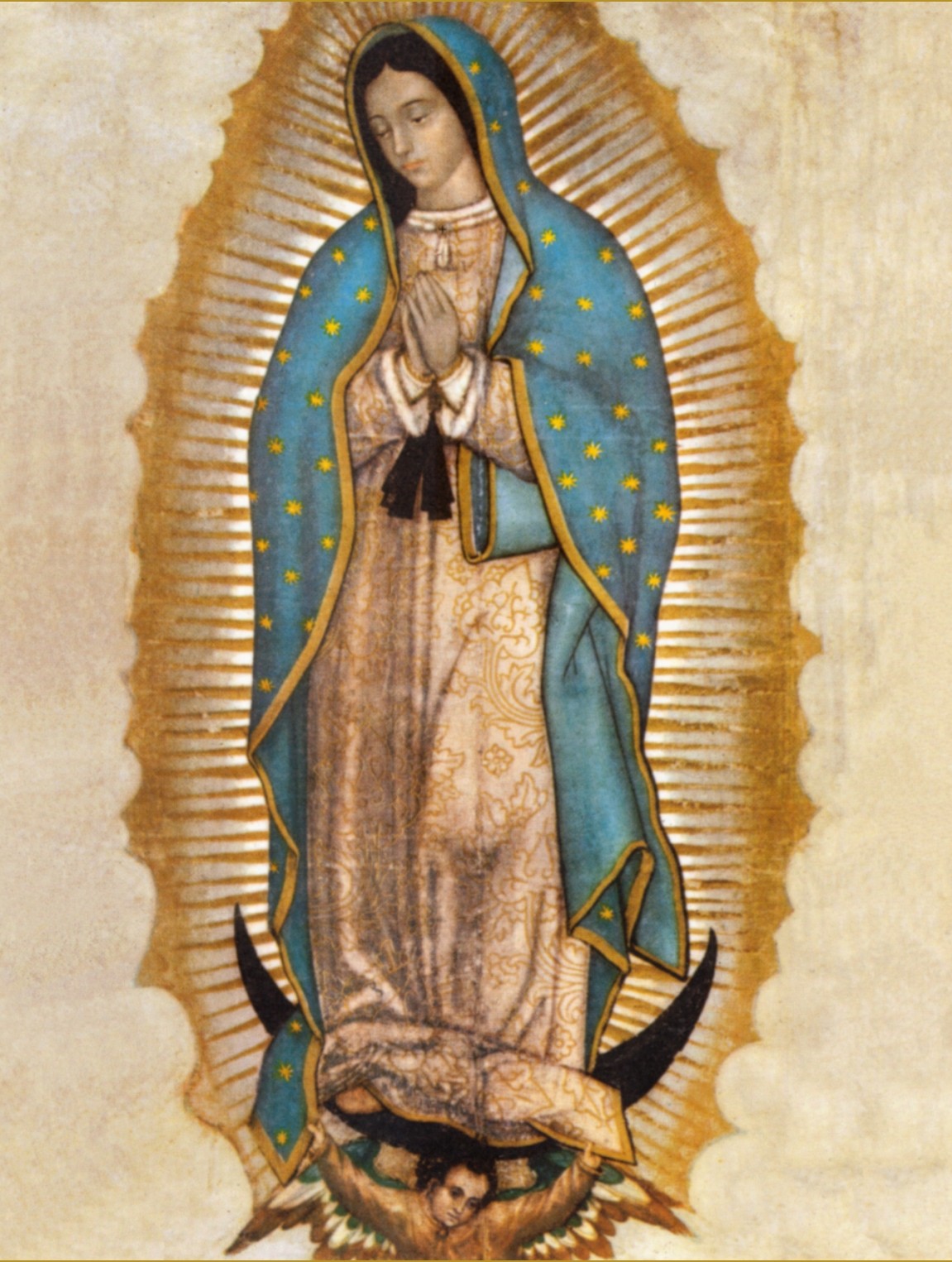
Our Lady of Guadalupe Zech 2:14-17 [or Rev 11:19;12:1-6,10] + Lk 1:26-38 [or Lk 1:39-47]
Blessed are you, daughter, by the Most High God, above all the women on earth .…
Today’s Responsorial is not taken from one of the psalms, but from the Old Testament Book of Judith. The verses of the Responsorial, by which the Church praises Mary today, in their original setting praise the Old Testament heroine Judith. In the thirteenth chapter of Judith you can read of Judith beheading the Assyrian general Holofernes, thus freeing her people from foreign control. The praise that follows, which we hear in today’s Responsorial, is offered by Uzziah, the king of Judah.
Although the transposition of this praise to honor Mary makes sense when one reads the verses themselves, the original setting might give one pause. However, even the setting in which Judith receives praise offers insight into the vocation of Our Blessed Mother, especially as we honor her today under the title of Our Lady of Guadalupe.
In the first book of the Bible, after the fall of Adam and Eve, God curses the serpent and declares: “I will put enmity between you and the woman, and between your offspring and hers; He will strike at your head, while you strike at his heel.” The Church has always heard these words as foreshadowing the advent of Christ and His mother Mary. It is through Mary’s vocation as the Mother of God that the power of evil is destroyed. As we ask the intercession of Our Lady of Guadalupe on behalf of the unborn and their mothers, we trust that her maternal love will transform our country and world into a culture of life.
Saturday of the Second Week of Advent Sirach 48:1-4,9-11 + Matthew 17:9,10-13
Then the disciples understood that He was speaking to them of John the Baptist.
Both the First Reading and the Gospel Reading of this morning’s Mass speak of the Old Testament prophet Elijah. His importance in the Old Testament is highlighted by the fact that he (along with Moses) appears with Jesus at the Transfiguration.
There are eighteen prophetic books in the Old Testament. Yet Elijah’s importance is highlighted by the fact that he’s also mentioned within the Wisdom literature of the Old Testament: in the case of this morning’s First Reading, in the Book of Sirach. In this passage, Elijah is brought to our attention not only because he has a prophecy for us to attend to, and not only because at the end of his earthly life he ascended to Heaven in a flaming chariot. Such is the holiness of Elijah that the person is “blessed” who “shall have seen [him] and who falls asleep in [his] friendship.”
In the Gospel Reading, however, Jesus mysteriously identifies St. John the Baptist with Elijah. While Jesus does not elaborate upon this identification, we know that Elijah and St. John the Baptist are both ultimately important for the same reason: because they foreshadow the advent of the Messiah. As we reflect upon the prophetic ministry of Elijah, we ask the Lord to allow Elijah’s words and deeds to motivate us to accept Christ when He comes.
Friday of the Second Week of Advent Isaiah 48:17-19 + Matthew 11:16-19
“But wisdom is vindicated by her works.”
There are many points that one might conclude from Jesus’ enigmatic statement that “wisdom is vindicated by her works.” Consider one point about wisdom, and another about wisdom’s works.
Wisdom can be considered from the perspective of God’s own nature, or in terms of what God freely chooses to do in salvation history. In the Catholic tradition, this consideration would be referred to in terms of the “immanent Trinity” and the “economic Trinity”.
What Jesus declares in today’s Gospel Reading ought to be considered in terms of God’s work of salvation history: creation, redemption, and sanctification. This is especially so in terms of wisdom being “vindicated”. The masterpiece of Saint Augustine of Hippo, The City of God, explores the vagaries of salvation history, which often seems to hold more troughs than peaks; more sin than grace; and more sinners than saints.
When it comes to salvation history, God certainly plays a “long game”. This ought to comfort those of us who waste so many years of our lives following our own interests rather than God’s. Saint Augustine explored this sad dynamic in his own life in another of his masterpieces, The Confessions. Fortunately for each of us, God loves us more than we love ourselves, and in Jesus is willing to make our sins His own so that His wisdom might prevail over our folly.
The Conversion of St. Augustine of Hippo by Fra Angelico
In the beginning, God had a plan. God’s plan was for mankind to live a blissful life in this world, and at the end of that earthly life, to rise body and soul into Heaven.
But mankind did not cooperate. You know how Adam and Eve brought sin into the world. They did not cooperate with God’s plan, and so God came up with a “Plan B”. In this “Plan B”, God would show His love for mankind by sending His only Son to earth, knowing that man would crucify this Son, yet also knowing that the Crucifixion of His Son would destroy the power of sin and death.
In God’s “Plan A”, one man and one woman were to begin God’s plan. They failed. Adam and Eve instead brought sin and death into human experience. Adam and Eve changed a human paradise into a valley of tears, full of suffering, doubt, and at time, even despair.
In God’s “Plan B”, one man and one woman were to begin God’s plan. These two obeyed. They fulfilled God the Father’s Will. And so through these two—Jesus and Mary—you now have the opportunity to live a life here below filled with hope and joy. Those virtues and all the rest of the virtues will be fulfilled in the perfection of Heaven if we cooperate with God’s grace to the hour of our death.
+ + +
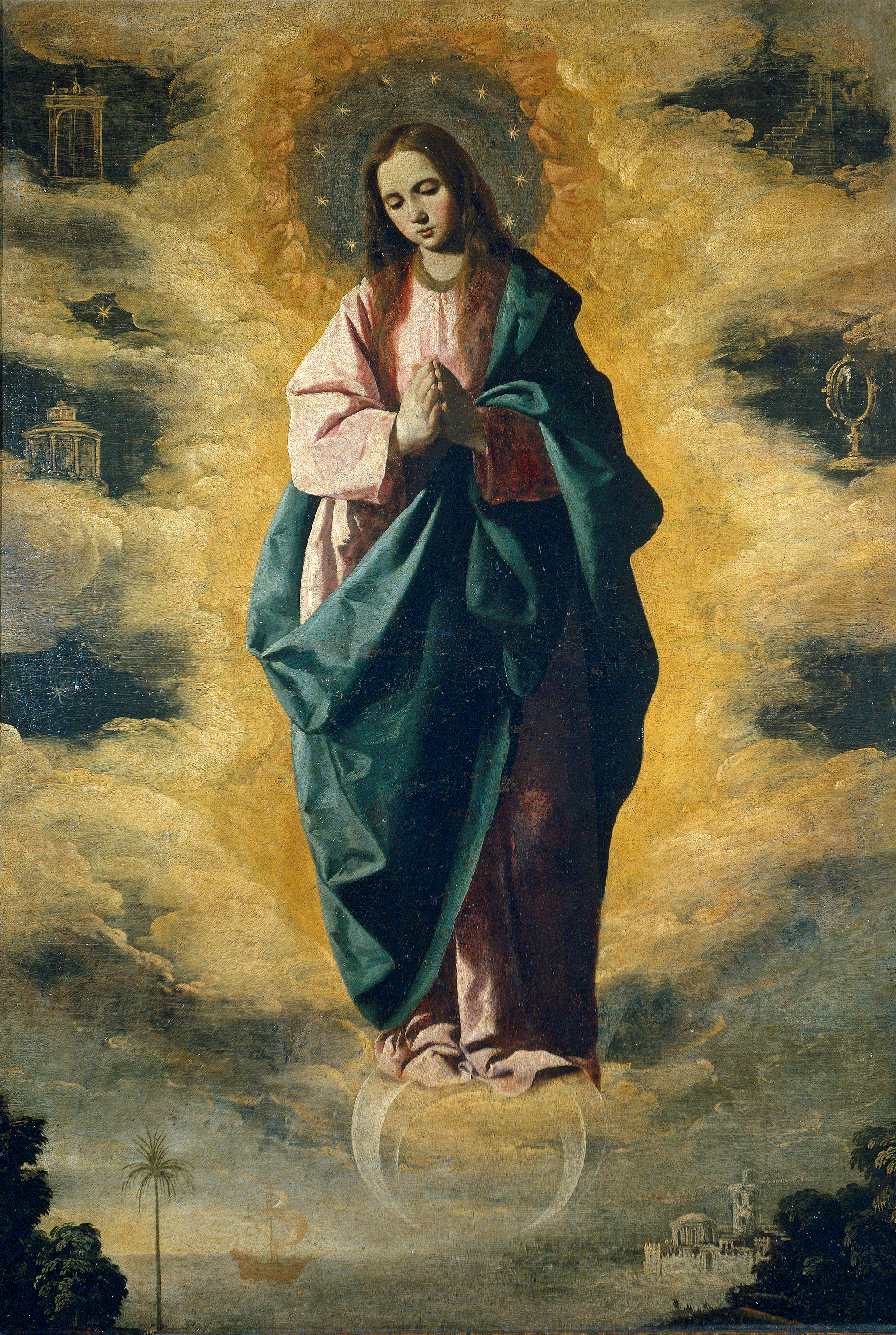
Today the Church throughout the world celebrates the Immaculate Conception of the Blessed Virgin Mary. Our Blessed Mother is the one creature in all of God’s Creation who obeyed God unfailingly. Our Blessed Lady is the one human person who has been completely open to accepting Jesus into her life. God knew that Mary would be such a woman before her life began. That’s why He gave her a gift at the moment that her mother, St. Anne, conceived her. God kept Mary from inheriting Original Sin, so that Mary would be the best possible mother for His Son.
We hear of Mary’s faithfulness in today’s Gospel passage. “Gabriel was sent from God… to a virgin betrothed to a man named Joseph… and the virgin’s name was Mary.” She asks how she, a virgin, can conceive. But God’s messenger assures Mary that God’s Son will be conceived in her womb by the Power of the Holy Spirit.
Mary’s virginal conception of Jesus reflects God’s omnipotence. God can create something out of nothing. In the beginning, God created the universe out of nothing. Similarly, in the nothingness of Mary’s virginity, God creates, and His Son is conceived as a human being in Mary’s womb. But these two acts of God creating out of nothing—God’s creation of the universe, in the beginning; and God’s creation of Jesus’ human body and soul, in the fullness of time—both foreshadow an even greater miracle on God’s part.
Likely you have heard the saying, “The wood of the crib is the wood of the Cross.” This saying isn’t literally—historically—true, but its truth lies in pointing out that Jesus’ conception and birth were a means to a greater end: that end being Jesus’ Death and Resurrection. As another saying puts it, “Jesus was born into this world, so that he might die from this world.”
Through Mary, God’s Son comes into the world to destroy sin and death. Jesus’ vocation is fulfilled more than three decades later, according to the same pattern by which God created in the beginning, and in Mary’s womb. God creates… out of nothing. So it is with the Death and Resurrection of Jesus. Human sin is a failure to love. Human sin is an absence of grace, an absence of love.
You and I, as human beings: how do we respond when someone doesn’t love us? In our sinfulness, we usually respond in kind. If someone gives us the cold shoulder, we do the same. We respond to an absence of love with a further absence of love. That’s how sin works: it spreads like a spiritual and moral cancer, destroying the love that God meant, in the beginning, for our human life to be all about.
Thanks be to God, God does not respond to sin as you and I do. If God did, then when we wandered far from Him, God would have (metaphorically) turned His back on mankind, and left us to wallow in sin, finally to die and exist forever separated from Him. Thanks be to God, God responds to the nothingness of sin by choosing to love. Down into the midst of a human race of sinners, God chose to send His only-begotten Son. On Calvary, in the midst of the nothingness of rejection, rebuke, scourging and mockery, Jesus offered His life for the forgiveness of sin. In the midst of the nothingness of sin, God “re-deemed” the world.
+ + +
Thanks be to God for His act of “re-creation”. Thanks be to Our Blessed Mother Mary for saying “Yes” to her part in God’s plan. And thanks be to God for preparing Mary to say “Yes” to His will for her life. Those are the three truths that the Church celebrates today on this Holy Day of Mary’s Immaculate Conception.
First, God from all eternity, knowing that man would reject Him, planned to re-create the human world through the offering of His Son. Second, God chose Mary to be the Mother of His only-begotten Son, and Mary chose perfectly to accept this vocation. Third, knowing from all eternity of Mary’s fidelity, God prepared Mary for her vocation be means of a unique grace: the grace that we call the “Immaculate Conception”, preserving her at the moment of her conception from Original Sin.
This gift was given to Mary not only for her own sake, but for the sake of her Son, and for the sake of all those who would become members of her Son’s Mystical Body, the Church. You and I celebrate Mary’s fidelity today because she is our Mother. We honor her as the first and best disciple of Jesus Christ. We also honor her because of the unique gift of holiness that God gave her through her Immaculate Conception. During this Season of Advent, Mary’s life shows us best how to receive Jesus into our lives.
The Immaculate Conception by Francisco de Zurbarán (1598–1664)
Wednesday of the Second Week of Advent Isaiah 40:25-31 + Matthew 11:28-30
To whom can you liken me as an equal?
Today’s First Reading from the fortieth chapter of Isaiah proclaims the unique majesty of the Lord God. This proclamation highlights the radical distinction between the Creator God and each of His creatures. In Isaiah we hear God ask a rhetorical question. “To whom can you liken me as an equal? says the Holy One.”
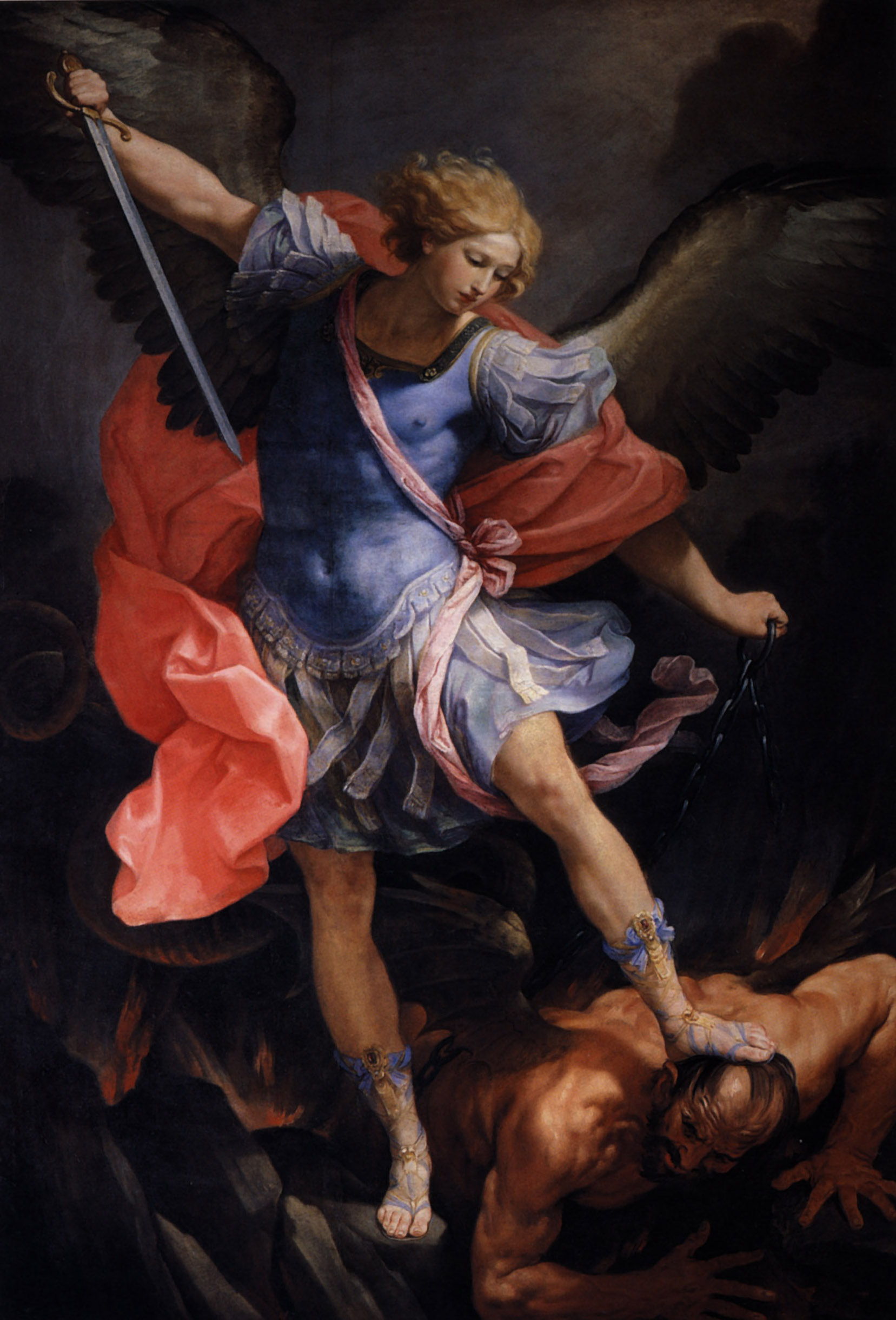
This question evokes the rhetorical question posed by one of God’s greatest creatures: Saint Michael the Archangel. The name “Michael” is literally a question: “Who is like God?” It’s not a coincidence that St. Michael is the angel who thrusts down into Hell Satan and all the evil spirits [see Revelation 12:7-9]. After all, Satan and the other fallen angels were thrown down from Heaven for believing that they were like God in His majesty and power.
By contrast, God the Son, who is equal to God—indeed, who is God—in every way, did not deem equality with God something to be clung to [see Philippians 2:6]. The humility of Jesus’ Incarnation at the Annunciation is complemented by the humility of the surroundings at Bethlehem. Yet these forms of humility are but preparations for the humility of Calvary, where the Creator God dies in order to offer His creatures the chance of eternal life.
The desert and the parched land will exult; the steppe will rejoice and bloom.
Born and reared as a Kansan, I have always loved traveling throughout the state. As I have had the chance to travel through other parts of the world, however, I have had to admit that the beauty of our state is not exactly the same as the beauty of other parts of God’s green earth. The beauty of our state is simple, subtle, and understated. It’s no wonder that when the first explorers came to this area, their report to those back east labeled this part of our continent “The Great American Desert”.
However, the beauty of Kansas is a lot like the beauty of Advent. Both are rooted in the virtue of humility. There are many virtues through which we grow in our spiritual lives, but each virtue has its proper place, and humility is the virtue of those journeying through a desert.
After all, the spiritual life on earth is itself a journey. We begin that journey the moment we are conceived, and end that journey only beyond the door of death. In between those moments of conception and death stretches a long path along which we exercise virtues such as temperance, fortitude, justice, prudence, faith, and hope. Each virtue offers some spiritual fruit for us to appreciate, some spiritual fruit to nourish us as we travel along that path that often winds through territory that is like a desert: barren and filled with trials and suffering.
But all of these virtues, and everything that’s good in our lives, leads ultimately in only one direction. Every virtue leads us in the direction of the goal of life: that perfect love which is called charity, or in Latin, caritas. Saint John tells us that this love is the very nature of God: God is love, he says simply [1 John 4:8]. Saint Paul tells us that this love is the greatest virtue, without which every other virtue is empty and meaningless [see 1 Corinthians 13].
This perfect love is the goal of our lives: we hope to live in the Presence of this perfect love forever in Heaven. This perfect love is also the goal of our lives here on earth. The only thing that we should ever worry about trying to do well is loving God and our neighbor: the great command of our Lord Jesus. This doesn’t necessarily mean doing great things. Even though it is the greatest virtue, love can be profoundly simple. Perfect love can express itself through very simple acts, as the Little Flower teaches us. Perfect love can even blossom in the midst of what seems like a desert of suffering.
Nonetheless, despite the fact that this perfect love is the goal of both daily life and our entire earthly life, we sometimes have to return to the basics. Advent—this season of plainness and of the desert—offers us a chance to rediscover what Saint Augustine called the foundation of all other virtues: the virtue of humility.
As the foundation of all other virtues, humility is a virtue that we cannot ever outgrow. If we think we can, we probably find it easy to sing the old song, “Lord, it’s hard to be humble when you’re perfect in every way.” In fact, all of the other virtues of our moral and spiritual life grow out of the “spiritual soil” of humility. Humility is laying ourselves bare: it’s really nothing more than honesty about who we are and where we figure in the scheme of things, which is to say that we are nothing without God.
This is why Advent is a penitential season. We seriously examine our consciences, go to Confession, and are reconciled with God and neighbor because only by admitting how much we are in need of God’s grace can we be ready to accept God the Father’s gift of His Son. And only with this virtue of humility as a foundation can we hope to draw others into the sweep of God’s love. If we allow ourselves to be loved by God and admit what a beautiful thing that love is, we want others to share in that love. But you cannot force God’s love, or throw His love, into the lives of others. The only way for people to be drawn into the mystery of its simple beauty is by starting with humility.





 Reflections on the Sacred Liturgy