Monday of the Thirty-third Week in Ordinary Time [II]

Monday of the Thirty-third Week in Ordinary Time [II]
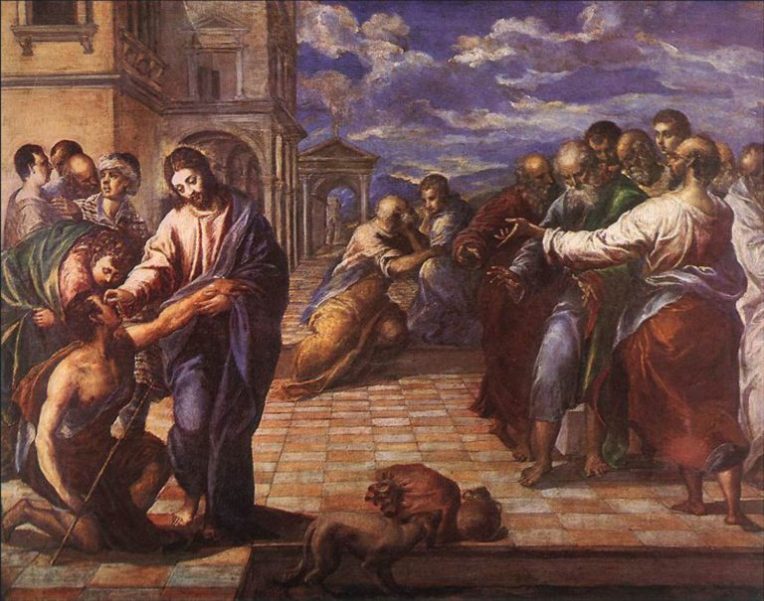
Revelation 1:1-4;2:1-5  +  Luke 18:35-43

When they saw this, all the people gave praise to God.

Today we begin hearing at weekday Mass from the Book of Revelation.  We will continue to hear from this book through the last day of the Church year.  This is fitting since Revelation is the last book of the Bible, and treats of the “Last Things”, although in a highly mysterious manner.

The Book of Revelation is literally the book of the “revelation of Jesus Christ” to the Beloved Disciple.  In turn, this same Saint John “gives witness to the word of God”, the same Word of God of whom John wrote in the prologue of his Gospel account.  Given the mysterious manner in which the Book of Revelation is recorded, the link between these two books of the New Testament is important to keep in mind as one reflects on John’s “witness to the word of God”.

Also, the evangelist calls this witness a “prophetic message”.  As such, we note a correspondence between the structure of the Old and New Testaments.  In each Testament, there are four types of books.  In both testaments, the fourth type of book is prophetic.  The Old Testament contains eighteen books of prophecy, but the New Testament contains only the Book of Revelation.  All books of prophecy look to the future:  those in the Old Testament to the first coming of God’s Word made Flesh, but the Book of Revelation to His Second Coming, as well as to His becoming Flesh and dwelling among us in the Holy Eucharist.

Saturday of the Thirty-second Week in Ordinary Time

Saturday of the Thirty-second Week in Ordinary Time
Luke 18:1-8

“But when the Son of Man comes, will He find faith on earth?”

In the first verse of today’s Gospel passage, St. Luke the Evangelist is unusually direct in explaining the exact meaning of Jesus’ parable.  “Jesus told His disciples a parable about the necessity for them to pray always without becoming weary.”  It is important to note that this parable is about one specific type of prayer to God:  prayer of petition.

Sometimes prayer is defined as “a conversation with God”.  That’s unfair to God for two reasons.  First, conversations normally take place between two persons of more or less equal standing.  While it’s true that prayer involves a dialogue with God, we have to keep in mind that what He has to say to each of us is far more important than what any of us might wish to say to Him.  In prayer, it’s far more important to listen to God than to speak to Him.

Second, prayer at its summit transcends what could be termed a conversation.  The form of prayer in which the believer and God dialogue is meant to be surpassed.  Dialogue is meant to lead to a loving silence, a form of prayer in which God and the believer rest in the goodness of His presence.  Dialogue or conversation gets us there, where God gives us the gift of contemplation.

Nonetheless, in today’s Gospel passage Jesus teaches us about prayers of petition.  Petition is one specific form that prayer takes during the “conversational” stages of prayer.  In this stage, however, we pray not only with God’s almighty Power in mind (because He can get us what we want), but also with His providential Love in mind.  That is to say, God answers our prayers of petition not only for our own good, but for His goodness as well, so as to lead us into that goodness.

Friday of the Thirty-second Week in Ordinary Time

Friday of the Thirty-second Week in Ordinary Time
Luke 17:26-37

“Where the body is, there also the vultures will gather.”

To His disciples, Jesus speaks of “the Son of Man”.  Regarding the Son of Man, Jesus explains that His presence is elusive, like lightning that “flashes and lights up the sky from one side to the other”.  Jesus downplays the desire somehow to “pin down” the Son of Man.

At the end of yesterday’s Gospel passage, Jesus spoke about this Son of Man suffering greatly and being rejected by this generation.  Here Jesus is making clear how much His hearers’ expectations will be shattered.  What we hope for is often not what God has in store for us.  In today’s Gospel passage, we hear some of the context of “the days of the Son of Man”.  The context is dire, which shouldn’t surprise us given what the Son of Man Himself suffers.

Jesus’ final words today do not seem hopeful:  “Where the body is, there also the vultures will gather.”  Yet Jesus is hopeful, of course.  He is simply not hopeful for the fate of this world.  Everything in this world must finally decay, so we must not be attached to such things.  Our hope must be for God alone, who draws us through this world, not to it.

Thursday of the Thirty-second Week in Ordinary Time

Thursday of the Thirty-second Week in Ordinary Time
Luke 17:20-25

“For behold, the Kingdom of God is among you.”

In today’s Gospel passage, Jesus describes the phrases “the Kingdom of God” and “the Son of Man”.  The meanings of both are elusive, and that’s Jesus’ point.

In the Pharisees, who ask “when the Kingdom of God would come”, we can see many in our own day who exert great effort in predicting and spreading news of the time of this coming.  Jesus splashes cold water on them all:  this coming “‘cannot be observed, and no one will announce, “Look, here it is”’”.  Along the same line, Jesus soberly explains to the Pharisees that while they “‘will long to see one of the days of the Son of Man,’” they “‘will not see it.’”

However, in the midst of this sobering up, Jesus declares something provocative, if not confusing.  “‘For behold, the Kingdom of God is among you.’”  So while the coming of the Kingdom “‘cannot be observed,’” it already “‘is among you.’”  How are we to understand what seems on the surface like a contradiction?  Perhaps such understanding ought only be sought by the Pharisees of old.  Perhaps our part is simply to live within the Kingdom of God, under the shepherding of the Son of Man.

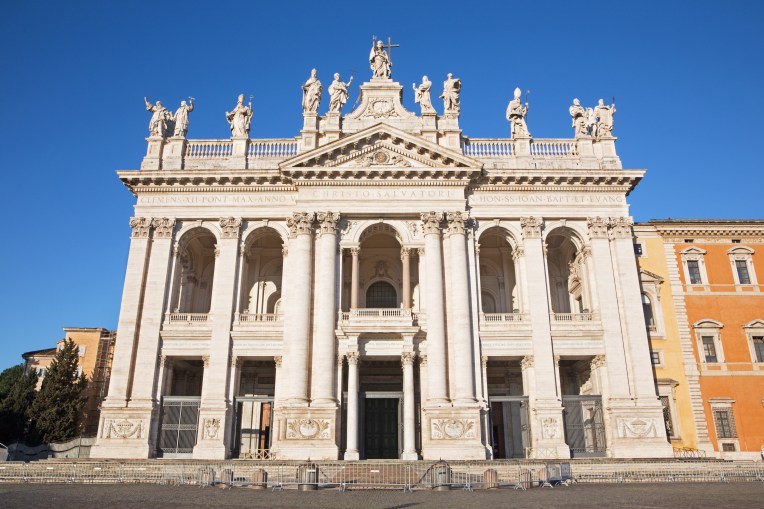
The Dedication of the Lateran Basilica in Rome

The Dedication of the Lateran Basilica in Rome
Ezekiel 47:1-2,8-9,12  +  1 Corinthians 3:9-11,16-17  +  John 2:13-22

… you are the temple of God ….

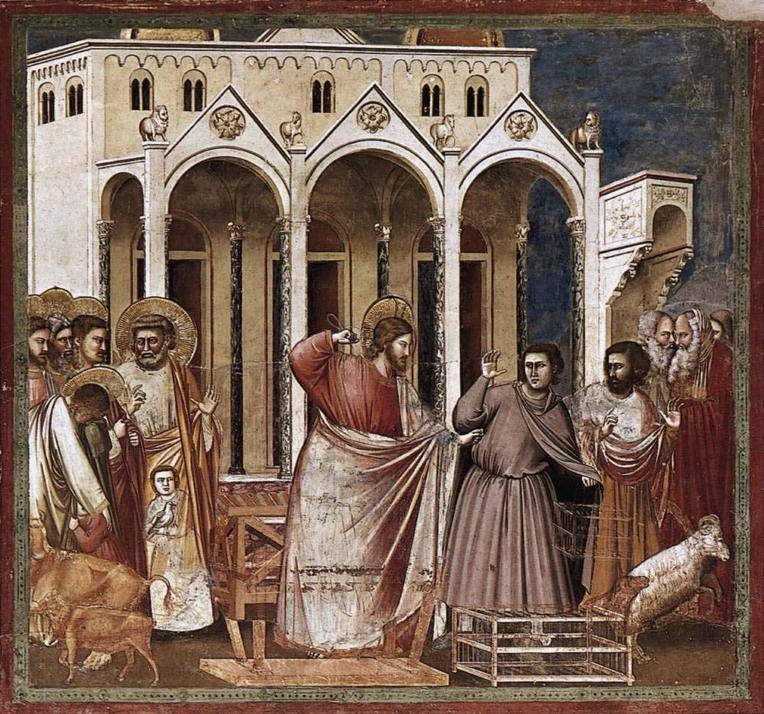
Today’s Gospel passage shows us God’s passion for His temple, and His passion for the sacrifice offered there.  In the confessional, priests often hear people confess anger.  A priest might find it necessary to ask questions when someone confesses “getting angry”.  In light of Jesus’ action in this passage, it’s important to remember not only that merely “getting angry” is not necessarily a sin.  Also, even acting in anger is not necessarily a sin.

Acting in anger, or fostering anger in oneself or others, certainly can be a sin.  But Jesus acts in anger in today’s Gospel passage, and with good reason.  When reflecting on a state of anger, and actions that flow from it, it’s important to ask what the object of one’s anger is.  This object can make all the difference in the morality of such an act.

While experiencing the passion of anger, Jesus purifies the Temple.  In the passion of love, He purifies the temple of the human body of sin on Calvary, by offering up His own body in sacrifice.  St. John the Evangelist makes this point clearly.  When Jesus challenges His opponents, saying, “Destroy this temple and in three days I will raise it up”, the evangelist explains that Jesus “was speaking about the temple of His Body.”  The Church’s belief in the great goodness of the human body is based in large measure on this Gospel truth.  The Church’s challenging ethic of purity of body stems not from a belief that the human body is bad, but that the human body’s purity ought to concern us as much as the purity of the Temple concerned Jesus.  Both temples ultimately belong to God, for His purposes and for His glory.  The temple of the human body is meant for the offering of sacrifices, small and large.

St. John Lateran.jpg

Click HERE to take a virtual tour of the Papal Basilica of St. John Lateran in Rome

The 33rd Sunday in Ordinary Time [C]

The 33rd Sunday in Ordinary Time [C]
Malachi 3:19-20  +  2 Thessalonians 3:7-12  +  Luke 21:5-19
Catechism Link: CCC 162
November 13, 2022

“By your perseverance you will secure your lives.”

Jesus’ last sentence in today’s Gospel Reading presents a two-edged sword.  “By your perseverance you will secure your lives.”  While Jesus says that you will secure your lives, this will only occur by your perseverance.  What that perseverance demands is the sharper side of the sword.

We can define the word “perseverance” as hanging on “through” what is “severe”.  Not many of us have ever literally faced something as severe as a cliff-hanger in the jungles of the Amazon.  Yet more than a few of us have faced death.

Maybe you were involved in a serious vehicle accident where you came within an inch of losing your life.  You might have faced a serious illness that could have been terminal, but for some mysterious reason took a turn for the better.  Regardless, every experience of suffering is an occasion for a moral choice between two opposing perspectives.  You must choose between looking at suffering as an end, or looking at it as a means.

The venerable Monsignor Ivan Eck has a saying that he’s well known for.  “In the face of suffering, you can choose to be bitter, or you can choose to be better.”  You get to choose.  The difference between the two choices is that, on the one hand, you can choose to be bitter through your own power alone.  On the other hand, you can only be better through God’s strength.

In this Sunday’s Gospel Reading, Jesus describes many types of suffering that His disciples might experience.  However, He’s not outlining these types of suffering to frighten us, but to alert us both to our need for perseverance and to what perseverance demands from us.

There’s a distinction that we need to understand in order to appreciate Christian perseverance.  God’s strength not only makes it possible for us to hang on in spite of what life throws at us.  In fact, we hang on to God Himself.

This Sunday’s First Reading can help us put into a broader perspective what it means to hang on to God.  The First Reading is taken from the Book of Malachi, which is the last book of the Old Testament.

Throughout the book named after him, Malachi prophesies—in the Name of the Lord—about what he calls “the day” or sometimes “that day”.  Without knowing Jesus, it’s easy to feel fear when Malachi prophesies:  “Lo, the day is coming, blazing like an oven, when all the proud and all evildoers will be stubble, and the day that is coming will set them on fire… says the Lord of hosts.”

However, in the last verse of today’s First Reading, we hear a message of hope.  Malachi prophesies in the Name of the Lord:  “But for you who fear my name, there will arise the sun of justice with its healing rays.”  These are words that can inspire perseverance.  Although these words speak of fear, this is a particular type of fear.  This is not servile fear, as you would naturally fear a wolf that’s bearing down upon you.  Malachi prophesies about the type of fear that brings healing and strength.

Fear of the Lord’s Name is another way of speaking about religious awe of God.  A more pedestrian way at getting at this same truth is the modern quip:  “There are only two things I know for sure:  #1, there is a God; and #2, I’m not Him.”  Of course, it’s easy to say such a thing, but harder to live from such a conviction.

Nonetheless, what the Jews knew only dimly, as in a mirror, Jesus revealed plainly in His very Person when He walked this earth.  The Most Holy Name of Jesus literally means “God saves.”

So consider this question:  how often do you call on the Name of Jesus as you work to persevere through difficulties?  You might be tempted to use the Holy Name of Jesus in vain.  But Jesus instead wants us when we’re suffering to use His Name not to express frustration, but to call for the strength that only He can give.

Calling on the Name of Jesus when striving to persevere in faith may seem quaint to some, or even superstitious.  Regardless, make a resolution that three times during the coming week you’ll call on the Name of Jesus out loud when you’re struggling with some situation, striving to persevere in the life of faith.
Tuesday of the Thirty-second Week in Ordinary Time [Years I & II]

Please note:  two reflections are given below, each based on the First Reading or Responsorial Psalm of the day.  The Year I readings apply to years ending in an odd number (for example, 2023), while the Year II readings apply to years ending in an even number, such as 2024.  The Gospel Reading is the same in both years.


+     +     +

Tuesday of the Thirty-second Week in Ordinary Time [Year I]
Wisdom 2:23—3:9  +  Luke 17:7-10

   God formed man to be imperishable; the image of His own nature He made him.   

Today’s First Reading from the Book of Wisdom explicitly proclaims a belief central to Judaeo-Christian thought.  The first sentence of this passage instructs us that “God formed man to be imperishable; the image of His own nature He made him.”

Today’s First Reading is eleven verses long.  The last nine make up a passage often proclaimed at funerals, meditating as it does on human suffering.  But the first two verses offer a frame in which to situate those last nine.

The theme of suffering is a continual theme throughout the seven books of the Old Testament’s “Wisdom Literature”.  Suffering is, for many, what makes or breaks them spiritually.  Many turn away from God because of their experiences of suffering.  Others profoundly deepen their living in God through their experiences of human suffering.  None of the Bible’s “Wisdom Literature” gives an “answer” to human suffering.  Wisdom is not found in answers.  Wisdom is found in resting in the Image of God.

+     +     +

Tuesday of the Thirty-second Week in Ordinary Time [Year II]
Titus 2:1-8,11-14  +  Luke 17:7-10

The just shall possess the land / and dwell in it forever.

During the last weeks of the Church year—which more or less correspond with the month of November—the Church asks us to turn our attention to what she calls the “Last Things”.  Each Christian needs to focus his or her attention upon Heaven and Hell, death and judgment.

A lot of people like to think, and lead their lives, believing that only one of these four things even exists.  Of course there is a Heaven.  Heaven is the place where everyone goes when they die:  this is what some people believe.  This is what some people teach.  But this is not what Jesus taught.

Jesus taught that people, if they do not follow Him, will go—not to Heaven, but to that other place, called Hell.  King David, in composing today’s psalm, puts it this way:  “The salvation of the just comes from the Lord.”  Salvation—being saved, which is another way of saying, “getting to Heaven”—does not come from ourselves, but only from the Lord.  If we try to get to Heaven by ourselves, or if we try to make our own Heaven, we will fail, and end up forever without God.  We are responsible for doing many things, and at the end of our lives, we should be able to give an account of what we have done.  Still, none of those things are what get us into Heaven.

Monday of the Thirty-second Week in Ordinary Time [Years I & II]

Please note:  two reflections are given below, each based on the First Reading or Responsorial Psalm of the day.  The Year I readings apply to years ending in an odd number (for example, 2023), while the Year II readings apply to years ending in an even number, such as 2024.  The Gospel Reading is the same in both years.


+     +     +

Monday of the Thirty-second Week in Ordinary Time [Year I]
Wisdom 1:1-7  +  Luke 17:1-6

Love justice, you who judge the earth; think of the Lord in goodness, and seek him in integrity of heart ….

At weekday Mass during this second-to-last week in Ordinary Time, the Church’s First Reading is taken from the Old Testament Book of Wisdom.  Not surprisingly, the Book of Wisdom is part of the Old Testament group of books called the “Wisdom Literature” (the other three groups of Old Testament books being the Pentateuch, the Historical Literature, and the Prophetical Literature).  There are seven books that make up the “Wisdom Literature”.

This book is fitting for us to listen to as we draw near to the end of the Church year.  Towards the end of the Church year, the Sacred Liturgy draws our attention to the Last Things:  Heaven, hell, death and judgment.  You and I need wisdom to think rightly about these four last things.

Today’s First Reading consists of the first seven verses of Wisdom.  It might surprise some just how “earth-bound” this passage is.  It is not “pie in the sky”, meditating abstractly on ideas and theories about God’s wisdom.  The passage is very concrete.

The first two words of the book are “Love justice”.  A good retreat master could develop an entire week-long retreat exploring just these two words, so profound are they.  Love and justice are both virtues:  the former the greatest of the theological virtues, and the latter one of the moral (or “cardinal”) virtues.  To love justice is to devote one’s self to a right ordering of one’s thoughts, words and actions:  giving to God what is His due, and recognizing God in our neighbors, whom He created for us to love.  In attending to the simple matters of daily life with divine love, we cannot fail to grow in wisdom.

+     +     +

Monday of the Thirty-second Week in Ordinary Time [Year II]
Titus 1:1-9  +  Luke 17:1-6

Such is the race that seeks for Him, that seeks the Face of the God of Jacob.

The refrain for today’s Responsorial Psalm is a good one to memorize and use throughout the day for repeated recitation and reflection.  “Lord, this is the people that longs to see your Face.”  This refrain has many words that one might focus upon in meditation.  But consider just the final phrase:  “… that longs to see your Face.”  There are two verbs here, and one noun.

What type of seeing is the Psalmist referring to, and exactly what Face is he referring to?  He’s referring to the Face of the Lord, clearly, but how can one see His Face?  Since God is purely spiritual, how can He have a Face?  Throughout the Old Testament, especially in regard to Moses, we hear that man cannot bear a “face-to-face” encounter with God.  In some sense, the term “Face” must be metaphorical when speaking of God.  At least, this is so in regard to the Old Testament.

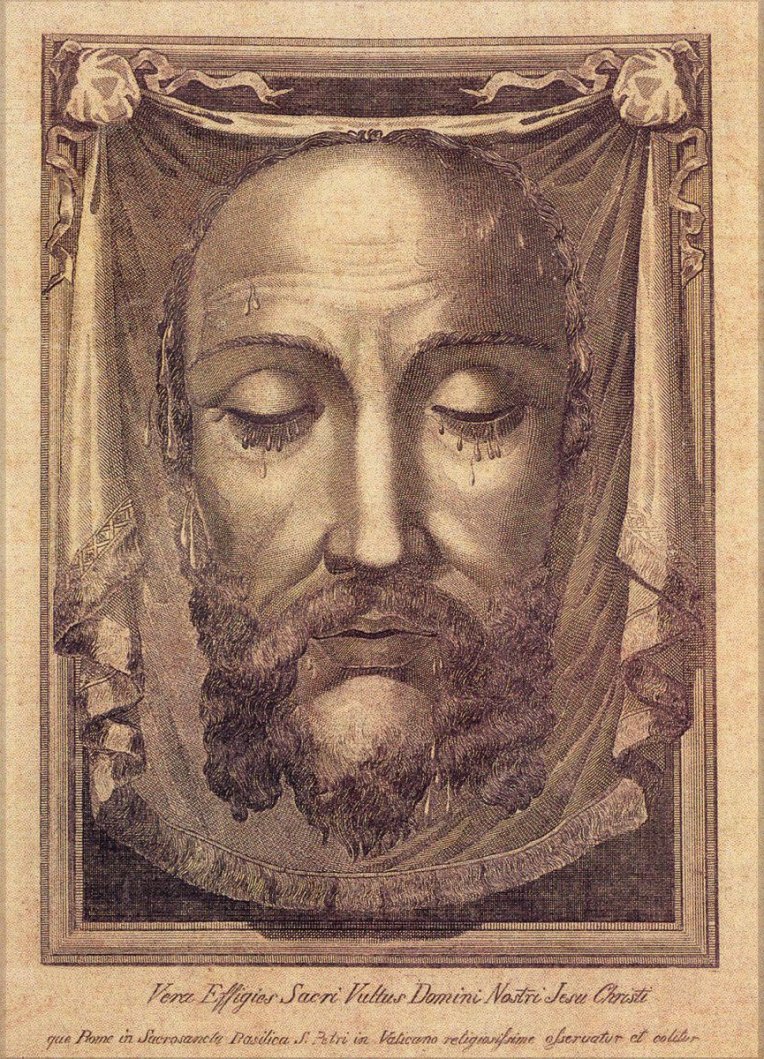
With the Incarnation, the holy Face of Jesus becomes our means of gazing upon the Face of God.  St. Thérèse the Little Flower helps us to do so.  Not only can man bear this gaze, but this gaze invites us into a relationship with Him that offers salvation.  We experience this salvation even upon earth, in the midst of living as members of the Church Militant.  This salvation comes to fulfillment in Heaven, with what theologians call the “beatific vision”.  Seeing the Lord on earth comes through faith in Jesus as the Son of God.  Living in relationship with Him unto death leads to an everlasting vision of the Lord’s glory, which is to say, His Face.

Saturday of the Thirty-first Week in Ordinary Time

Saturday of the Thirty-first Week in Ordinary Time
Luke 16:9-15

The Pharisees, who loved money, heard all these things and sneered at Him.

“You cannot serve God and mammon.”  This sentence of Jesus is sometimes falsely and simplistically interpreted to mean that you cannot have both God and money in your life.  In other words, this false interpretation says that there’s a sort of competition in your life between God and money which is a zero-sum game.  Or to use a picture metaphor:  this false interpretation says that there’s a see-saw in your life:  God and money are sitting at opposite ends of the see-saw.  If one goes up, the other must go down.  The holier you are, the less money you will have, and the more money you have, the less holy you must be.  This interpretation of Jesus’ words is false.

Our spiritual well-being and our financial well-being are not in competition with each other.  Rather, when Jesus plainly tells you that “You cannot serve both God and mammon”, the key is the word “serve”“You cannot serve both God and mammon.”  You can serve God, or you can serve mammon.  But you cannot serve both.

The beautiful thing about serving God is that through this form of love, we become more like Him.  After all, “God is love”, as St. John taught the first Christians.  So in the very act of loving God, we become like Him:  that is to say, we enter into His very way of life, His very way of being.  This is as God wants, and in fact this is as each of you wants, in the deepest center of your heart, because God planted that desire there when He created your heart:  the desire to serve Him through sacrificial love, and so become more like Him.