Friday of the Twenty-eighth Week in Ordinary Time

Friday of the Twenty-eighth Week in Ordinary Time
Luke 12:1-7

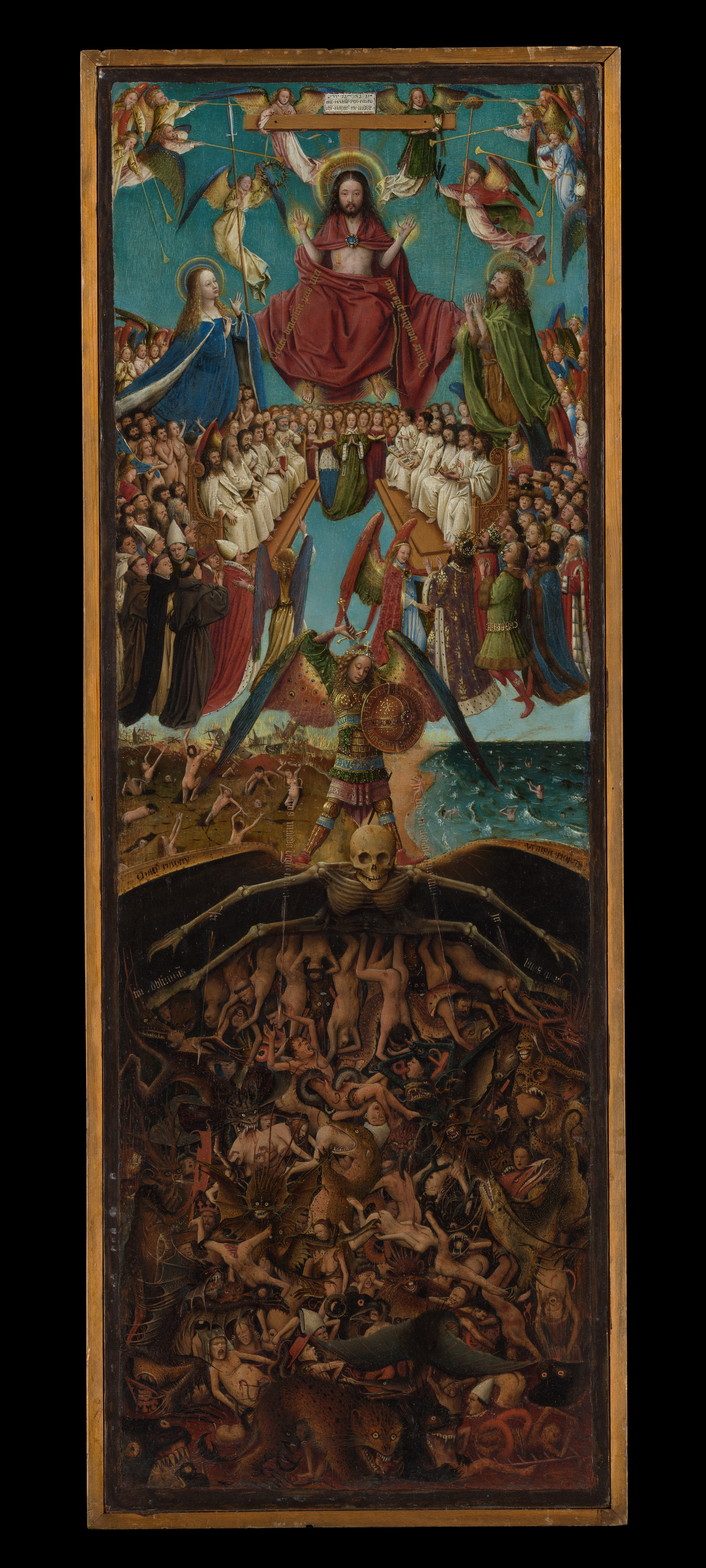
“Be afraid of the one who after killing has the power to cast into Gehenna ….”

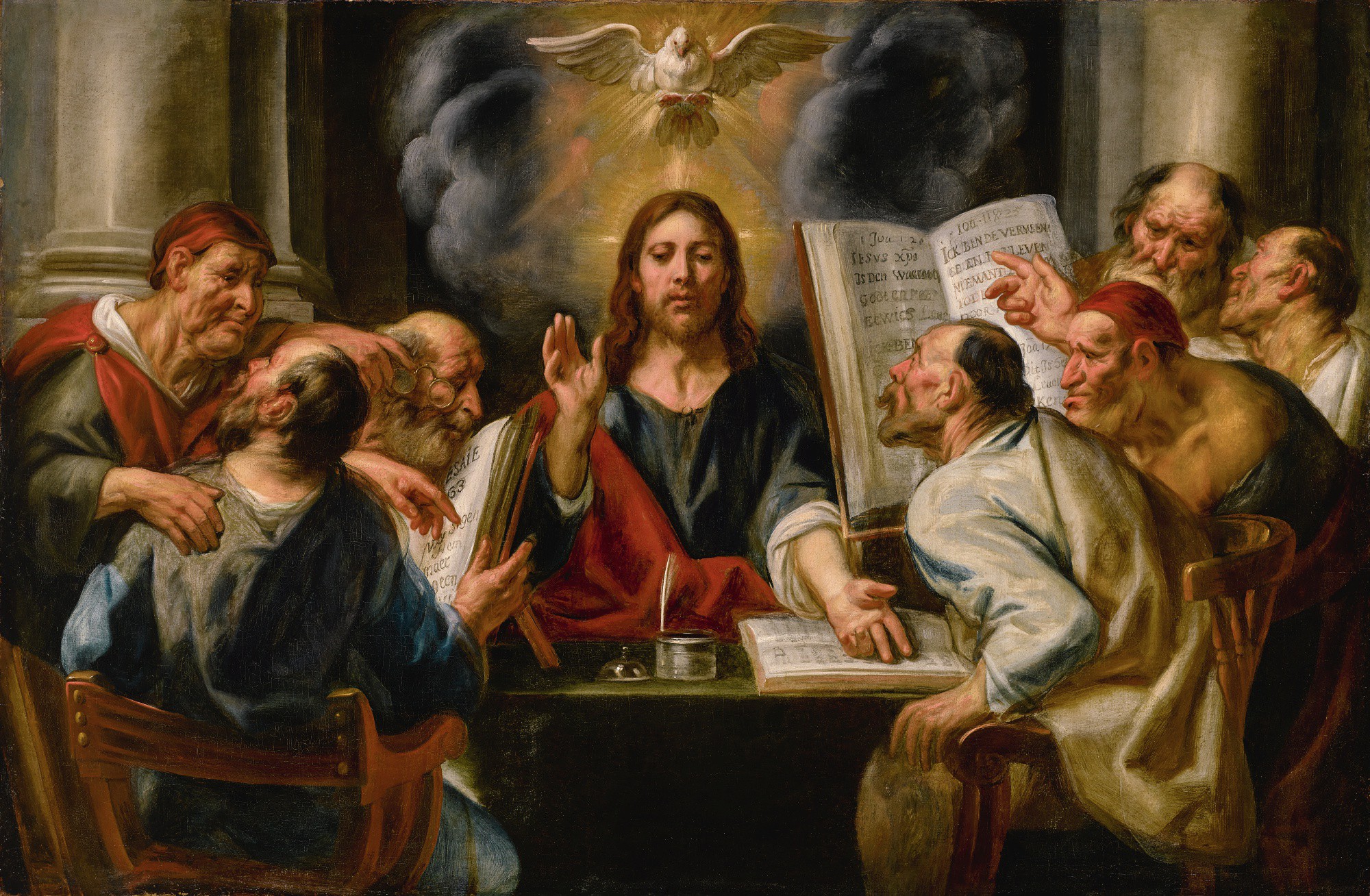
In the secular culture that surrounds modern Western man, the idea that Jesus makes moral demands, or sets moral boundaries, is anathema.  How, then, can today’s Gospel passage be understood?  Jesus declares:  “I shall show you whom to fear.  Be afraid of the one who after killing has the power to cast into Gehenna; yes, I tell you, be afraid of that one.”

Still, just three sentences later Jesus demands“Do not be afraid.”  There seems to be a contradiction, inasmuch as Jesus tells us to be afraid, and then not to be afraid.

In fact, Jesus here insists that we have a fully-rounded, rather than two-dimensional, view of God.  We may consider Jesus to be speaking of God the Father, or of Himself, when He describes whom one should fear.  As God, the Father, Son and Holy Spirit condemn the one who persists in mortal sin.  Fear of God, the Just Judge, however, is a fear that helps us shape our lives.

This is a “holy fear”, upon which we need especially to meditate on this day of the week when Jesus His Passion and Death.  This holy fear gives direction to our days on this earth and to each day’s choices.  But guided by this holy fear, we can trust in the God who guides us away from sin, and to Himself.

Thursday of the Twenty-eighth Week in Ordinary Time

Thursday of the Twenty-eighth Week in Ordinary Time
Luke 11:47-54

“Yes, I tell you, this generation will be charged with their blood!”

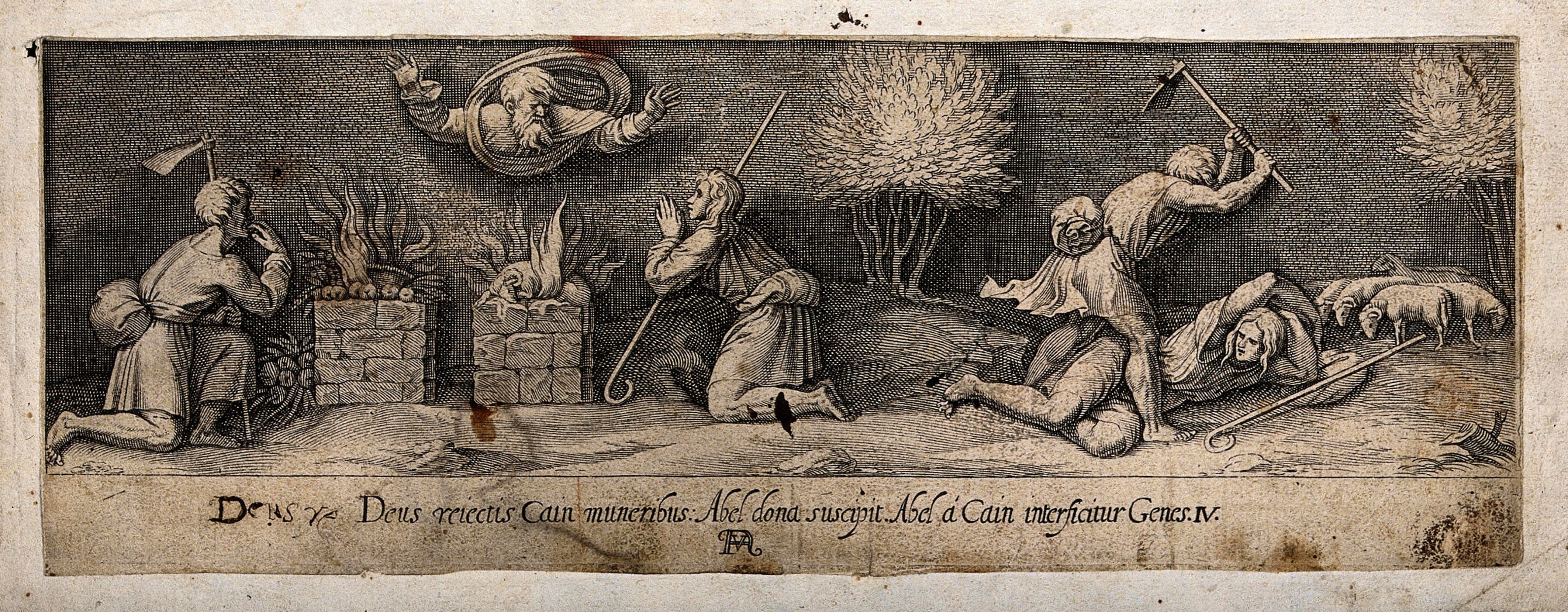
On the occasions when Jesus refers to persons from the Old Testament, it’s usually Moses or Abraham of whom He speaks.  Today’s Gospel passage, though, is the only time that Jesus refers to Abel (along with the parallel passage in Matthew 23:34).

What’s intriguing about Jesus’ reference to Abel is that He speaks about him in relation to the Old Testament prophets.  Jesus speaks about “the blood of all the prophets shed since the foundation of the world”.  Clearly Jesus doesn’t agree with those modern scholars who consider the first generations of mankind in Genesis to be literary creations.  After all, why would Jesus’ own generation, as He declares, be charged with the blood of a fictional character?

Regardless, we need to reflect on why Jesus included Abel among the prophets.  Certainly, like the prophets, Abel was murdered for professing his belief in God.  But his profession was not made verbally, as prophets usually proclaim their prophecies.  In the fourth chapter of Genesis, we hear that Abel “brought to the Lord an offering… of the firstlings of his flock and of their fat portions.  And the Lord had regard for Abel and his offering, but for Cain and his offering He had no regard” [Gn 4:3,4-5].

It might seem cavalier to say that Cain and Abel were engaged in the first of mankind’s “liturgy wars”.  Nonetheless, Jesus pointing our attention to the prophetic nature of right worship reminds us of the need for “orthodoxy” within the Mystical Body of Christ.

Wednesday of the Twenty-eighth Week in Ordinary Time

Wednesday of the Twenty-eighth Week in Ordinary Time
Luke 11:42-46

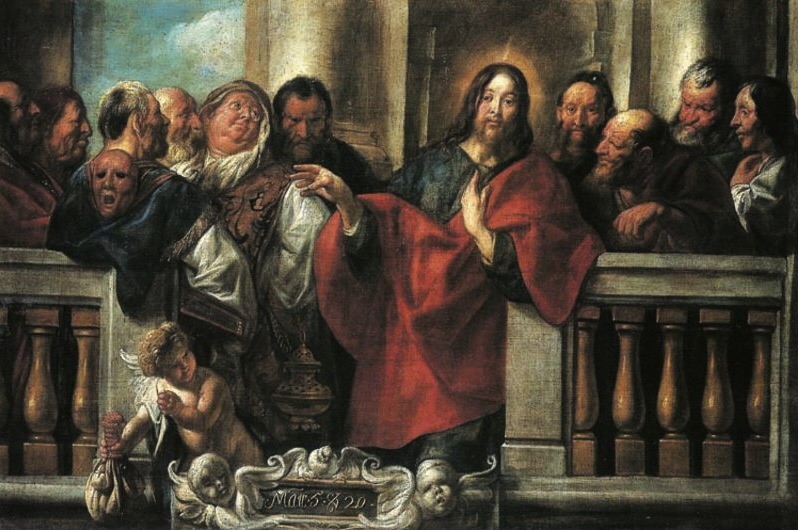
“You pay tithes … but you pay no attention to judgment and to love for God.”

If the scholar of the Law who interrupted Jesus’ lambasting of the Pharisees thought he would earn an apology from Jesus, he quickly realized otherwise.  Contrary to modern notions of Jesus as a sort of “spiritual teddy bear”, today’s Gospel passage splashes cold water on our souls, forcing us to ask whether Jesus might speak of us in a similar manner.

However, in addition to the sober fact of Jesus’ forthright willingness to condemn those deserving condemnation, we could consider in turn each of the “woes” that Jesus articulates today.  Here consider just the first.

“You pay tithes… but you pay no attention to judgment and to love for God.”  All three of these objects of religion—tithes, judgment, and love—are due to God from human persons.  They “belong” to God, we might say, each in its own manner.  Why might it be that the Pharisees are willing to give the first, but not the latter two?

There certainly is a hierarchy among the three.  “Love for God” is due God because “God is love”.  Judgment is due God in that only He—all-loving and all-knowing—can judge truly.  Tithing of materials goods such as “of mint and of rue and of every garden herb” is due God because He is the Lord of creation.  Nonetheless, the ascent to God in the practice of religion involves the ascent of a staircase with many steps.  The tithing of material goods is one of the lower steps, and the Pharisees are content to rest there.  This step is meant to lead us further upwards: closer to God, towards a higher share in God’s divine nature.

The 29th Sunday in Ordinary Time [C]

The 29th Sunday in Ordinary Time [C]
Exodus 17:8-13  +  2 Timothy 3:14—14:2  +  Luke 18:1-8
Catechism Link: CCC 101
October 16, 2022

“… proclaim the word; be persistent whether it is convenient or inconvenient ….”

In Sunday’s Second Reading, Saint Paul describes how God’s Word speaks to us through the words of Scripture.  But the “Word of God” is found not only in the Bible.  We listen to the Word of God in the Bible in order to receive an even greater gift:  the Word of God made Flesh.  Opening ourselves to this greater gift is one of the chief dynamics of the Christian life.

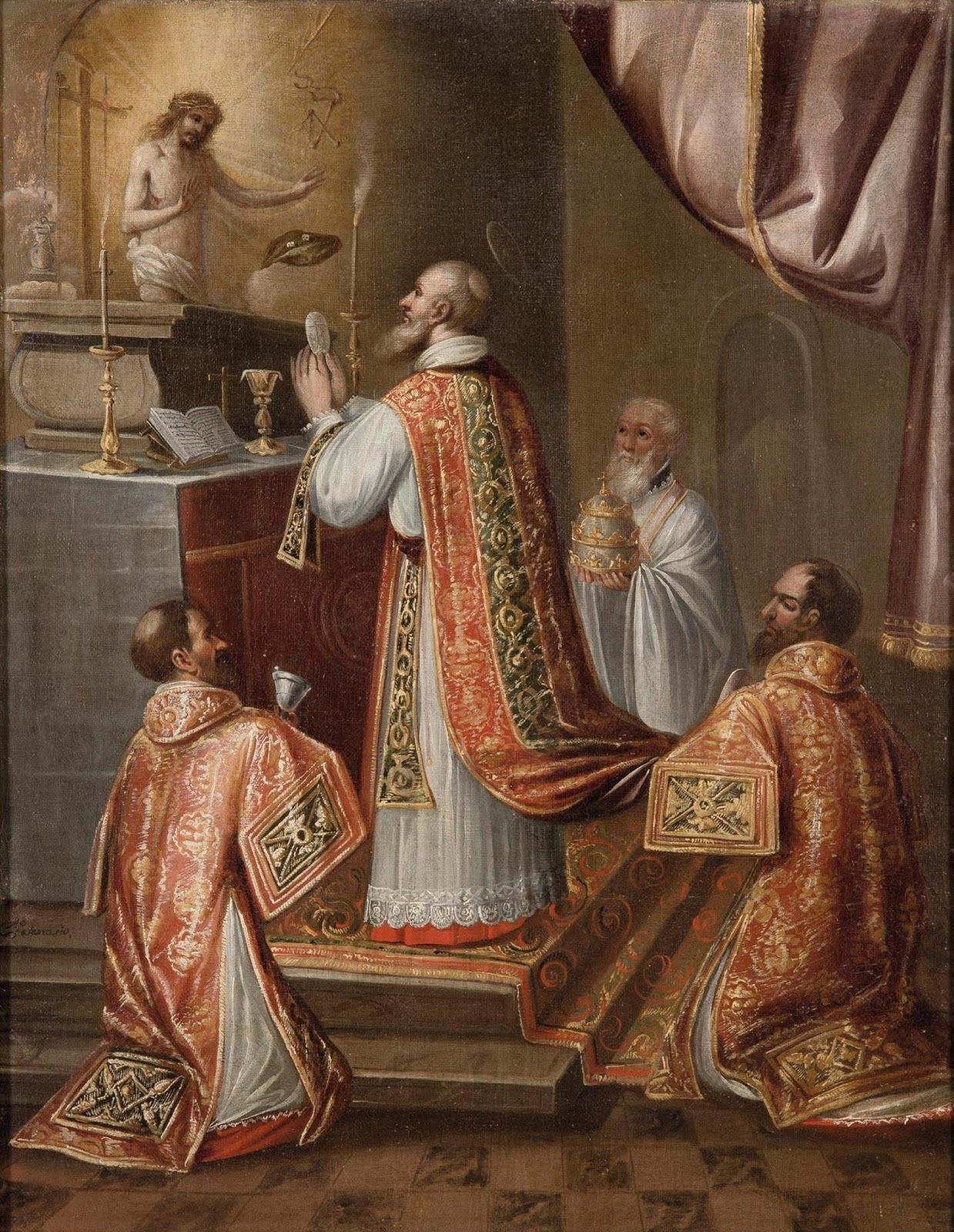
The very structure of the Mass invites us into this spiritual dynamic.  It’s not a coincidence that Holy Mass follows the pattern that it does.  The two main parts of the Mass—in the Ordinary Form called the “Liturgy of the Word” and the “Liturgy of the Eucharist”—are not interchangeable.  That is to say, the Mass would not make sense if the Liturgy of the Eucharist were celebrated first, and then the Liturgy of the Word.  After all, the Word is proclaimed and preached as a preparation for the Word made Flesh.

We see this if we superimpose the outline of the Mass upon the outline of salvation history.  Consider what we might call the “first half” of salvation history:  the time of the Old Testament.  During this long period of time, “God spoke” his Word “in partial and various ways to our ancestors through the prophets” [Hebrews 1:1].  But in the “second half” of salvation history—the time of Christ and His Church—“God spoke to us”, and speaks to us today, “through [His] Son” [Hebrews 1:2], the Word made flesh, who proclaimed to His followers:  “Take this, all of you, and eat it.  This is my Body, which will be given up for you.”

Catholics are at times accused of being ignorant of the Scriptures.  Unfortunately, there are times when this criticism is justified.  To that extent, we must dispel our ignorance, for St. Jerome’s words are just as true today as when he lived:  “Ignorance of Scripture is ignorance of Christ.”

But if our devotion to Scripture does not lead us to a deeper devotion to the Eucharist, we miss the entire point of God becoming human:  the point of the divine Word becoming flesh and blood.  After all, what did God the Son say on this earth that God the Father could not have said from the heavens?  Couldn’t God the Father have spoken the Beatitudes from Heaven, rather than Jesus speaking them during the Sermon on the Mount?  Couldn’t God the Father have taught His People from Heaven how to pray to Him, rather than Jesus teaching us the “Our Father”?  What words had to be spoken by one who is both fully divine and fully human?  “Take this, all of you, and eat it.  This is my Body, which will be given up for you.”

Jesus calls us to the Supper of the Lamb—the sacrifice of the divine Word made Flesh—for two reasons.  The second and more ultimate is to give us while on earth a foretaste of what we would experience in the Banquet of Heaven if we were to persevere in the Faith until death.

The first and more immediate reason is to strengthen us through the Eucharist for the difficult work of our vocations within this world.  If our devotion to the Eucharist—whether in Adoration, or weekday Mass, or even only our Sunday obligation—does not deepen our Christian service, we’re missing an important point of the Word becoming flesh.

In Sunday’s Second Reading, St. Paul writes about the nature of the Word of God as found in the Bible.  He makes three specific points.  First:  “All Scripture is inspired by God”.  Second, Scripture “is useful for” four purposes:  “for teaching, for refutation, for correction, and for training in righteousness”.

But then St. Paul explains that those four purposes serve a larger, overarching purpose.  All Scripture is inspired and useful “so that one who belongs to God may be competent, equipped for every good work.”

As faith is meant by God to express itself in a Christian’s good works, so Scripture also orients the Christian to good works.  As the Word becomes Flesh in the Eucharist, the Eucharist strengthens the members of the Body of Christ for service in this world.  That service aims to call even more persons into the life of the Church, and through the Church’s life with Christ, into Heaven.

Tuesday of the Twenty-eighth Week in Ordinary Time

Tuesday of the Twenty-eighth Week in Ordinary Time
Luke 11:37-41

“Did not the maker of the outside also make the inside?”

Jesus’ words in today’s Gospel passage highlight the distinction between “the outside” and “the inside”.  The Pharisees are focused upon the outside to the exclusion of the inside, while Jesus wants His disciples to focus upon both, but in a certain order:  the inside first, and then from the inside the outside will flow fittingly.

In Christian terms, we can draw an analogy between Jesus’ words here and God calling each Christian to carry out good works.  It’s often said that the Catholic view of Christianity is not an “either/or” approach, but an approach that is “both/and”.  This is true when it comes to good works.  In the Catholic view of the spiritual and moral life, there is no division between faith and good works.  Both are necessary.  As St. James says in his New Testament epistle, “So faith by itself, if it has no works, is dead.  … Show me your faith apart from your works, and I by my works will show you my faith” [James 2:17-18].

Speaking by analogy, authentic faith in God is the soul of authentic good works.  They ought no more be separated from each other than the soul from the body.  In today’s Gospel passage, Jesus calls the Pharisees to a more integrated view of good works.  Likewise, Christ calls each of His disciples to authentic faith, and authentic good works.

Monday of the Twenty-eighth Week in Ordinary Time

Monday of the Twenty-eighth Week in Ordinary Time
Luke 11:29-32

“… no sign will be given it, except the sign of Jonah.”

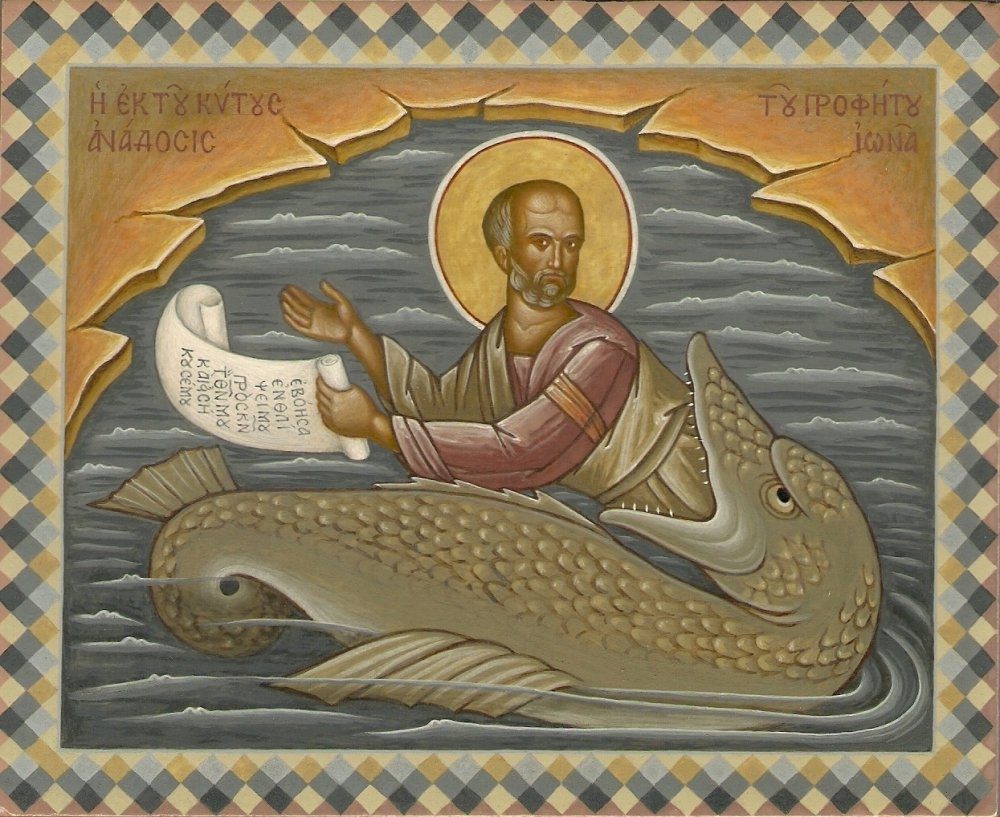
Given the dramatic narrative of Jonah in the Old Testament, one might be tempted, when hearing Jesus in today’s Gospel Reading refer to the “sign of Jonah”, to think that the sign of which Jesus speaks is the miracle of Jonah surviving his ordeal within the belly of the sea beast.  While Jonah’s survival after three days in the belly of the beast foreshadows Jesus’ Resurrection, there is another sense to the phrase “sign of Jonah”.  This other sense refers to something much simpler, yet just as dramatic as Jonah’s survival inside the beast.

God communicated the “sign of Jonah” to the Ninevites, and they read the sign aright.  The “sign of Jonah” was the prophet’s preaching about the need for repentance.  Because of his preaching, the Ninevites repented, and the Ninevites, as Jesus’ audience would have known, were a pagan people.  The fact of the Ninevites’ pagan background and their repentance stand in contrast to the current “generation” to whom Jesus refers, who were members of God’s elect People, yet all too often did not heed God’s Word.

What’s more, we who are Catholics receive God’s Word made Flesh in the Holy Eucharist.  We are often more obstinate and sinful than those in the Old Testament or in the Gospel accounts, in spite of the sacramental sign that is an infinitely greater gift than the “sign of Jonah”.  We no less than the Ninevites need to repent, to make room in our minds and hearts for the Word of God made Flesh to dwell not just among us, but within each of us.

Saturday of the Twenty-seventh Week in Ordinary Time

Saturday of the Twenty-seventh Week in Ordinary Time
Luke 11:27-28

“Rather, blessed are those who hear the word of God and observe it.”

In the Catholic Church, Saturday is a “little day” devoted to Our Blessed Mother Mary.  It is little because liturgically, the day only runs until mid-afternoon (some would specify this as 4:00 p.m.).  From that point on, the day is celebrated liturgically as the vigil of Sunday.

This “little day” is traditionally devoted to Our Lady because as Jesus came to us from Mary, so Sunday follows on this brief span of time.  Even in a parish, Saturday mornings and early afternoons are quieter than the rest of the week (unless, of course, a funeral or wedding is celebrated).  Even on a quiet Saturday, though, there’s work to be done behind the scenes in preparation for the Lord’s Day, as our Lady worked quietly to prepare for her Son, and to minister to Him during His public ministry.

Today’s Gospel passage is fittingly short, then:  only two verses long.  A woman from the crowd honors Mary without naming her.  Jesus then seems to cast aside the honor accorded His mother.  In fact, however, He’s describing Mary, and so is pointing out to us our need to be like her:  “blessed are those who hear the word of God and observe it.”

We’re familiar with the Third Commandment:  “Keep holy the Lord’s Day.”  This commandment binds us under pain of mortal sin.  It lies at the heart of what it means to be a Christian.  Nonetheless, each of us needs to “keep hallowed Our Lady’s Day”.  This is not a command that binds under pain of sin, and while the Third Commandment lies at the heart of what it means to be a Christian, the counsel to “keep hallowed Our Lady’s Day” lies at the heart of what it means to grow as a Christian.

No one can grow closer to Jesus, and no one can live his or her life in Christ, without honoring Jesus’ Blessed Mother.  While the Third Commandment binds under pain of mortal sin, devotion to Our Lady’s Day binds under pain of lukewarmness in the Christian life.  Make certain in your life to enkindle, nurture, and foster devotion to Our Blessed Mother each and every Saturday morning and afternoon.

Our Lady of the Rosary

Our Lady of the Rosary
Acts 1:12-14  +  Luke 1:26-38

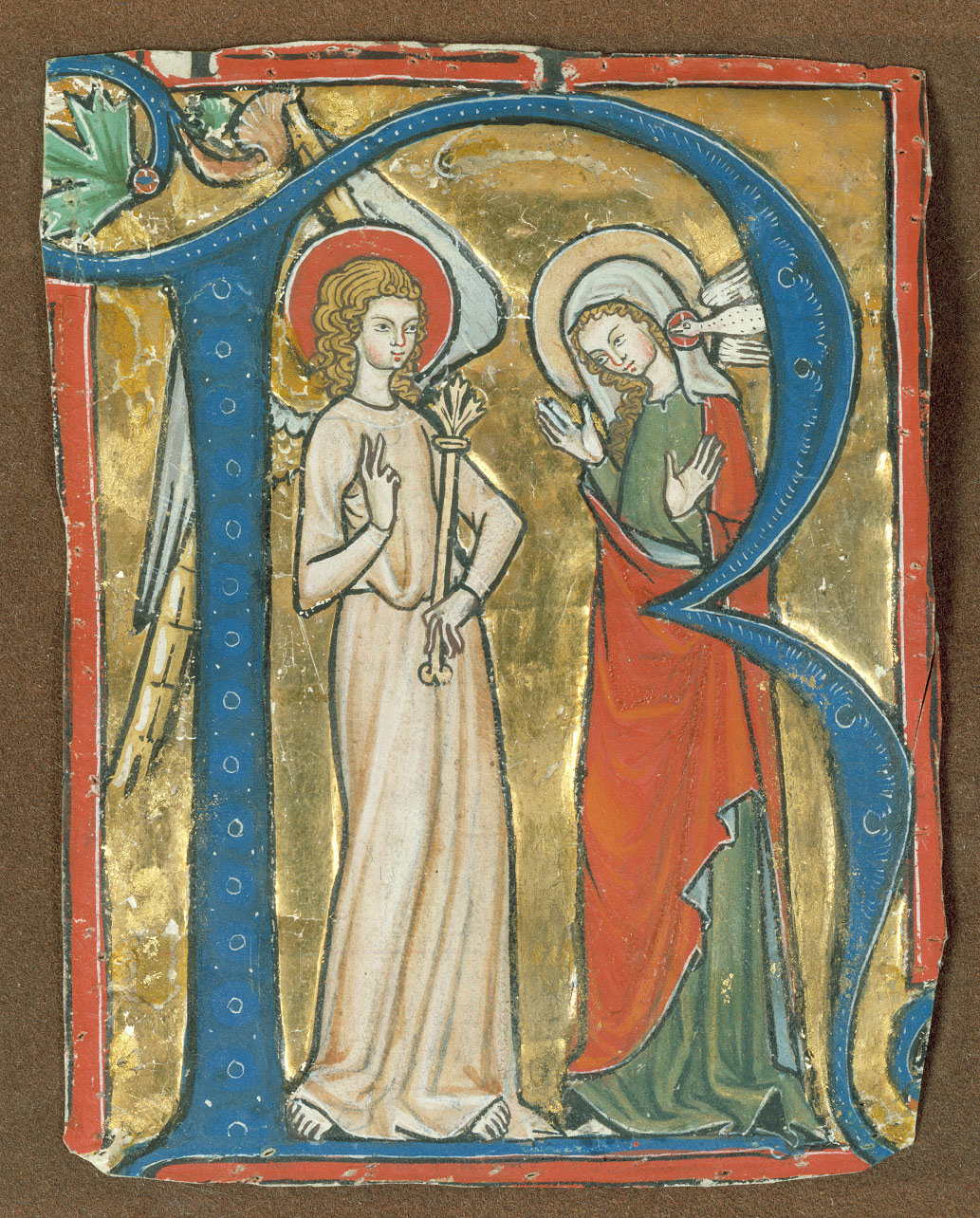
“Hail, full of grace!  The Lord is with you.”

Is there a better manner in which to offer prayer and sacrifices for Holy Mother Church than through the intercession of Our Blessed Mother Mary?  Like the many lay faithful who’ve expressed to me a desire to do something more for the Church in these difficult times, I prayed about a desire to pray something more.  One of my responses following that prayer was to begin praying the Carmelite Rosary.

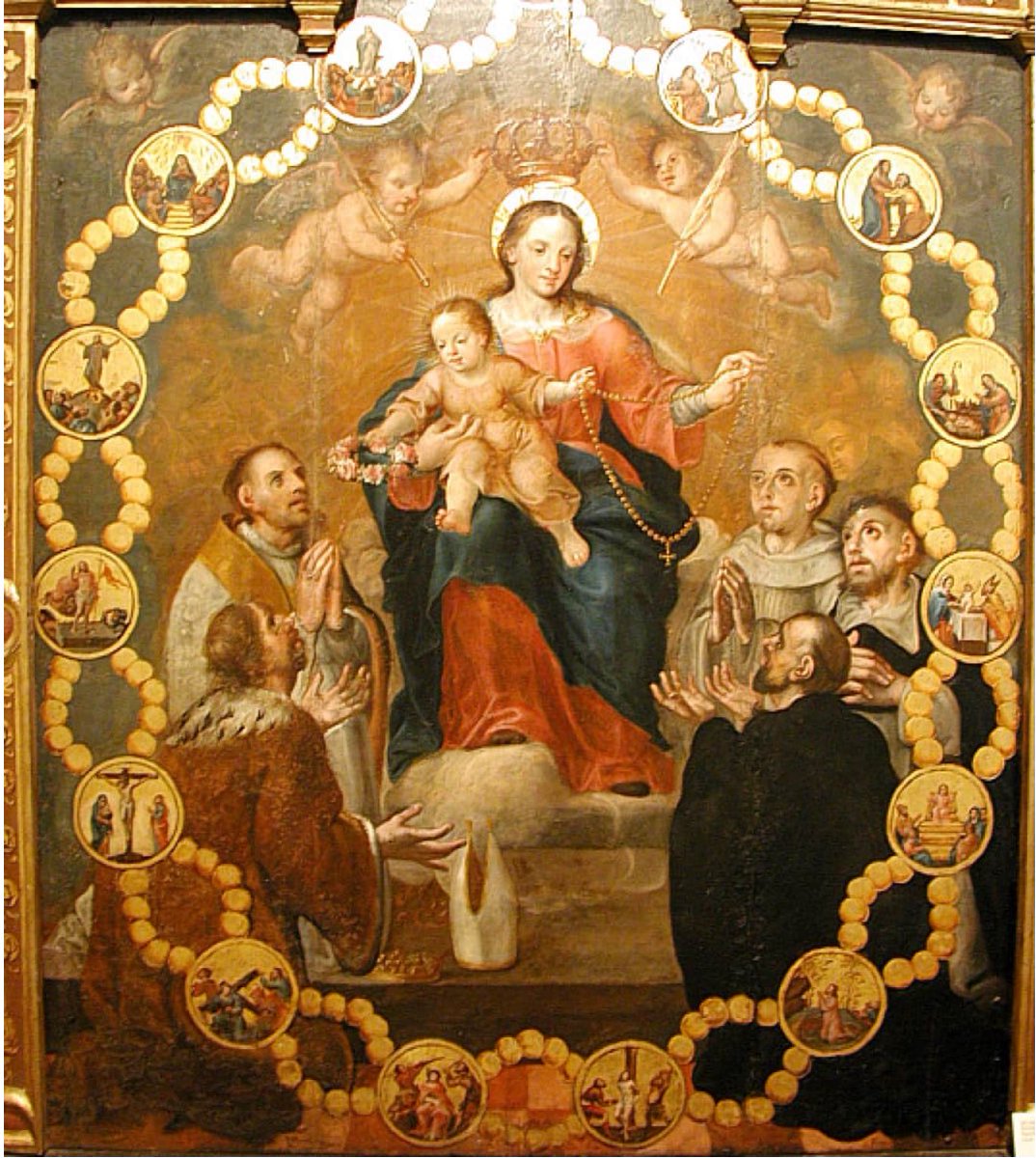
The Carmelite Rosary has six decades, rather than the five decades of the Dominican Rosary.  Another difference is that whenever in the Dominican Rosary the Glory Be is prayed, in the Carmelite Rosary the Apostles’ Creed is prayed.

St. Teresa of Jesus, who with St. John of the Cross reformed the Carmelite Order during the Catholic Reformation, adopted this six-decade rosary from the Sisters of St. Bridget of Sweden.  However, since the Carmelites friars and nuns are more numerous than the Brigittine Sisters, this rosary is more often known as the Carmelite Rosary.  The Carmelite Rosary is a beautiful means by which to grow in Carmelite spirituality.

Because this rosary has six decades following the usual introductory beads, there are a total of seven Our Fathers (six decades plus the introductory Our Father), and sixty-three Hail Marys (six decades plus the three introductory Hail Marys).  These seven Our Fathers honor the sorrows and joys of the Blessed Virgin, while the sixty-three Hail Marys commemorate the number of years that Mary, according to tradition, lived on this earth.

Since there are six rather than five decades to the Carmelite Rosary, each set of mysteries has one additional mystery to be pondered in prayer.  Within the Joyful and Luminous Mysteries, the extra mystery is added at the beginning:  the first Joyful Mystery is The Immaculate Conception, while the first Luminous Mystery is Jesus Being Obedient to Mary and Joseph at Nazareth.  By contrast, within the Sorrowful and Glorious Mysteries, the extra mystery is added at the end.  The sixth Sorrowful Mystery is the scene of the Pietá:  The Deposition of the Lord’s Body into the Arms of His Sorrowful Mother.  The sixth Glorious Mystery is The Patronage of Mary, Our Lady of Mount Carmel.  These mysteries help us not simply to pray more words, but also to pray with more fervor and devotion.

Many might feel overwhelmed in the midst of so much confusion today:  what the bishop calls “the current crisis in the Church”.  Many might feel that there’s nothing they can do to help.  But that’s wrong.  Making sacrifice and praying to Our Blessed Mother means joining Our Lady within the very heart of the Church:  not only seeking solace, but joining one’s self to the love of the Sacred Heart of Jesus and the Immaculate Heart of Mary.

To understand better how our own praying of the daily Rosary can contribute to the Church in her current need, we would profit from reflecting back on the wisdom of St. John Paul II about the Rosary.  At the beginning of the twenty-fifth year of his papacy, the Pope promulgated an apostolic letter on the Rosary, titled Rosarium Virginis Mariae.

In this letter, the Pope teaches that the “Rosary, though clearly Marian in character, is at heart a Christocentric prayer.  … it has all the depth of the Gospel message in its entirety, of which it can be said to be a compendium.  It is an echo of the prayer of Mary, her perennial Magnificat for the work of the redemptive Incarnation which began in her virginal womb.  With the Rosary, the Christian people sits at the school of Mary and is led to contemplate the beauty on the face of Christ and to experience the depths of his love.  Through the Rosary the faithful receive abundant grace, as though from the very hands of the Mother of the Redeemer.”[1]

The saintly Pope offers two reasons for the emphasis that he was putting upon the Rosary at that particular time within his papacy.  These reasons are justly as timely today.  One reason is negative, the other very positive.

St. John Paul first explains that there is an “urgent need to counter a certain crisis of the Rosary”, caused by two objections.  The first objection is posed by those “who think that the centrality of the Liturgy, rightly stressed by the Second Vatican Ecumenical Council, necessarily entails giving lesser importance to the Rosary.  Yet, as Pope Paul VI made clear, not only does [the Rosary] not conflict with the Liturgy, it sustains it, since it serves as an excellent introduction and a faithful echo of the Liturgy, enabling people to participate fully and interiorly in it and to reap its fruits in their daily lives.”[2]

Also, “there are some who fear that the Rosary is somehow unecumenical because of its distinctly Marian character.  Yet the Rosary clearly belongs to the kind of veneration of the Mother of God described by the Council:  a devotion directed to the Christological center of the Christian faith, in such a way that ‘when the Mother is honored, the Son … is duly known, loved and glorified’.  If properly revitalized, the Rosary is an aid and certainly not a hindrance to ecumenism!”[3]

But then St. John Paul the Great moves on to present the very positive reason for his decision to focus this apostolic letter and other endeavors upon the Rosary.  Given that the reason that he explains is a timeless lesson for the Church’s members, let me leave off today with this thought from our saintly pope:  “the most important reason for strongly encouraging the practice of the Rosary is that it represents a most effective means of fostering among the faithful that commitment to the contemplation of the Christian mystery which I have proposed in the Apostolic Letter Novo Millennio Ineunte as a genuine ‘training in holiness’:  ‘What is needed is a Christian life distinguished above all in the art of prayer’.  Inasmuch as contemporary culture, even amid so many indications to the contrary, has witnessed the flowering of a new call for spirituality, due also to the influence of other religions, it is more urgent than ever that our Christian communities should become ‘genuine schools of prayer’.

[1] St. John Paul II, Rosarium Virginis Mariae (Oct. 16, 2002), 1.

[2] Ibid., 4.

[3] Ibid., quoting Lumen Gentium 66.

For a video in which the Carmelite Rosary is further explained, please click HERE.
 

Thursday of the Twenty-seventh Week in Ordinary Time [II]

Thursday of the 27th Week in Ordinary Time [II]
Galatians 3:1-5  +  Luke 11:5-13

O stupid Galatians!

This week and early next, we are hearing from the letter that Saint Paul wrote to the people in the region of Galatia.  It’s not hard to tell that Saint Paul was unhappy when he wrote his Letter to the Galatians.  Saint Paul wrote thirteen of the letters in the New Testament, and only in this letter, to the Galatians, does Saint Paul call people “stupid”.  It must be something very serious that the Galatians have done to be called this by a saintly apostle.

The mistake that Saint Paul is trying to correct is about the Galatians thinking that they are going to get to heaven only because of what they do.  The Galatians think that they are “making” the Holy Spirit present in their lives because of their good choices.

Instead, Saint Paul teaches, echoing the Gospel, that everything begins with God.  Our good works are accomplished only because of the time and talent that God gave us.  The Holy Spirit comes into our lives through the divine virtue of faith.  Even within the Trinity, the Holy Spirit comes from the love of God the Father and God the Son for each other.

Everything begins with God.  Jesus in today’s Gospel passage is teaching us about one specific type of prayer.  There are four basic types of prayer (there are others as well, but these are the four main types).  One way to remember them is to think of the word “pact”, as in an agreement.

The word “pact” has four letters.  Each letter stands for a different type of prayer.  The first of these—“p”—stands for “petition”.  We should ask God for whatever we believe we most need in life.  Sometimes God does not answer our prayers the way we want:  but this helps us grow spiritually, too, because when one of our prayers doesn’t get answered the way we wanted, it’s a chance for us to learn once again that God gives us not what we want, but what we need.