The Assumption of the Blessed Virgin Mary

The Assumption of the Blessed Virgin Mary
VIGIL:  1 Chr 15:3-4,15-16;16:1-2  +  1 Cor 15:54-57  +  Lk 11:27-28
MASS OF THE DAY:  Rev 11:19;12:1-6,10  +  1 Cor 15:20-27  +  Lk 1:39-56

“… my spirit rejoices in God my Savior ….”

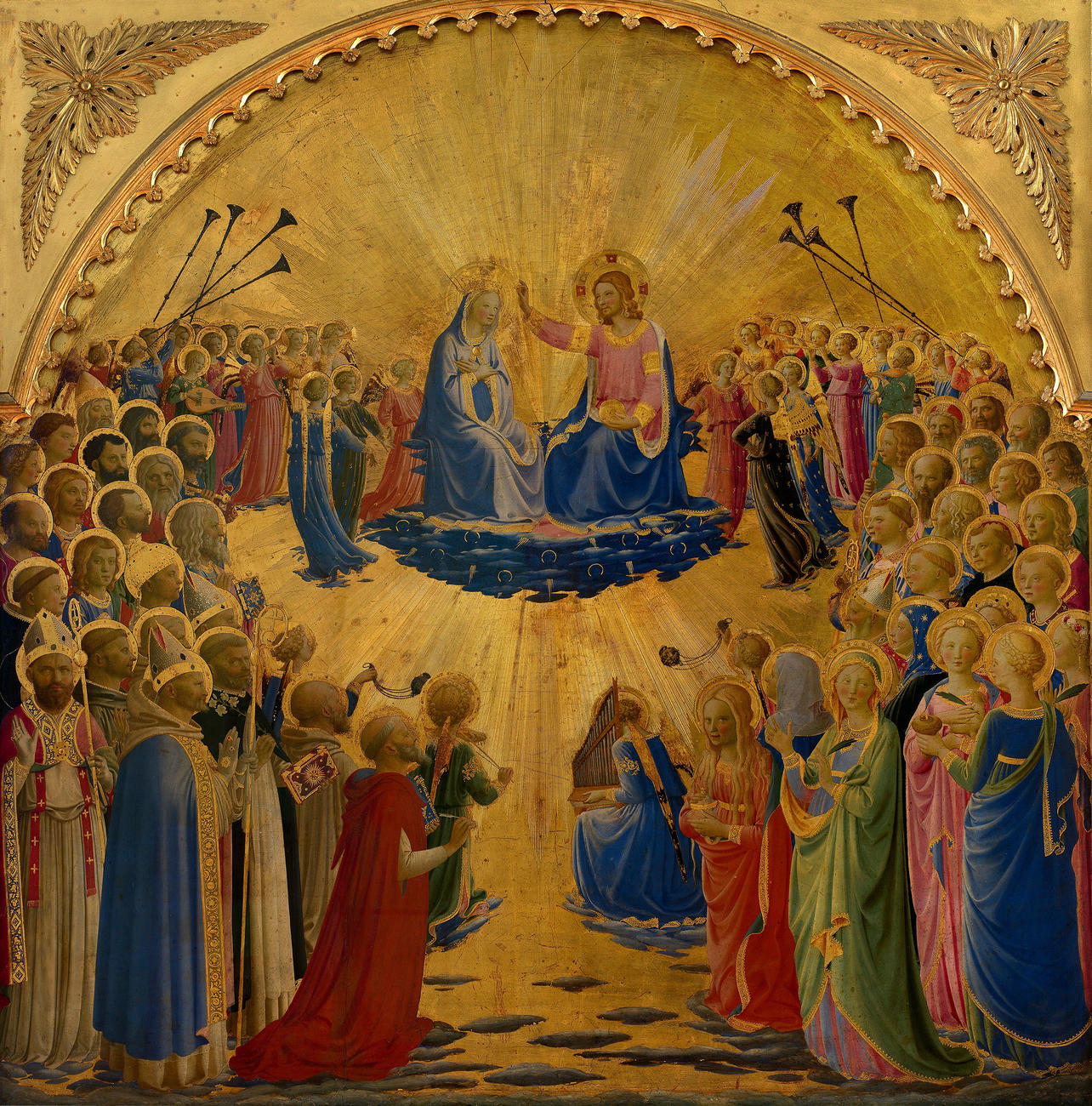
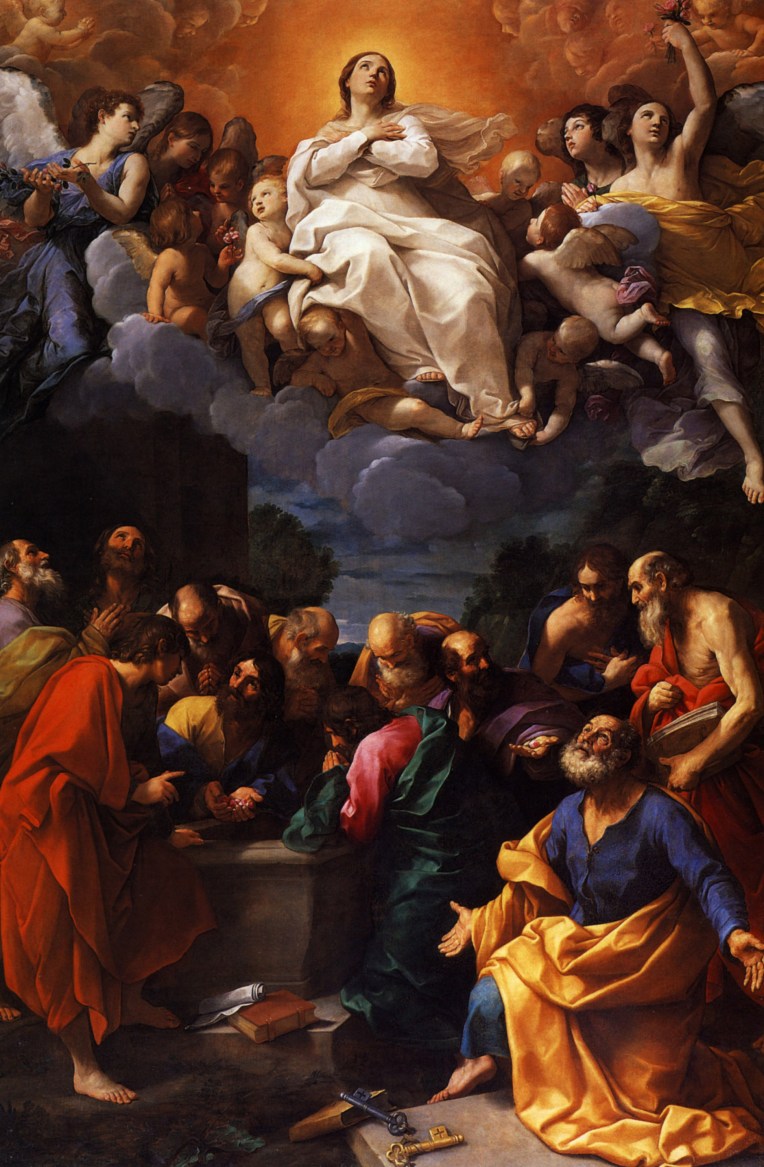
Today the Church celebrates the Assumption of our Blessed Mother into heaven.  The Assumption was a gift that God gave to Mary at the end of her earthly life.  To put this gift into perspective, consider this.  We know that anyone who dies without sin and without attachment to sin is assumed into heaven when he or she dies:  but only that person’s soul.  When someone dies in a perfect state of grace, that person’s soul is assumed by God into Heaven.  That person’s body, of course, remains buried under the earth until the Final Judgment.  But at the end of her earthly life, Mary was taken up into heaven both in soul and body.

Why did God give this gift to Mary?  Why did He so highly privilege her at the end of her earthly life?  One way to get at an answer is to see how this gift was related to another of God’s gifts:  that is, the gift God had given Mary at the beginning of her earthly life, when Mary was conceived by Saint Anne.

Here you can see how the twin gifts of the Immaculate Conception and the Assumption are bound together in meaning.  It was because Mary had never been touched by sin—either the Original Sin of Adam, or her own actual sin—that her body and soul were not torn in two by death.   On the one hand, God kept Original Sin from staining Mary, in virtue of the vocation He wanted her to accept:  to be the Mother of Jesus Christ.  For her part, throughout her earthly life, she never committed an actual sin, either mortal or venial.

Now, there might be some who consider Mary’s vocation and then scoff, saying, “How hard could it be to be the mother of God?”  From one perspective, it’s true that if your son was like Jesus, who in fact was God Incarnate, you would experience many consolations:  no reports from the principal about fighting; no yelling at and kicking his cousins; no backtalk or rolling of eyes; no breaking of curfews.

Yet there’s more to motherhood than keeping your children out of trouble.  In fact, mothers are not meant to keep their children out of all trouble, or even necessarily out of the most serious of trouble.  It’s here that the uniqueness of the Blessed Virgin’s vocation comes into sharper focus.

Motherhood is defined not by keeping children away from all evil, but in steering the child towards what is the greatest Good.  After all, for the Christian, sometimes the greatest good that needs to be embraced is an evil.  Does that sound strange?

Think of Jesus embracing the Cross on Good Friday.  Then think of Mary on Good Friday, and what her vocation meant that day.  She would have been naturally tempted to shield her Son from the Cross.  You who are mothers know instinctually the desire to shield your child from harm.  But Mary was supernaturally moved to join her Son in His vocation as the Messiah of the human race.

Sometimes you’ll hear both mothers and fathers who say, “I just want my child to be happy.”  But we need to stop and think about what that statement means in the end.  We need to ask ourselves:  “Was Jesus happy on Good Friday?”  Yet Good Friday was the Hour for which Jesus came into this world.  Good Friday was the day when His vocation reached its summit.  Here is what fathers and mothers must want for their children more than anything else, including earthly happiness:  namely, that one’s child embrace his or her vocation.  Only by faithfulness to one’s vocation on earth can a person be happy eternally in Heaven.

As we honor our Blessed Mother today, we recognize that there are many “good things” that mothers have and give to their children.  But with the eyes of Faith, we see that there’s something even more difficult that a mother has to give.  A mother has to teach her child what it means not only to embrace the Cross, but to love the Cross.  For in loving the Cross, we love Jesus Himself.

Of all the “good things” a mother has to give her children, a love of the Cross is the “best thing”, because that’s the only road that leads to Heaven.  To help us in accepting this as Gospel, Mary was given the fullness of grace.
Saturday of the Nineteenth Week in Ordinary Time

Saturday of the Nineteenth Week in Ordinary Time
Matthew 19:13-15

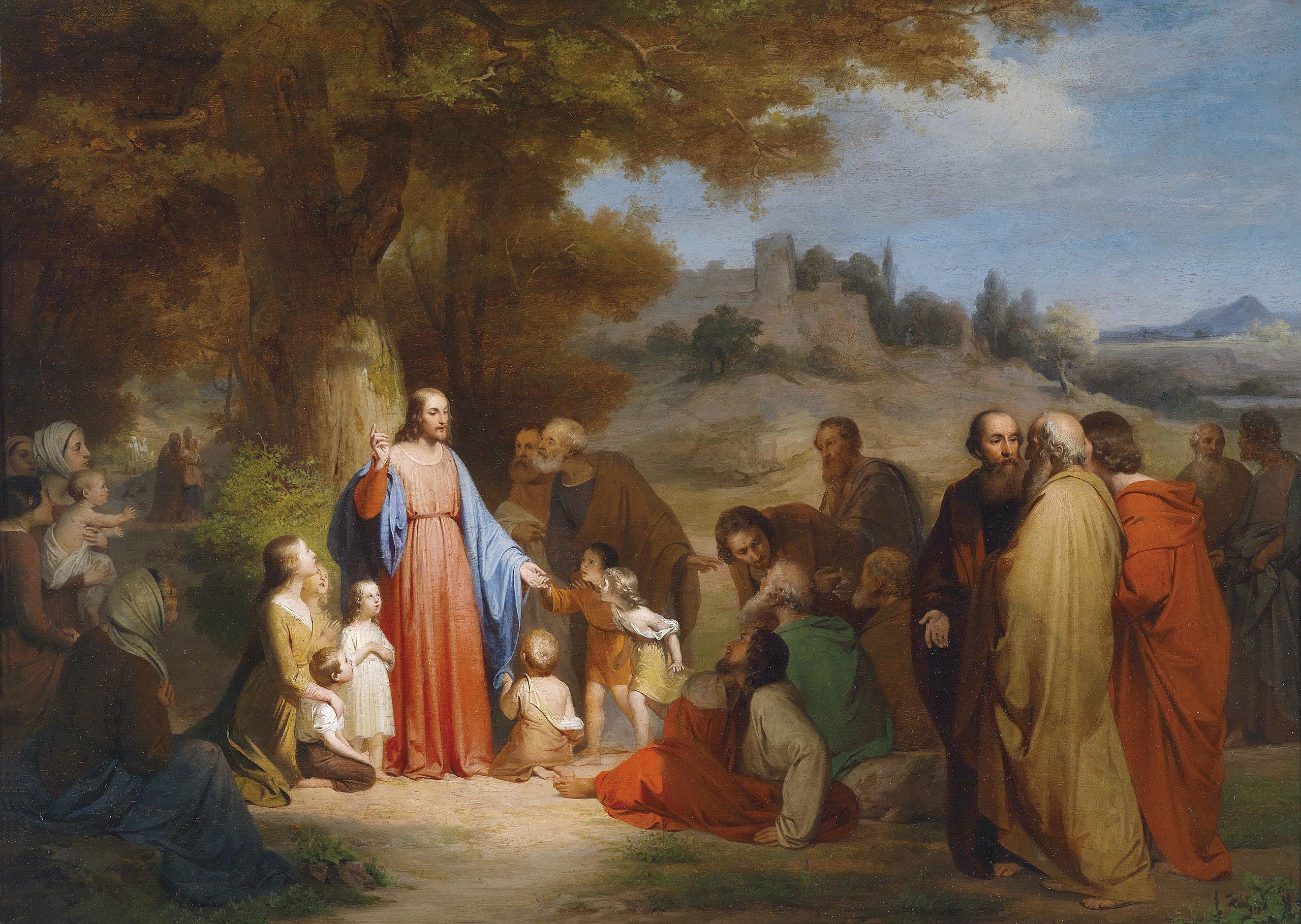
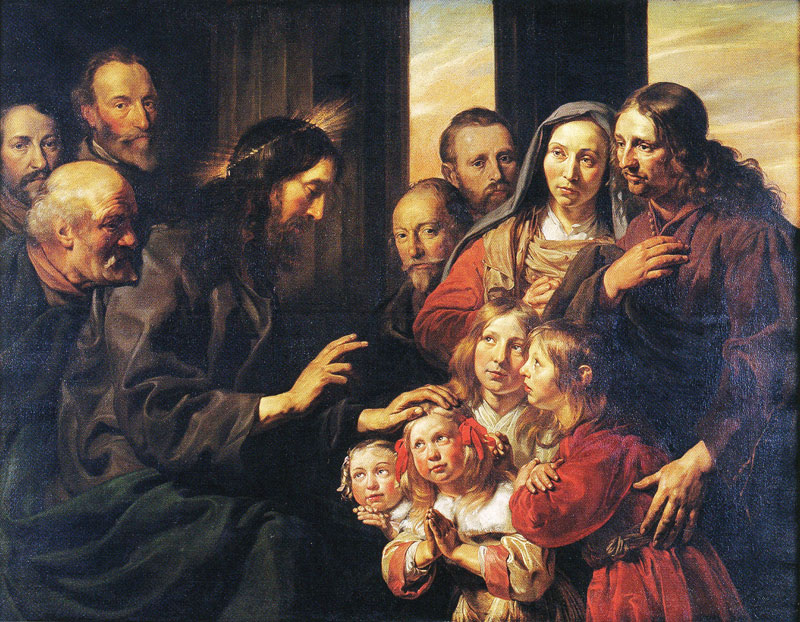
“Let the children come to me, and do not prevent them ….”

Our spiritual need for humility is like our body’s need for water:  it is foundational in an on-going manner; that is, in a manner that we constantly have to attend to.  It’s not like the foundation of a house that you pour once and then don’t (hopefully) have to attend to afterwards.

Some people think that humility is only for children.  This sort of thinking says, “Of course you should be humble when you’re small.  You should also be humble when you’re applying for a job, and when you’re going to confession, and when you’re at the bank applying for a loan.  But once you’re older, and you’ve made something of your life, and have money in the bank, and people who work for you… well, then, the time for humility is past.  At this point, you should take pride in yourself.”

But Jesus says just the opposite.  Jesus, who is divine, and the only-begotten Son of God, declared at the Annunciation:  “I am willing to become even less than a tiny baby.  I will become a single-celled human being inside the womb of this 14-year-old girl, in order to grow up and die to take away the sins of all mankind.”

We can reflect on the example of the Annunciation as a concrete example of Jesus’ counsel today.  Both Mary and Jesus in the scene of the Annunciation show us to whom “the Kingdom of Heaven belongs”.  Both Mary and Jesus demonstrate humility, but from opposite ends of a spectrum.  Mary—a poor, weak girl—submits her self to God the Father, accepting from Him a vocation that she cannot possibly at that point understand.

Jesus—God’s own divine Son—submits his self to God the Father, accepting from Him a vocation that we cannot understand.  Our Blessed Mother and Our Lord show us that humility is needed at every step of our lives:  from the beginning of our life on this earth, to the end of our life in Heaven.  We never outgrow the need for humility.

Friday of the Nineteenth Week in Ordinary Time

Friday of the Nineteenth Week in Ordinary Time
Matthew 19:3-12

“So they are no longer two, but one flesh.”

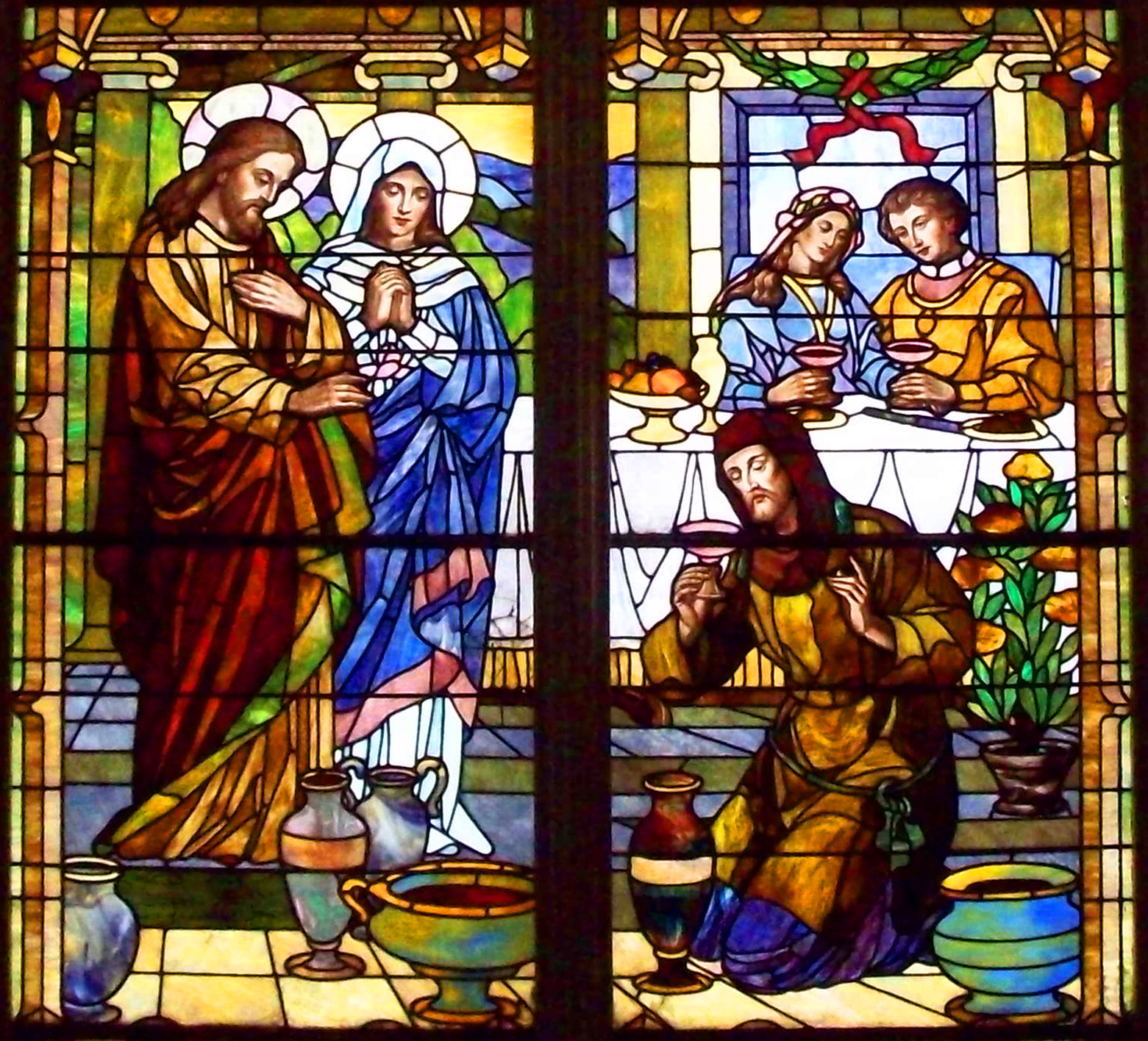
In raising the institution of marriage to the dignity of a sacrament, Christ transformed it into a covenant reflecting His own love for His Church.  This transformation was symbolized at the wedding at Cana by Jesus transforming water into wine.  The natural is transformed by the supernatural into some third thing that is both.

Certainly there is a stark contrast between marriage during the Old Testament and the Sacrament of Holy Matrimony.  We might say something similar of the contrast between Christian marriage and what many today—including the federal government, and in collusion with them, state governments—are labeling “marriage”.  The former contrast can be easily seen through the example of Moses, who more than 1200 years before Christ, permitted the Israelites to divorce [Deuteronomy 24:1-4].  Moses’ concession to human sinfulness, however, is repudiated by Jesus in today’s Gospel passage, and the original will of the Creator is reaffirmed against that concession.

The indissolubility of marriage is due not only to the fact that God Himself is marriage’s origin, but also that He is the One whose divine love marriage points to.  Thirdly, He is its mirror as it’s lived in the present, as spouses vow to help each other and their children each day to strive for Heaven.

Thursday of the Nineteenth Week in Ordinary Time

Thursday of the Nineteenth Week in Ordinary Time
Matthew 18:21—19:1

“So will my heavenly Father do to you, unless each of you forgives his brother from his heart.”

Our truest home is the home where we find the deepest sort of forgiveness.  In this home we find a selfless and generous forgiveness that seeks to build up the one who has committed a transgression.  The Church, through which we share in the Body of Christ, is our “home of homes”.

By right, we should feel most at home before the altar, because it is there that we rejoice in the source of all forgiveness.  But in the Church during the Eucharist, we give thanks not only for the forgiveness wrought by Christ’s Sacrifice on the Cross.  We also give thanks for the fact that when we share fully in the Eucharist, we receive not only a share in Christ’s forgiveness; we receive a share in the life of Christ himself.  We receive not only the Forgiver’s forgiveness.  We receive the Forgiver.

To receive forgiveness is to be restored to our former self.  But to receive the Forgiver means something greater.  It means not simply that we’re restored to our former self, but that we’re raised from our state of sinfulness even higher than our original state, to a share in the life of the Forgiver’s Self.  We share in the life of Christ, and so are given the power to forgive others as Christ offers forgiveness:  to all persons, in all circumstances, for ever and ever.

St. Lawrence, Deacon & Martyr

St. Lawrence, Deacon & Martyr
2 Corinthians 9:6-10  +  John 12:24-26

… whoever sows bountifully will also reap bountifully.

The First Reading and Gospel Reading for today’s feast of Saint Lawrence both lay before us images of agriculture:  sowing seed, a grain falling to the ground and dying, and reaping bountifully.  These images relate to a holy martyr apropos Tertullian’s dictum that “the blood of the martyrs is the seed of the Church” [Apologeticus, Chapter 50].

In another sense, the martyr himself or herself is the seed that Jesus speaks of in this passage.  In this regard, Jesus’ words reveal the martyr to be an icon of Christ Himself.  “Whoever serves me must follow me, and where I am, there also will my servant be.”  We might choose simply three words from this sentence, and see how many points of meditation the Holy Spirit surfaces for us; those three words being “where I am”.

These three words call to mind the Divine Name revealed to Moses.  While God in His divinity is in all things, above all things, and is everywhere that is, Jesus Christ in His humanity dwelt among us sinners.  He dwelt first within Mary at the site of the Annunciation, then dwelt in the manger at Bethlehem, and then dwelt for many years in the home at Nazareth before beginning His public ministry.

Yet His ministry culminated in His self-offering at Calvary, and above anywhere else that He dwelt in this fallen world, Mount Calvary is the location that reveals the meaning of this phrase that Jesus speaks today:  “where I am”.  Jesus calls us to join Him in His self-offering, standing fast at the foot of His Cross.  There is where Jesus speaks of when He declares, “where I am, there also will my servant be.”

St. Lawrence - Fra Angelico

The Twentieth Sunday in Ordinary Time [C]

The Twentieth Sunday in Ordinary Time [C]
Jeremiah 38:4-6,8-10  +  Hebrews 12:1-4  +  Luke 12:49-53
Catechism Link: CCC 2471

“No, I tell you, but rather division.”

The family is the chief earthly example of the “cloud of witnesses” described in today’s Second Reading.  Another term for this “cloud of witnesses” is the “communion of saints”.  One of the great truths about human families is that we tend over time to resemble those we are close to, for good or ill.  It’s in the domestic church—the family—that we first see and then learn to practice the Faith.

Each person has her own portrait of God in her mind.  Each Christian paints such a “portrait of God” from her spiritual experiences growing up, from personal devotions, and from her relationships within the Communion of Saints.

Parents, in the eyes of a child, are the first images of God.  Often, it’s from a mother that a child has his first glimpse of God’s tenderness and gentleness.  Likewise, it’s often from a father that a child has his first glimpse of God’s steadfastness through adversity.

What parents teach by word and example is echoed in Christian devotions.  For example, some devout Catholics pray the Stations not just on Fridays of Lent, but 52 Fridays a year.  They do this to express their thanks to God the Father for giving up His Son.  They also give thanks to Christ for handing over His life for us poor sinners.  For the Christian with a deep devotion like this, she sees clearly how much mercy the Father has for her:  as if the Father sacrificed His Son for her alone.

But Jesus talks in this Sunday’s Gospel passage about what happens when a family is divided.  For example, when parents fight with each other, and a child sees his father running away from adversity instead of standing steadfast, or when a child sees his mother acting viciously towards his father, it’s not surprising that a child’s belief in God is shattered.  The percentage of children from broken homes who grow up and choose not to practice any sort of faith shows how important the roles of mother and father are, and how big an influence parents have on their children’s practice of the Faith.

Today’s Second Reading and Gospel passage can seem to be talking about two opposite things.  The Letter to the Hebrews encourages us that, “since we are surrounded by so great a cloud of witnesses, [we should] rid ourselves of every burden and sin that clings to us, and persevere in running the race that lies before us ….”  This “great cloud of witnesses” doesn’t just mean the saints who are already in heaven.  It includes also those who share our Faith here on earth.  After our participation in the Mass, the example of our parents, and private devotions, it is through other fellow Christians within this “great cloud of witnesses” that we are either strengthened in our Faith or grow weaker.

This presents a responsibility that each of us has as a baptized Christian; that is, as one member of the communion of saints.  Each of us has a responsibility to be there for others and to be an example for others.  This is where our Gospel passage comes in.  Although our Second Reading talks about the importance of the communion of saints, Jesus in our Gospel passage says that He came into this world to bring division.  He did not come to establish peace on earth.

Now maybe this isn’t a picture of God that we like.  Maybe we want to think about God as a teddy bear.  But either Jesus is lying in today’s Gospel passage or we must accept that following Jesus sometimes means causing division.  If we are not willing to stand for our Catholic Faith and recognize it as a treasure from God to be shared with others because it has the power to give eternal life, then there’s not much reason to be Catholic.

What is our Faith worth?  Jesus answered this question in a very clear way.  To see His answer, all we have to do is look at the Crucifix.  But consider the example that we see in the crucifix.  This example, through the mystery of the Eucharist, becomes the true presence of Jesus’ Body and Blood, soul and divinity.  Jesus offers us His sacrificial Self so that we might have the strength to live for others within and for the sake of that “great cloud of witnesses” that is His Church.

Tuesday of the Nineteenth Week in Ordinary Time

Tuesday of the Nineteenth Week in Ordinary Time
Matthew 18:1-5,10,12-14

“See that you do not despise one of these little ones ….”

For you to be a saint means to live your life in Christ, not just to imitate Christ. In grade school libraries they have series of books titled “Great Men of History”, which highlight the bravery of George Washington, the honesty of Abraham Lincoln, and so on. The idea of this series of books is the reader will be inspired by George Washington’s bravery, and want to imitate his example.

Are the Gospels like that series about great men of history? Are the Gospel stories meant to inspire us to be like Jesus. On one level, certainly, we can find inspiration in the stories of Jesus’ preaching and miracles. However, if we think that the goal of our Christian life is merely to imitate Jesus, we will never get to Heaven.

For you to be a saint means to live your life in Christ, and to allow Christ to live His life within yours. This is something mystical, and so it’s difficult to describe in language. Nonetheless, it’s part and parcel of being a Christian. It’s not just for cloistered monks and nuns.

At the moment of your baptism, three changes happened to you. But focus on just two of them. On the one hand, you were adopted by God the Father, and became His child. On the other hand, you became one member of the Mystical Body of Christ. These two events—becoming a child of God, and becoming a member of Christ’s Body—are part and parcel of each other.

In other words, it’s not so much that Jesus is our “older brother” spiritually, whose relationship with the Father we admire and then try to imitate. Rather, it’s as members of Christ’s own Mystical Body that you and I share in the sonship of Jesus.

OT 19-2

Monday of the Nineteenth Week in Ordinary Time

Monday of the Nineteenth Week in Ordinary Time
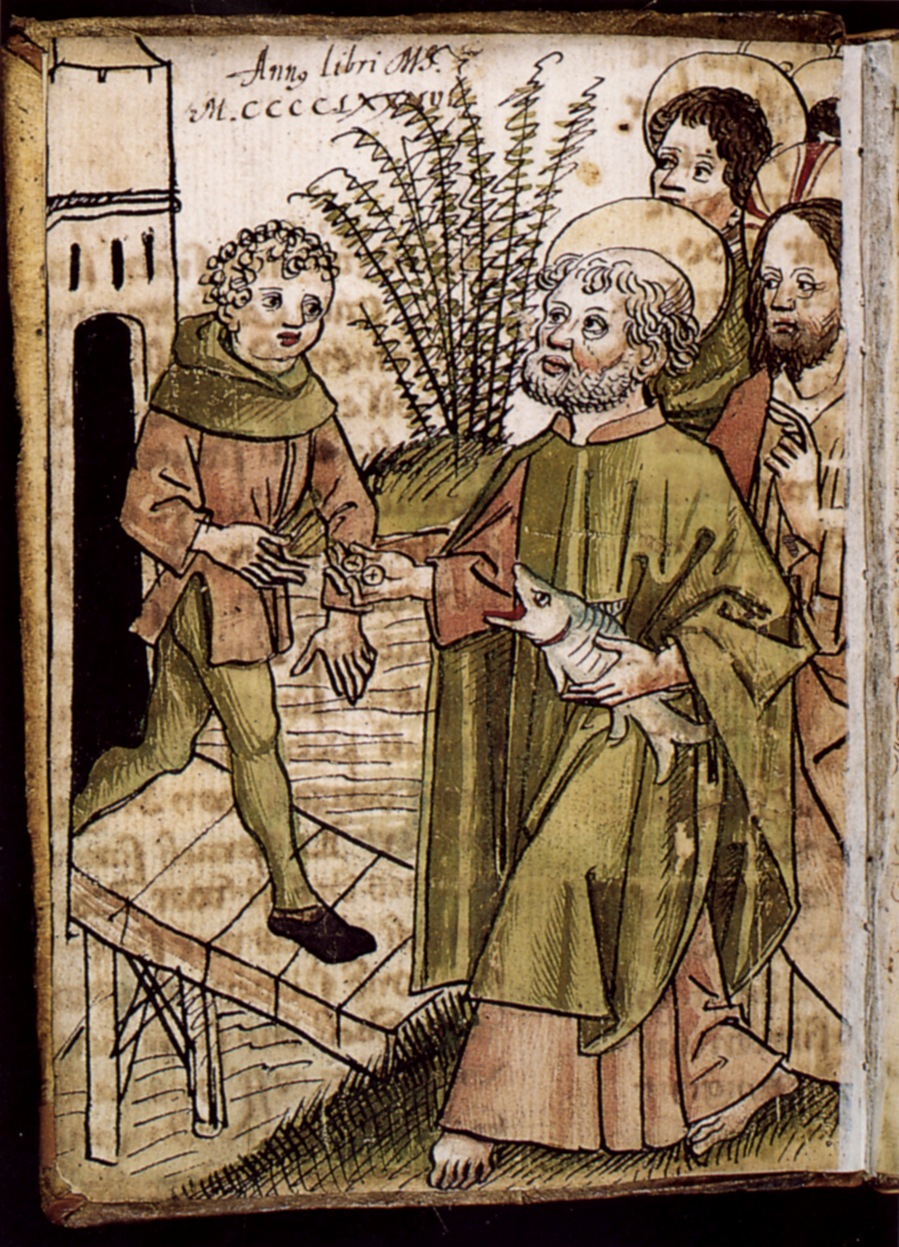
Matthew 17:22-27

“Give that to them for me and for you.”

When Jesus walked this earth—Jesus, the one whose life and ministry fulfilled the prophecies of the Old Testament—there were three ways in which He spoke and acted as a prophet.  Through these three, He teaches us not only how to be His disciples, but also how to teach in His name.

The sort of grand spectacle that Jesus worked through miracles such as multiplying the loaves or walking on water were complemented by sacred events such as Jesus’ Transfiguration on Mount Tabor, when He shone in glory before three of His disciples.  But as impressive as those scenes were, spectacle was not the norm for Jesus.

Though many like to pretend otherwise, Jesus also preached “fire and brimstone” when the occasion called for it.  This second way of being a prophet, of course, is one of the reasons that Jesus was led to the Cross.

The third way in which Jesus acted as a prophet is a kind which is very rare in the Old Testament.  But it is uncommonly common in the life of Jesus.  In the life of one of His saints—St. Thérèse the Little Flower—it was called the “Little Way”.  It is a way of simplicity and humbleness that goes overlooked by those looking for spectacles.  It is a way that is ignored by those who are looking out for themselves, instead of others:  by those who justify their actions by claiming that they’re just doing what everyone else is doing, walking down the broad path, instead of trying to walk the narrow way that following Jesus demands.

The simplicity and humbleness of Jesus in today’s Gospel is a very good meditation for those setting out again to begin a new school year.  Jesus is not obligated to pay the tax that is demanded of Peter, but Jesus explains—“that we may not offend them”—that He will pay the tax anyhow.

The miracle by which Jesus accomplishes this almost goes unnoticed, because it’s not the point.  Jesus’ point is to teach by humility, to teach by doing that which is not necessary, but which can lead others to see the Little Way.  This is the way that, after a long journey through a life of service in this world, leads to the vision of eternal life with God and His saints.

The Transfiguration of the Lord [C]

The Transfiguration of the Lord [C]
Daniel 7:9-10,13-14  +  +  2 Peter 1:16-19  +  Luke 9:28-36

And behold, two men were conversing with Him… [speaking] of His exodus ….

Suffering is part and parcel of following Jesus.  He teaches us this lesson through His Transfiguration.

There’s a simple contrast in today’s Gospel passage.  Peter stands in contrast to Jesus.  Peter says, “Master, it is good that we are here”, while Jesus does not reply.  In fact, the evangelist does not quote Jesus at all in this passage.  Not that Jesus doesn’t speak in this passage:  we’re told that Jesus was conversing with Moses and Elijah, but we are not allowed to overhear their conversation.

Did Peter hear the conversation among Jesus, Moses and Elijah?  It doesn’t seem so.  Had Peter heard them, it’s not likely that he would have said what he did:  “Master, it is good that we are here”.  Peter certainly perceived the glory of Jesus, His changed face, and the brilliance of His white clothing.  But had Peter heard the conversation of Jesus and His prophets, it’s unlikely that Peter would have said what he did.

Jesus, Moses and Elijah “spoke of Jesus’ exodus that He was going to accomplish in Jerusalem.”  This exodus is not from the power of a pharaoh, or from the persecution of pagan prophets, but from the power of sin and death.  You and I know the rest of the story:  that Jesus accomplished this exodus on Calvary.  We know that through His sin and death, you and I might have life to the full.  Had Peter understood all this, he may have turned away from following Jesus.

Suffering is part and parcel of following Jesus.  If we shy away from suffering for the good, we remove ourselves from Jesus’ presence.  Only by remaining in the presence of Jesus can He lead us to the glory of the Father.

Transfiguration - Titian

Transfiguration by Titian [c. 1488 – 1576]