PLEASE NOTE: In addition to the Mass for Pentecost Sunday, Pentecost has a proper Vigil Mass and an extended Vigil Mass with five Scripture readings before the Gospel. For the shorter Vigil Mass, the First Reading may be taken from any of the Old Testament passages proclaimed at the Extended Form of the Pentecost Vigil Mass.
Pentecost Vigil Mass—Extended Form
Genesis 11:1-9 + Exodus 19:3-8a,16-20b + Ezekiel 37:1-14 + Joel 3:1-5 + Romans 8:22-27 + John 7:37-39
Pentecost Sunday
Acts 2:1-11 + 1 Corinthians 12:3-7,12-13 + John 20:19-23
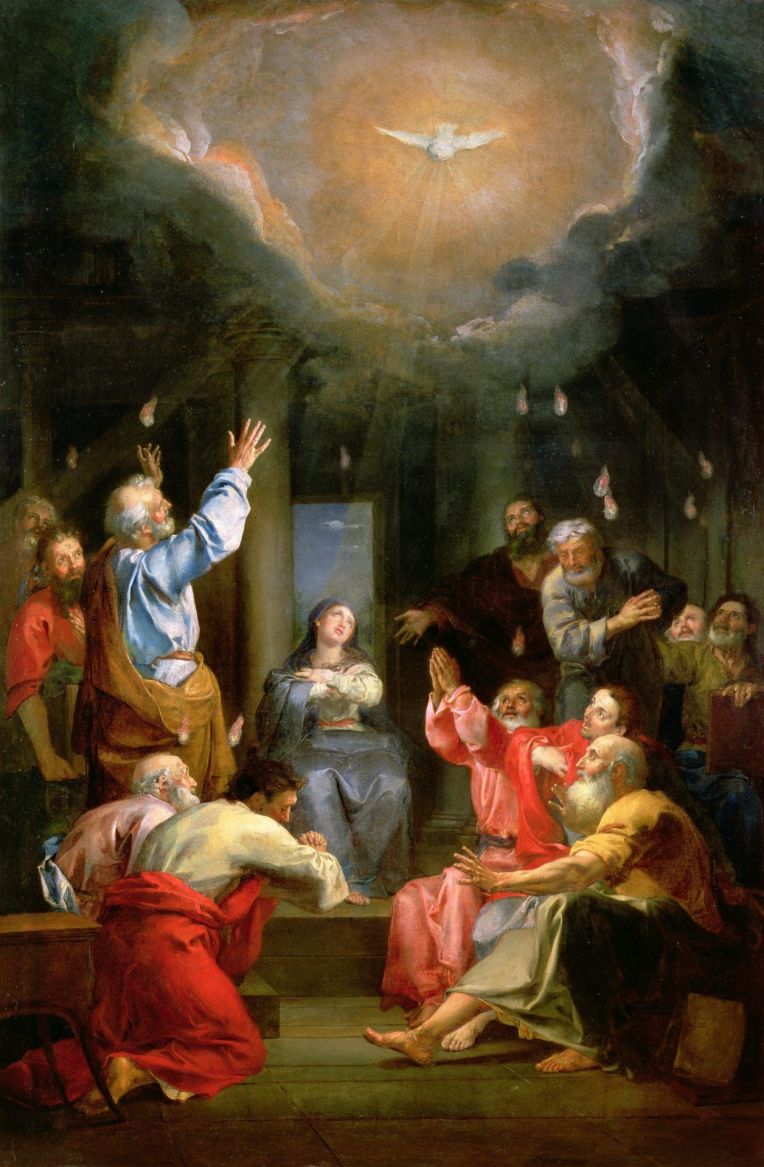
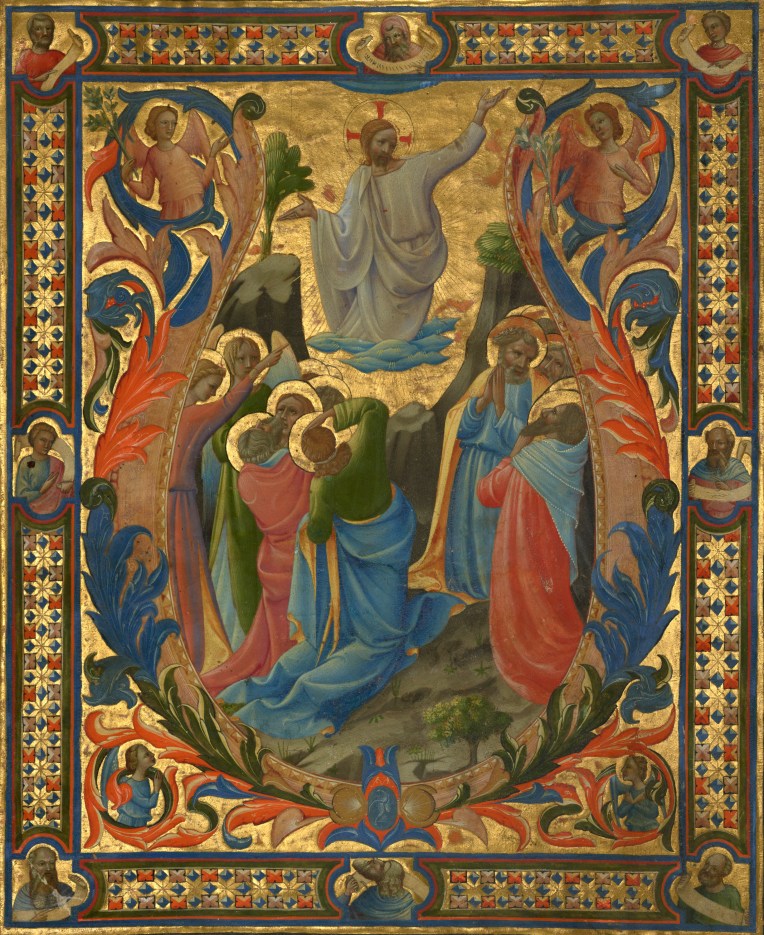
When the time for Pentecost was fulfilled, they were all in one place together.
Almost 2000 years ago on this day, the Church was born. The Church would be nothing without the Holy Spirit. The Church couldn’t have been born without the Holy Spirit, and she could not live today without the Holy Spirit. Where the Church is strong, it’s because of the Holy Spirit. Where the Church is weak, it’s because the Holy Spirit is not given His due.
When I say “where”, I don’t just mean in different parts of the world. It’s true that the Church is stronger in some parts of the world than others. Certainly the Church in the Western world is not as strong—doesn’t live the Gospel with as much fidelity—as the Church in many third-world countries. In countries where the Church has fewer material resources, the Church tends to be stronger, for opportunities to experience the suffering Christ are more present, whereas the West fosters an antiseptic culture in which many wear blinders.
When the event of Pentecost occurred almost 2000 years ago, the apostles were greatly changed by their “encounter” with the Holy Spirit. How were they changed? The Holy Spirit didn’t make them taller, richer or stronger. The Holy Spirit doesn’t try to change us in these ways, because He isn’t interested in our bank accounts, or the vehicles we drive, or our looks, but only the state of our souls.
So how were the apostles changed? What did the apostles “get out of” their encounter with the Holy Spirit? It was a spiritual change, certainly, but we need to be more specific. The apostles didn’t receive the Holy Spirit in order to help them feel good about their relationship with God. The apostles didn’t receive the Holy Spirit in order to tickle the ears of others by preaching about sunshine and daffodils, but instead to call others to an adult faith: that is, to a catholic faith that preaches and lives out even the hard teachings of the Church.
This is just as true today. The gifts of the Holy Spirit are given to apostles and prophets, clergy and lay people, in the first and twenty-first centuries, in order to build the Church on earth by means of self-sacrifice. There are different works but the same God who accomplishes all of them in every one. To each person the manifestation of the Spirit is given for the common good. To each person the Holy Spirit is not given to make him feel better about himself. The Holy Spirit is given to make possible greater self-sacrifice.
We receive the Holy Spirit in simple ways. Among other examples, we receive the Holy Spirit when devoutly reading Scripture, and by carrying out the corporal and spiritual works of mercy. But as we receive Him—as we grow spiritually—the gifts and graces of the spiritual life that we receive are to be laid at the feet of others.
We see this when we look at the sacraments of Baptism and Confirmation. Through Baptism, a person becomes a member of the Church: an individual member of the Body of Christ. Through Confirmation, a person is prepared to offer his or her life in service for the sake of the Church, for the sake of that Body of which he or she is one member.
The Holy Spirit leads us in our spiritual life. He leads us in making decisions about how to serve the needs of others. There are countless opportunities to do good each day of our lives. But we cannot do them all.
Likewise, we sometimes ask God to help us accomplish something: to help us see how to get something done that we want to do. We often need to realize, though, that the Holy Spirit is not going to show us how to do something that He has no interest in us doing in the first place. If we do not feel that God is guiding us, it may be because that path would lead us in a direction that God does not want us to travel.
At this conclusion of Eastertide, ask God to help you to be open to the Presence of the Holy Spirit in your life. Ask this not simply for your own sake, but to help you seek and serve the needs of others, because no one can find salvation on his own.
 Reflections on the Sacred Liturgy