Friday in the Octave of Easter

Friday in the Octave of Easter
Acts 4:1-12  +  John 21:1-14

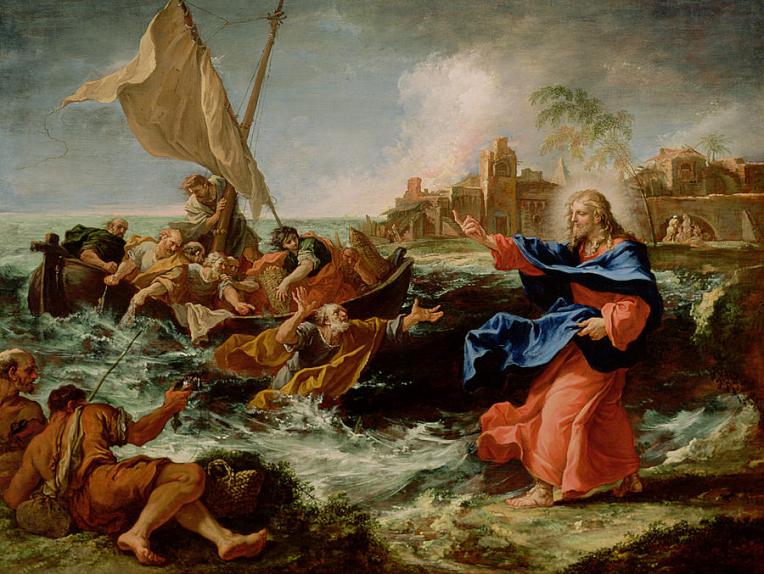
He revealed Himself in this way.

What does St. John the Evangelist mean when he reports to us that the disciples “dared” not ask Jesus “Who are you?”  After all, the Beloved Disciple had told Peter that this was the Lord.  Today’s Gospel passage suggests some unresolved ambiguity.  While the miracle of catching 153 fish convinced the disciples who He was, there was still some reason for them to ask His identity.  His miracle convinced them, but His appearance did not.

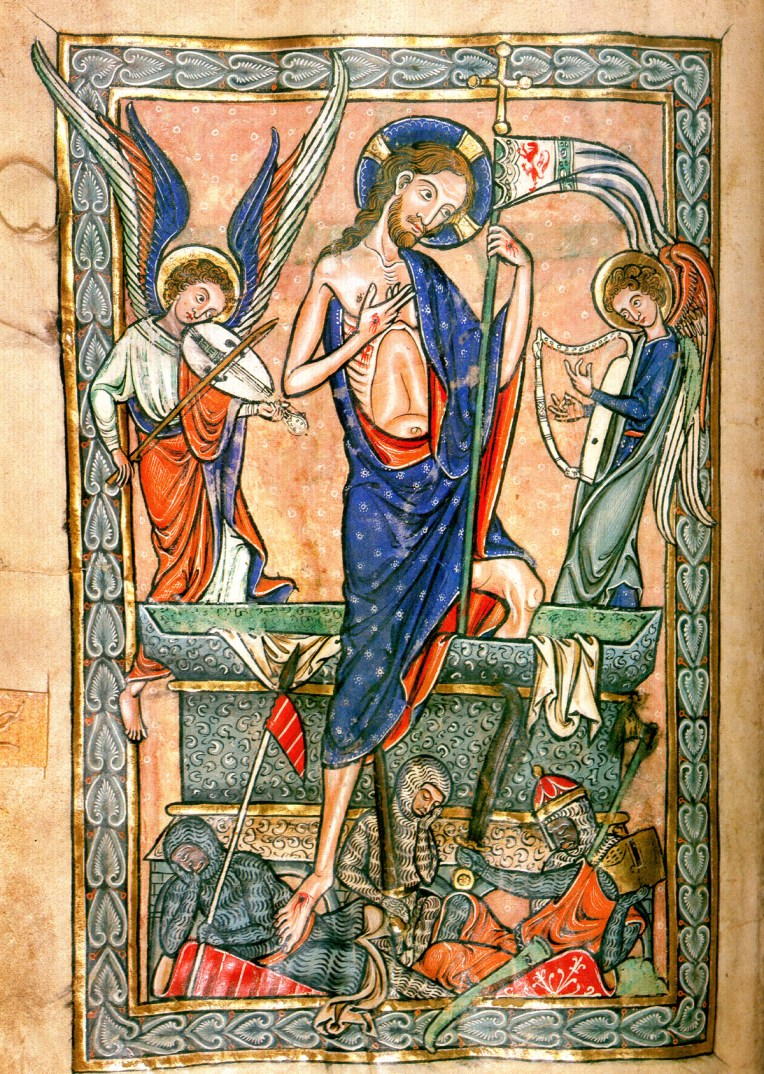
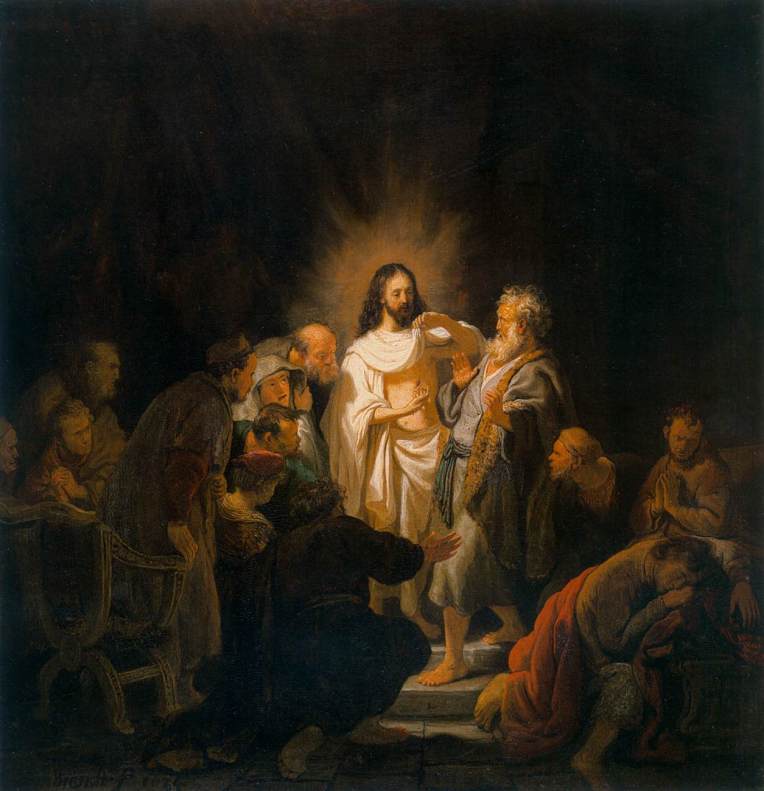
So the Risen Jesus, in His glorified Body, was the same person, yet somehow different.  He had the same two natures—human and divine—yet He was somehow different.  The Resurrection narratives demonstrate some of the ways in which Jesus was different after His rising from the dead:  most famously—as we will hear this coming Sunday—the Risen Lord had a physical body that could pass through solid matter.

The point here is that in His Risen Body, Jesus looks different to His disciples.  He looks different enough to cause some confusion in their minds:  at least enough confusion for them to be tempted to “dare” ask Him “Who are you?”  For ourselves, regarding both our meditation and our speaking to the Lord in prayer, we should ask:  do we expect the Lord to appear to us in some certain way?  How might God want to surprise us in making Himself known to us, and in showing us His love?

Easter 1-5

Divine Mercy Sunday [C]

Divine Mercy Sunday [C]
Acts 5:12-16  +  Revelation 1:9-11,12-13,17-19  +  John 20:19-31

 “I hold the keys to death and the netherworld.”

On this Sunday’s solemnity of Divine Mercy, the Church calls us to rejoice that the Sacrament of Confession, and the peace flowing from it, are the “first fruits” of Jesus’ Resurrection.  In the Old Testament, the People of God—Israel—gave to Him the first fruits of their harvests, as precious and life-giving as they were.  But in the New Testament, God turns this around.  It’s God who gives to His People—the Church—the first fruits of the Resurrection from the dead of His most precious Son.

Many of our separated brethren claim that there’s no need to confess one’s sins to a priest.  Against such a claim stand the words of St. John the Evangelist, who tells us that just a few hours after Jesus’ Resurrection, He showed Himself to His apostles, “breathed on them, and said to them:  ‘Receive the Holy Spirit.  If you forgive the sins of any, they are forgiven; if you retain the sins of any, they are retained’” [John 20:19,22-23].  Consider from three perspectives the blessings that flow from this gift of the Holy Spirit.

First, Confession reflects the nature of the sinner.  God established a sacrament where we are required to confess our sins to another human being—in fact, a fellow sinner—to receive the benefits of the sacrament.  God knows that if He made the default for forgiving sins the direct confession of one’s sins to God, then the average sinner would grow spiritually weaker over time.

For example, if you start a confession of your sins directly to God and have trouble remembering them, it’s easy to say to yourself, “Well, God knows everything anyway.  I don’t have to confess all my sins.”  That can begin a habit by which the sinner demands less and less from himself.

From the opposite perspective, because the priest is not likely to know our sins, the burden is on each Christian to present herself more honestly to God.  But one of the beautiful truths about Confession is that the more honest we are about our sinfulness, the more we appreciate the beauty and abundance of God’s mercy.

Second, Confession reflects the nature of the Church.  The priest in Confession represents not only God, but also the other members of the Body of Christ.  One of the many problems with the idea of just confessing one’s sins directly to God is that our sins are offenses not only against God.

When Jesus taught His disciples about God’s commandments, He explained that they boil down to two:  to love God, and to love one’s neighbor.  This two-fold command is even symbolized by the Cross on which Jesus died for us.  The Cross has a vertical beam symbolizing the love meant to flow between me and God, and a horizontal beam symbolizing the love meant to flow between me and my neighbors.  As Jesus Christ is fully God and fully man, the priest in Confession represents both God and man:  my God and my neighbors.

Third, Confession reflects the nature of God Himself.  On the evening of His Resurrection, Jesus breathed on the apostles and said to them: “Receive the Holy Spirit.”  In Confession the penitent receives this same Holy Spirit, and if we know one thing about the Holy Spirit, it’s that He is never satisfied to give life when He can give life abundantly.

In Confession God not only forgives your sins, but gives many other gifts as well.  The Catechism lists all of them, but perhaps most important among them is “an increase of spiritual strength for the Christian battle” [CCC 1496].  This gift is why we ought to make a sacramental confession regularly even if we don’t have any mortal sins to confess, but only venial sins.

After all, what is one of hardest parts of “the Christian battle” if not forgiving those who have hurt you?  There are times in every disciple’s life when it’s so difficult to forgive that it would be impossible to do so through human efforts alone.  But as Christians, we are never alone.  The graces that we receive in Confession strengthen us to offer more easily human forgiveness to those who have wronged us.

Some people think of Confession as concerning only the washing away of the sins of one’s past.  But Confession is not only about the past:  it’s also about the future.  Confession is about God equipping us through His grace for the days ahead.  Confession prepares us so that when we leave the confessional we might serve Him as instruments of mercy, loving our neighbors as God loves them:  not just when it’s easy, but even when it requires us to love as Jesus loved on the Cross.
Thursday in the Octave of Easter

Thursday in the Octave of Easter
Acts 3:11-26  +  Luke 24:35-48

Then he opened their minds to understand the Scriptures.

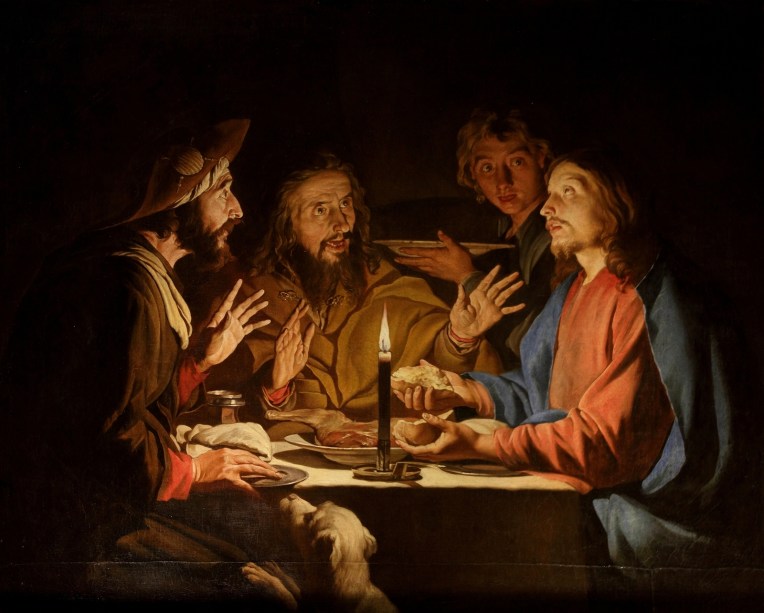
It is only in “the breaking of the bread” that the disciples come to know Jesus, and it is only in this that they become more than disciples.  Only in the Eucharist do we share in the Sacrifice of Jesus on the Cross, and become members of Christ’s Body.  This is the goal of our lives as Christians:  not merely to learn about Jesus, but to enter into His life and saving mission.

On the day of the Resurrection, Jesus is preparing the apostles for the day of His Ascension.  After He leaves the earth, it will be up to them to act in His name.  First, they must preach penance for the remission of sins, and then suffer inevitably for standing up for what is true.

In all of this, the waves of impact from the news of the Resurrection continue to spread throughout the world that God created, bringing peace to His people on earth and glory to God in the highest.  Throughout history and throughout our own lives, it is our calling to continue to be faithful witness to the news of the Resurrection.  Yet only Christ’s Holy Spirit can sustain us in offering ourselves for such witness.  So for this calling we pray during the Easter season for the outpouring of the Holy Spirit in abundance.

Easter 1-4

Wednesday in the Octave of Easter

Wednesday in the Octave of Easter
Acts 3:1-10  +  Luke 24:13-35

But they urged him, “Stay with us, for it is nearly evening and the day is almost over.”

Easter Monday we heard the chief priests and the elders respond to the news of the Resurrection by covering their tracks with lies.  Yesterday, we heard Mary Magdalen respond to Our Risen Lord when He called her by her name.  She cried out, “Teacher!”  Yet we are called to recognize in Christ much more than simply a teacher.

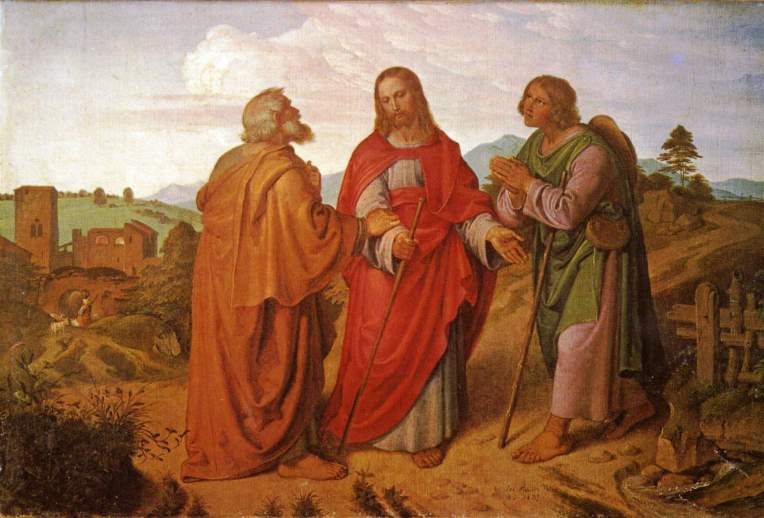
Today we hear of more events which took place on the day of the Resurrection.  The word “disciple” means “one who learns”, and the two disciples of today’s Gospel passage are obviously devoted to learning.  Undoubtedly they asked themselves what all these amazing events could mean.

We are told that Jesus joins them in their journey, though the disciples, like Mary Magdalen, do not recognize who He is.  Jesus preaches to them the meaning of the Scriptures, which help them learn.  These Scriptures help them learn the meaning of what had happened over the previous few days.  But still, they do not recognize Jesus.

Only in “the breaking of the bread” do they come to know Jesus, and only in the Eucharist do we Christians become more than disciples.  Only by sharing in the Sacrifice of Christ’s Body and Blood can we begin to imitate Him in our lives as He wills.

Tuesday in the Octave of Easter

Tuesday in the Octave of Easter
Acts 2:36-41  +  John 20:11-18

Those who accepted his message were baptized, and about three thousand persons were added that day.

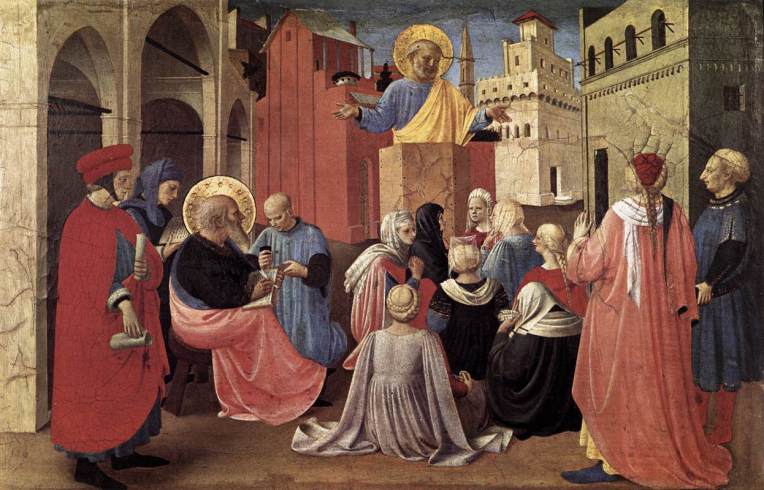
On the day of Pentecost, Peter boldly proclaims to the Jewish people:  “Let the whole house of Israel know for certain that God has made Him both Lord and Christ, this Jesus whom you crucified.”  The response of these Jews is pretty easy to guess.  Acts tells us that “when they heard this, they were cut to the heart, and they asked Peter and the other Apostles, ‘What are we to do…?’”  You can almost imagine what they, in their fear, expect Peter to reply.

But Peter delivers to them Good News:  “Repent and be baptized, every one of you, in the Name of Jesus Christ, for the forgiveness of your sins; and you will receive the Gift of the Holy Spirit.”

Acts then tells us that there were two groups in that crowd:  there were those who accepted this Good News—some 3,000 persons—and there were those who did not accept this Good News.

Here is the first lesson of the Church’s life and saving mission.  Unfortunately, it’s a difficult lesson to put into practice.  We need to choose to be in that first crowd, the crowd of 3,000.  We need to accept the Good News about the love that God wants to give us.  This is the love that Jesus, from the Cross and in the Holy Eucharist, is dying to give us.

Easter 1-2

Monday in the Octave of Easter

Monday in the Octave of Easter
Acts 2:14,22-33  +  Matthew 28:8-15

Mary Magdalene and the other Mary went away quickly from the tomb, fearful yet overjoyed ….

During most of the liturgical year, the First Reading at Holy Mass comes from the Old Testament.  But Easter is different.  During Easter, we hear first from Acts of the Apostles.  Why is this?  There are plenty of apostolic letters that could be proclaimed:  Romans, Galatians, Ephesians, 1 John, Jude, and so on.  These New Testament epistles preach about the Resurrection.  So why do we hear, each and every day of the Easter Season, from Acts of the Apostles?

The answer is that what the apostles were about throughout Acts is what God is calling us to throughout Easter.  In a phrase, this answer is:  forming the Church and living out her mission.

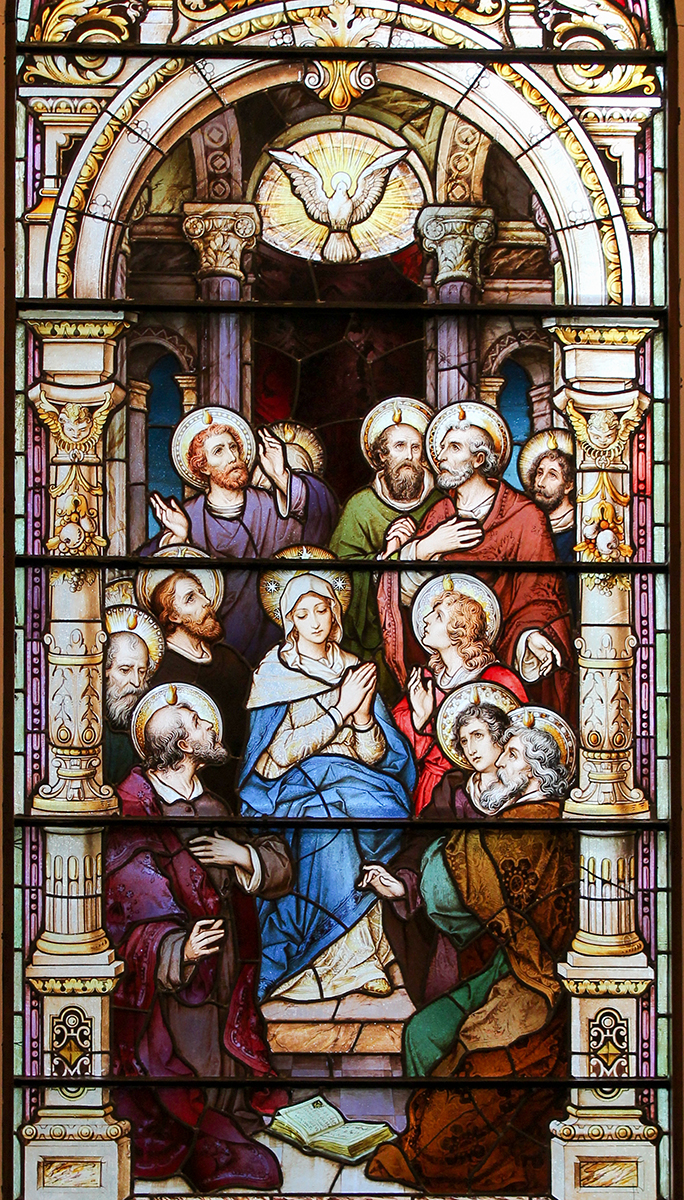
The Church was conceived, so to speak, from the water and blood that poured forth from the side of Jesus crucified.  But the Church was born some fifty days later, on the feast of Pentecost.  The story of Acts is the first history of the Church:  going forth, out into the world, to proclaim in word and action the saving mystery of Jesus, crucified and Risen.  This Church has lived on earth for some 2000 years, and each of us is called to share in her life and saving mission.

Easter 1-1

Easter Sunday of the Resurrection of the Lord

Easter Sunday of the Resurrection of the Lord
Acts 10:34,37-43  +  Colossians 3:1-4 [or 1 Corinthians 5:6-8]  +  John 20:1-9

So Peter and the other disciple went out and came to the tomb.

Easter is not just the single day of Easter Sunday, but a season of seven weeks plus one more day.  The Church celebrates Easter for fifty days so as to be able to ponder thoroughly the mysteries of this holiest season of the Church’s year.  There are three mysteries of our Faith that the Church celebrates throughout the Easter Season.  They are the first three Glorious Mysteries of the Rosary.  We need to see how all three of these are part of a single plan.

The First Glorious Mystery is the proper focus of today:  the Resurrection of Jesus Christ from the dead.  This mystery is presented by today’s Gospel Reading, where the young apostle John serves as a model of how to ponder.

St. John, who served God as both apostle and evangelist, accomplished all he did because he was the Beloved Disciple.  As an apostle and an evangelist, he was like a zealous Martha.  But before he acted zealously, he was a faithful Mary.  The Beloved Disciple at the Last Supper took the stance that Mary did at the meal in her home, sitting and listening at the feet of the Word made Flesh.

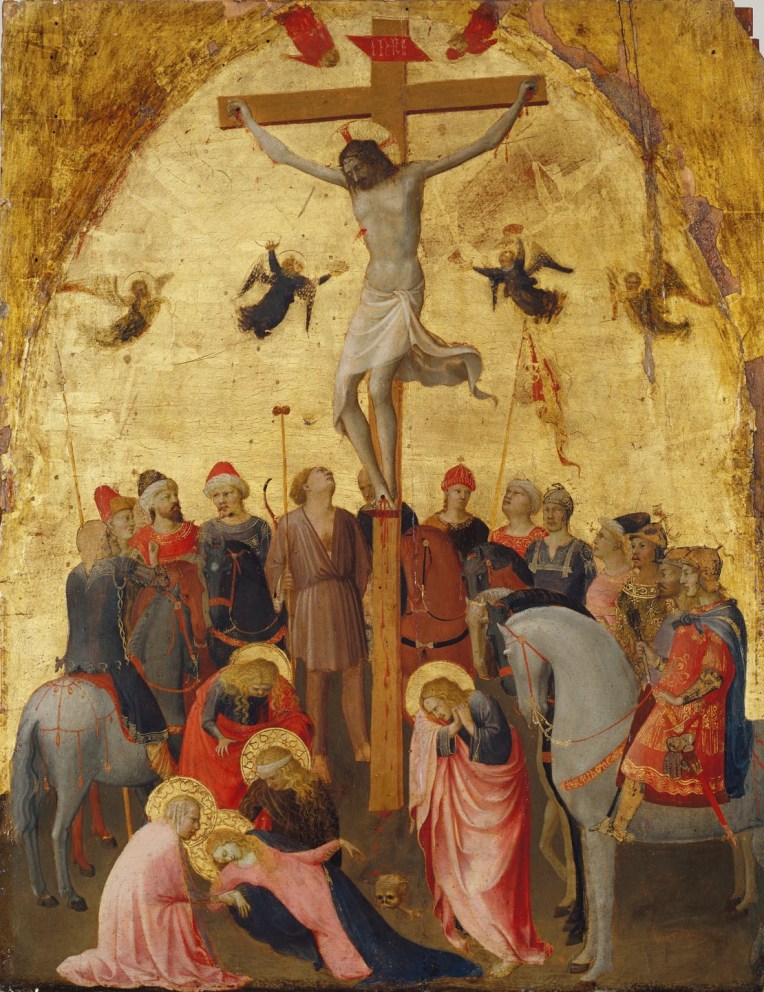
In many churches, we see above the high altar the youngest of the apostles—St. John—at one side of the Cross, and our Blessed Mother on the other.  This is the scene of the Crucifixion that the Church celebrated just days ago.

But on the third day, John ran with Peter to the tomb.  Along with Saint Peter and the beloved disciple, Saint John, we also see the wrappings lying on the ground.  John saw and believed.  With no sign of Jesus and without a word from Jesus, John saw and believed simply because the tomb was empty.  It is ironic that on the greatest feast of the Christian year, Christ doesn’t even appear in the Gospel Reading, nor speak a word.  We see only His empty tomb, and hear only silence.

Following His Resurrection on Easter Sunday, Jesus appears several times in His glorified body.  Yet He remained on this earth only for forty days proclaiming the Resurrection in this glorified body.  He remained only forty days because He had in store a different means of proclaiming the Resurrection, by means of a different body:  the Mystical Body of Christ.  What Jesus did in a glorified body for forty days, He would do until the end of time through His Mystical Body.

The Second Glorious Mystery is the Ascension.  The Ascension is the bittersweet transition between two means of Jesus revealing His love for fallen man.  The first means was the physical body that He received from the Blessed Virgin Mary—through the power of the Holy Spirit—at the Annunciation.  The second means was, is, and will be “unto the end of the age” the Church as the Mystical Body of Christ.  All of the Joyful, Luminous, and Sorrowful Mysteries of the Rosary, as well as the first two Glorious Mysteries, make possible the event of Pentecost:  the “birth” of the Church as the Mystical Body of Christ.  All of those earlier mysteries are preludes or prologues to the event of Pentecost, even the Resurrection that took place on Easter Sunday morning.

The Third Glorious Mystery is the “birth” of the Church at Pentecost.  This is what Jesus died for.  This is what Jesus rose for.  Jesus’ resurrection in a glorified body foreshadows what the Church becomes on the day of Pentecost.

Jesus bears new life when He rises from the dead.  Yet He wants His new life to be ours.  The Church—the Mystical Body of Christ—is the means by which we share in the life of the Risen Jesus.  The Church makes it possible for Easter to be not a mere historical event, but an ever-present reality:  in fact, the source of strength and grace each day that we live on this earth.

St. John teaches us to pray during these fifty days of Easter for a great gift.  God has a gift ready for us:  the Gift of the Holy Spirit.  That is why we hear every day of Eastertide from the Acts of the Apostles:  the book that describes the Church at work through the Power of the Holy Spirit.  The descent of the Holy Spirit at Pentecost is the culminating mystery of Easter.  We don’t simply celebrate it on the last day of Easter as an afterthought:  it is the mystery that Jesus leads us towards through His Resurrection.

Holy Saturday – morning reflection

Holy Saturday – morning reflection
April 16, 2022

… suffered under Pontius Pilate, was crucified, died and was buried; he descended into hell ….

How ought Christians spend Holy Saturday morning and afternoon?  Is this time simply an extension of the tenor and tone of Good Friday?  What happened to Jesus during the time between His Death and Resurrection?

Although Jesus was not subject to death as every sinner is, Jesus submitted to death.  His sacred Body did not undergo corruption or decay during this time.  However, Jesus was “divided”, so to speak, during the time between His Death and Resurrection.

When a sinner such as you or I dies, the sinner’s body and soul are separated.  The body decays, while the soul heads off towards its eternal reward or punishment.  The souls of those headed for Heaven may have to wayfare through Purgatory.  Yet regardless of where the soul heads after death, it will not be reunited with its body until the end of time.  However, after Jesus’ death, something very different happened.

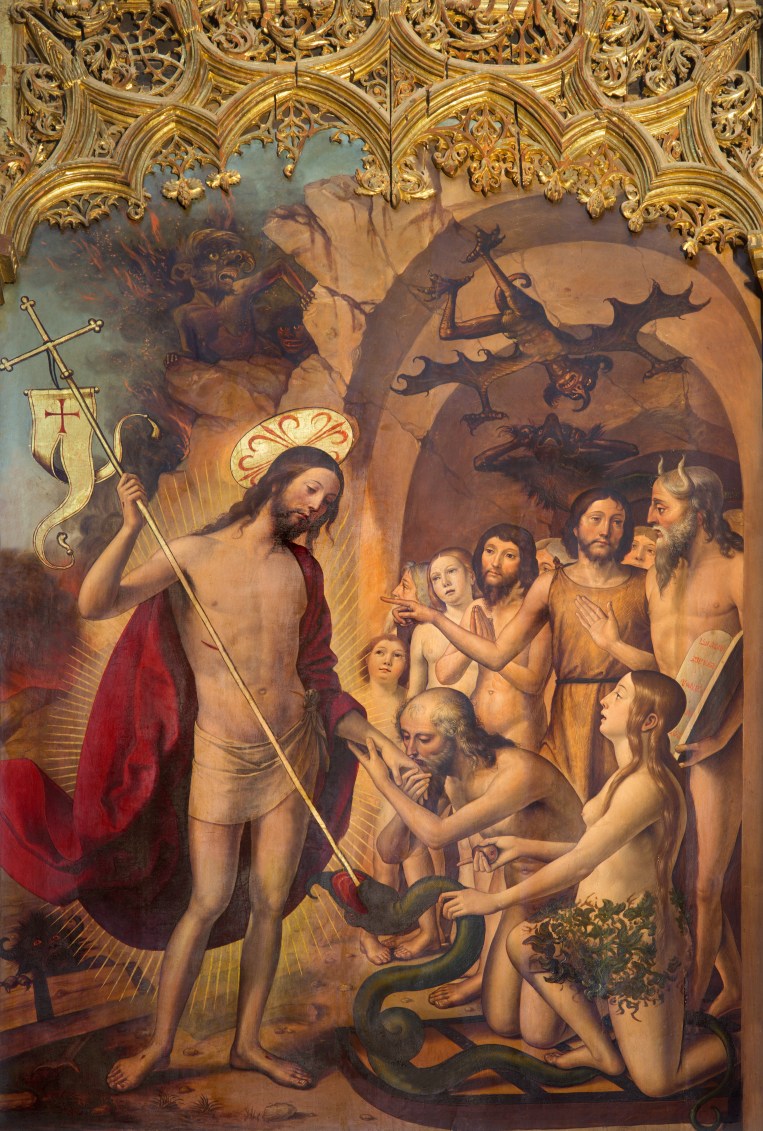
The Nicene Creed, which the Church usually professes at Sunday Mass, does not mention what Jesus did between His burial and His Resurrection.  But the Apostles’ Creed does affirm that “he descended into hell” (Latin: “infernos”; Hebrew: “Sheol”; Greek: “Hades”).  This is not the place where the damned face eternal punishment.  Instead, the Catechism refers to it simply as “the abode of the dead” [CCC 633].

Even morally good persons who died before Christ’s saving Death were destined for this “abode of the dead”.  Due to the merit of sin, both Original Sin and actual sin, even those who were just in terms of their human moral actions could not enter Heaven.  Only by the grace and merit of Christ’s Passion and Death could anyone enter into the presence of the Trinity in Heaven.

So when Jesus descended into the abode of the dead, He revealed Himself—bearing the wounds of His Passion and Death—to the just.  Those who wished were able to follow Jesus out of that abode and into Heaven.  This saving work that Jesus carried out is traditionally called “the harrowing of Hell”.  This saving work that Jesus performed even as His sacred Body lay in death reminds us of the depth and extent of God’s love.  At the same time, this work is a call to Jesus’ disciples to bear in daily life a love for others that is as deep and far-ranging.

Good Friday

Good Friday
Isaiah 52:13—53:12  +  Hebrews 4:14-16;5:7-9  +  John 18:1—19:42

We had all gone astray like sheep, each following his own way; but the Lord laid upon him the guilt of us all.

What is most striking about the scene in Gethsemane is not the betrayal of Judas, but the wandering of the other apostles.  Only two continued to follow Jesus after his arrest, Peter and John.  They follow Jesus, bound and carried away by the soldiers, at a distance:  their faith is wavering.  We know that before the night is over, Peter denies his Lord and Savior three times.

It is only John, the Beloved Disciple, who continues to journey with Jesus.  It is John who is beneath the cross with our Blessed Mother Mary.  We can be sure that even at the Cross, John, the youngest of the apostles, perhaps in his early twenties at this time, did not fully understand the death of his Master.  He wept for his Lord but could not fully understand what was taking place there on Calvary.

We know that of the apostles, only one did not become a martyr, and that apostle was Saint John.  It was he who had been faithful to the Lord’s Cross, who had shared Our Lord’s death not at the end of his life, but near the beginning.  Throughout the rest of his life as an apostle he prayed deeply about this great gift, this great sacrifice that Christ made.  Throughout the rest of St. John’s life, as he continued to serve others, his mind turned back, year after year, to that Good Friday and the hill of Calvary, where the love and the glory of God were brilliantly revealed.

Through the Eucharist which Christ, at the Last Supper, had given St. John the power to celebrate, John was able to enter into that scene once again, to return to that day which is today, and to that hill of Calvary.

There is no offering of the sacrifice of the Mass on Good Friday.  Yet still we are able to share in the fruits of that sacrifice.  As we enter into Holy Communion with Our Lord, let us turn our minds again to the sacrifice of Calvary, and the love in Christ’s Sacred Heart by which He offered it for our salvation.