The Second Sunday in Ordinary Time [C]

The Second Sunday in Ordinary Time [C]
Isaiah 62:1-5  +  1 Corinthians 12:4-11  +  John 2:1-11

Jesus did this as the beginning of his signs at Cana in Galilee and so revealed his glory ….

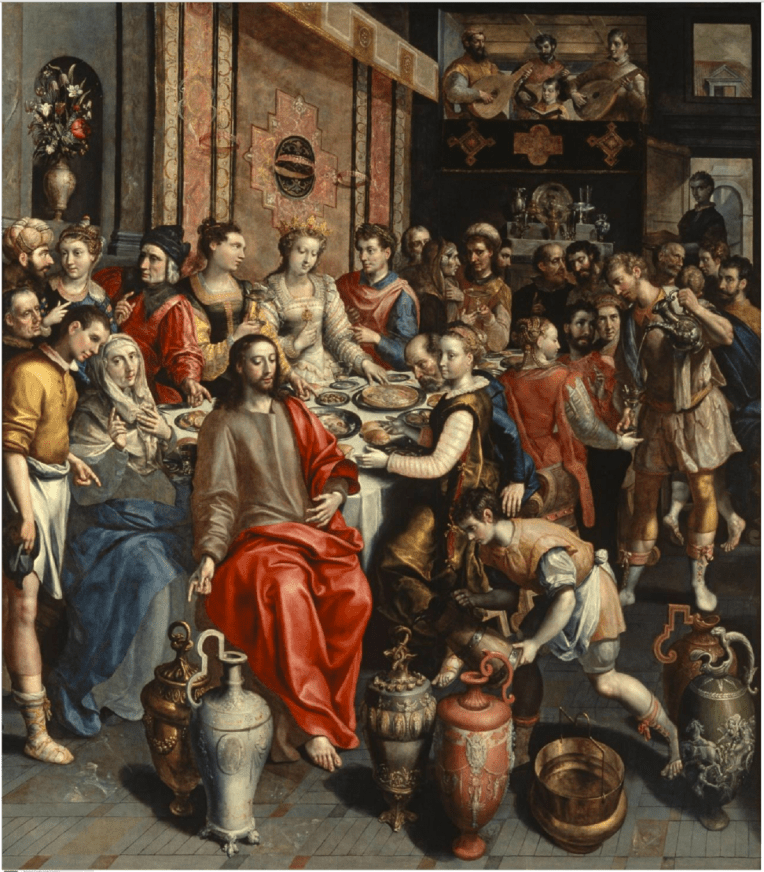
Jesus’ miracle at the wedding at Cana reveals to us many important truths.  For example, the fact that there were six ceremonial water jars, each holding about 25 gallons, tells us that Jesus produced 150 gallons of wine for this wedding celebration, which in turn tells us that this… was a Catholic wedding.

It also tells us that Jesus was not a fundamentalist.  If Jesus had believed that drinking alcohol is inherently immoral, His first public miracle would not have been to turn water into wine at a wedding.  Instead, He would have turned 150 gallons of wine into water to prevent those at the wedding from enjoying themselves.  As the 20th century essayist Hilaire Belloc declared:  “Wherever the Catholic sun doth shine, there’s always laughter and good red wine.  At least, I’ve always found it so:  Benedicamus Domino!”

However, besides this simple lesson about morality, there’s a deeper tradition revealed in this Gospel passage:  part of Tradition with a capital “T”.  It’s not a coincidence that Jesus’ first public miracle takes place at a wedding, and that this miracle teaches us about Marriage.

After all, it’s for the sake of a marriage that God the Father sent His Son to become man.  The Word became Flesh so that fallen man, by receiving this Word made Flesh, would enter into union with God.  St. Paul speaks of this union at length in his New Testament letters, describing the love of Jesus and His Church as a marriage.

Given this, it’s not a coincidence that the Fourth Commandment is about loving one’s parents.  Reflect on the Fourth Commandment’s place among the Ten in order to appreciate Jesus’ marriage to His Church, of which each of us is a member.

The Ten Commandments fall into two groups:  the first three command us to love God because God is Love.  The latter seven command us to love our neighbor as our self.  It’s not a coincidence that the first three are first, because it’s more important to love God than our neighbor.

This is so because our love has to be ordered.  If your love for God is not primary, then your love for your neighbors will be weak.  God intends, by the way He designed us, for His love to be the source of our love for our neighbors.

Similarly, our love for all our neighbors has to be ordered.  That is, there’s a reason why the Fourth Commandment is the first of the commandments to love our neighbors.  During your earthly life, as you journey among all your fellow human beings, if your love for your parents is not primary, then your love for any and all of your other neighbors—in childhood and adulthood—will be too weak to accomplish what God wishes for you to do.

What does He wish you to do?  As you strive during your earthly journey to love God and neighbor, what does He wish you to do?

“Do whatever He tells you.”  These words of our Blessed Mother are not just for servers at a wedding 2000 years ago.  If each of us listened to our Blessed Mother, our families would be strong.  Each human family would reflect the love seen in the Holy Family.  Each human family would be a school of discipleship, apprenticing its members in the love of God and neighbor.  The principle of all that Jesus tells us to do is the self-sacrifice seen on Calvary, where Jesus gave His life for His Bride, the Church.

As the family goes, so goes society.  The family that’s rooted in God strengthens society.  But the family itself is made of individuals.  Each individual within each family—excepting the Holy Family—is a fallen sinner.

As the first of the signs of Jesus’ glory that St. John records in his Gospel account, the miracle at Cana points to nothing less than the divinization of man:  that is, the capacity of the human person to abide in God’s love.  What is merely natural and of this earth—water—becomes something more, something richer and deeper.  What for human beings is ordinary is made a conduit of God’s extraordinary grace.  As the venerable wedding instruction preaches:  “Sacrifice is usually difficult and irksome.  Only love can make it easy, and perfect love can make it a joy.”
Thursday of the First Week in Ordinary Time [II]

Thursday of the First Week in Ordinary Time [II]
I Samuel 4:1-11  +  Mark 1:40-45
January 13, 2022

[Jesus] remained outside in deserted places ….

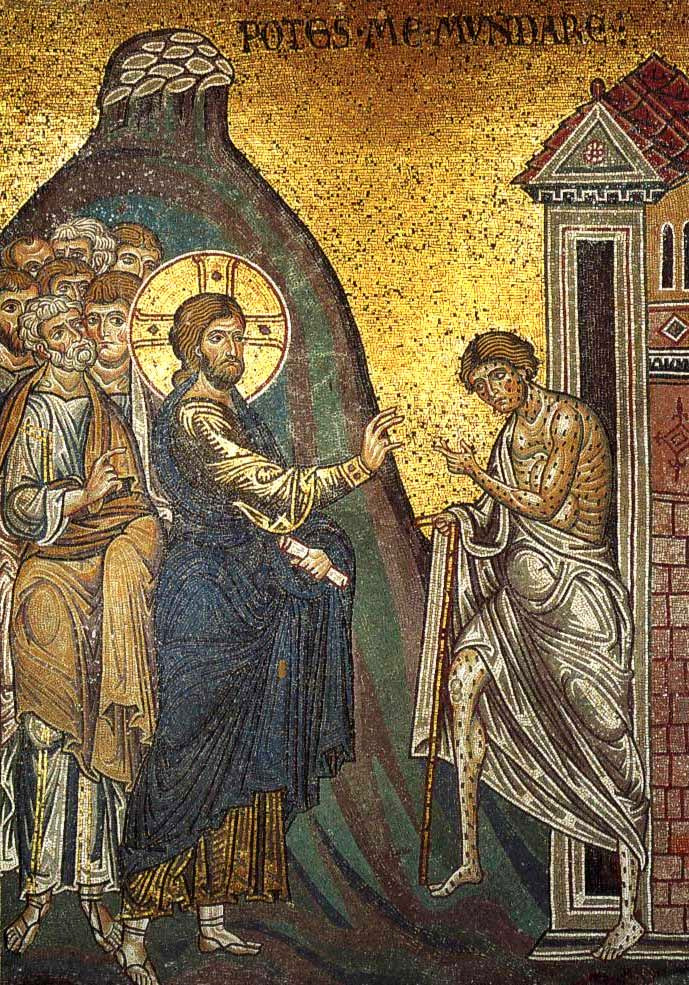
In today’s Gospel passage, we hear that Jesus “remained outside in deserted places, and people kept coming to him from everywhere.”  Jesus’ “retreat” is not that of a hermit.  Jesus’ frequent journeys to deserted places was a prudential distancing himself from those He came into this world to serve.  Jesus wanted at times simply to be in prayerful communion with His Father.

At the same time, perhaps Jesus knew that the people He was sent to serve needed a “breather”.  It’s hard for us to imagine what it was like to hear the Word of God preach the Good News, or work stupendous miracles.  We may imagine that because we’ve seen movies portraying such events, that we have an idea what it was like for those first-century folk.  If so, we underestimate the power of the Word of God made Flesh, and overestimate the power of cinema.

Often implicitly, and sometimes directly, Jesus says that the crowds are misunderstanding Him, even praising Him for the wrong reasons.  Some distance between Him and them, then, was prudent so that the crowds might reflect in their minds and hearts on the mysteries of Christ.  Of course, in the end, the crowds called for His death:  “Crucify him!  crucify him!”  So also have we ourselves cried by our sins.  But within the desert of Calvary Christ offered His life, so that throughout all ages to come, people might keep coming to Him from everywhere.

OT 01-4

Wednesday of the First Week in Ordinary Time [II]

Wednesday of the First Week in Ordinary Time [II]
I Samuel 3:1-10,19-20  +  Mark 1:29-39
January 12, 2022

Rising very early before dawn, He left and went off to a deserted place, where He prayed.

In the light of Simon’s pursuit of Jesus and his informing Jesus that “everyone” is looking for Him, two actions of Jesus stand out.  Both actions show the falsity of Simon’s claim.

The fact that this passage begins with the cure of Simon’s mother-in-law gives us a glimpse into his way of thinking.  As more persons are cured, and as word spreads, Simon is convinced that “everyone” is looking for Jesus.

But “rising very early before dawn,” Jesus prayed in a deserted place.  In that “desert” He entered into communion with His Father.  His Father is primary to Jesus in an ultimate manner.  His Father is also primary to the crowds that Simon calls “everyone”.

When Simon makes his claim to Jesus, He responds by explaining the need to “go on to the nearby villages”.  Simon is parochial in his thinking, while Jesus wants no one excluded.  At this point in His public ministry, Jesus is preaching and healing “throughout the whole of Galilee.”

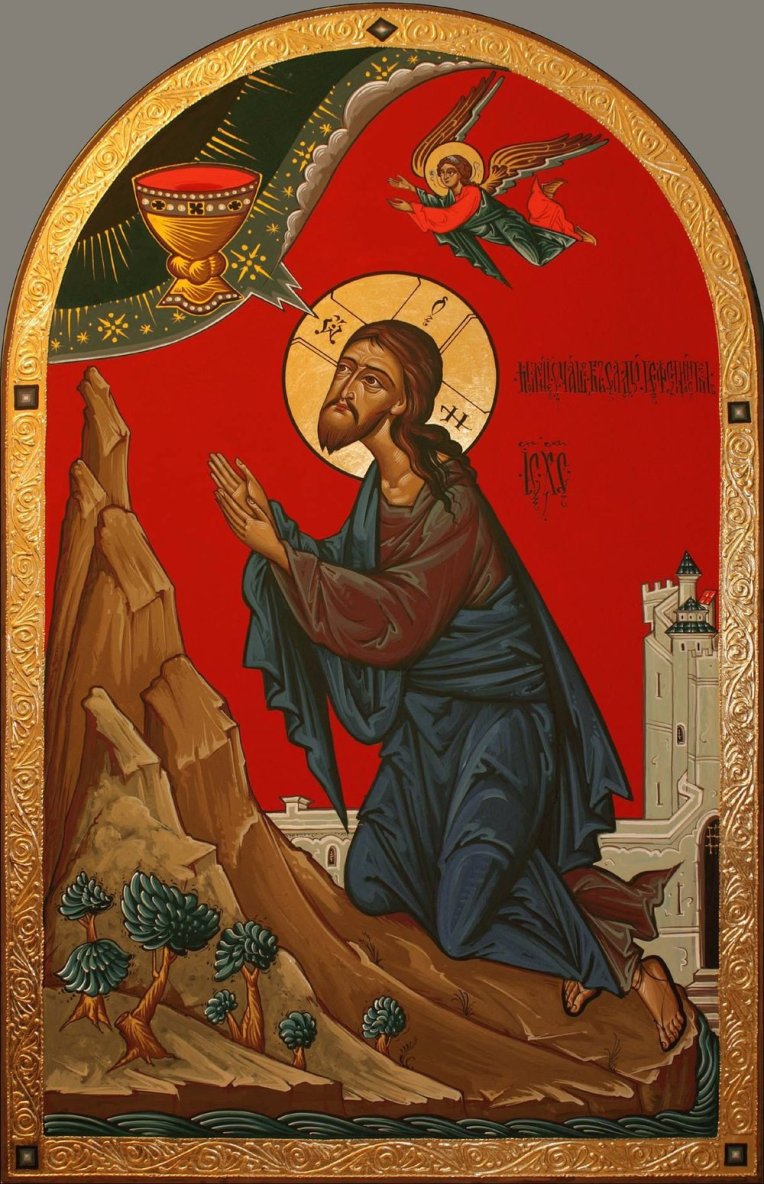
As those three years continue, the effects of His ministry spread out in waves.  Ultimately, His ministry culminates in His self-sacrifice on Calvary.  Jesus’ prayer in today’s Gospel Reading foreshadows His prayer in Gethsemane after the Last Supper.  Jesus offers His self-sacrifice on Calvary for all mankind throughout all of human history.  This is the “everyone” whom Jesus was sent by His Father to serve.

OT 01-3

Tuesday of the First Week in Ordinary Time [II]

Tuesday of the First Week in Ordinary Time [II]
I Samuel 1:9-20  +  Mark 1:21-28
January 11, 2022

“What is this?  A new teaching with authority.”

Twice in today’s Gospel passage we hear the word “authority”, both times applied to Jesus.  In both cases, astonishment or surprise is evoked by the fact that Jesus teaches with authority.  Why is there this astonishment, and what does it mean for Jesus to teach with authority?

In the culture that surrounds us, every person believes himself to be his own authority.  In effect, this wide-spread belief means that no real authority exists.  In our society there is a great need for clarity about the meaning and purpose of authority.

At its most literal level, the word “authority” comes from the word “author”.  The author of a novel can create worlds of his own design from his imagination.  Laws of physics need not apply.  Strange creatures can exist, and fantastic events are commonplace.  Tolkien, Baum and Rodenberry are all authors in this sense.  They have the authority to create worlds and races of creatures, and to confer life upon individuals and to take it from them.  However, this is merely a fictional form of authority.  In reality, there is only one Author of creation.

Jesus, as God from God and Light from Light, is this divine Author.  Through His divinity He has authority.  He exercises this authority throughout the three years of His public ministry for various persons, and for all mankind on Calvary.  However, in the face of His exercise of divine authority, astonishment arises for varied reasons.

Most cannot believe that a mere man could exercise divine authority.  Jesus, of course, was not merely a man, even though He was fully so.  In our own lives, we should not be astonished by the authority of Jesus.  We should root our daily lives in His desire to grant us His grace.

OT 01-2

Monday of the First Week in Ordinary Time

Monday of the First Week in Ordinary Time
Mark 1:14-20

“Come after me, and I will make you fishers of men.”

Today is a day of beginnings.  Today as we begin the season of Ordinary Time we hear from the beginning of the Gospel account of Saint Mark.  It points us to our ultimate end:  the embrace of God the Father.

Christ sustains all things by his powerful word, whether those things recognize the source of that power or not.  But for those who recognize Christ as the Son of God, He does infinitely more.  For those who all willing to abandon everything in this world—even the earthly fathers who reared them—Christ confers the power to share everlasting life, to be sustained in the life of God the Father forever.

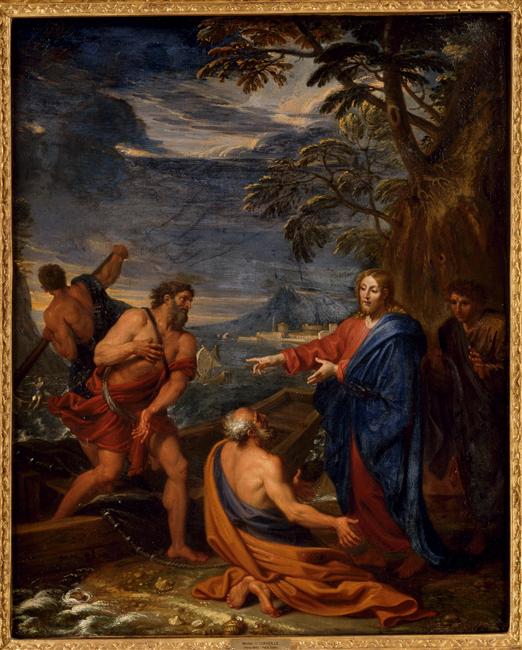
Such men are the apostles Andrew and Simon, James and John.  They leave everything to go off in his company, having received a commission to become “fishers of men.”  They are called to share in the life of Christ, and at this point, they have no idea what this will entail.  This is how beginnings always are:  we have no real idea of what is going to transpire in the future.  If these four men had known that each of them would share deeply in the suffering of Christ—three of them, through martyrdom, and Saint John, at the foot of the Cross—it is unlikely they ever would have left their boats.

At the beginning of this season of Ordinary Time, let us pray for the grace to be faithful to the calling which we entered into through our Baptism.

OT 01-1

Saturday after Epiphany

Saturday after Epiphany
1 John 5:14-21  +  John 3:22-30

There is such a thing as deadly sin, about which I do not say that you should pray.

On this last weekday of Christmastide before the season’s concluding with the celebration of the Baptism of the Lord, the Beloved Disciple in the First Reading tackles a challenging subject.  What he states follows from what he has proclaimed in passages heard earlier in Christmastide.  Yet he’s more specific here about the demands made of the Christian disciple.

St. John in his biblical writings repeatedly proclaims the Crucifixion of Jesus as God’s clearest revelation of His love for fallen man.  In today’s First Reading, St. John declares that the disciple of Jesus must forgive sinners as Jesus did on the Cross.  In St. John’s exposition, there are several specific points that deserve attention.

First, St. John proclaims that the Christian disciple ought to pray for a sinner, and that God “will give him life.”  This makes clear that God wants Christians to intercede for others in prayer, contrary to what some of our separated brethren claim.  Moreover, God specifically wants the Christian to intercede for a sinner.  While St. John does not state here that the Christian’s intercessory prayer for a sinner will bring the sinner forgiveness, but rather “life”, the principle of a Christian interceding for another sinner is one of the principle underling the Sacrament of Confession.

Second, St. John very clearly distinguishes two types of sin based on the degree of severity.  He states that there “is such a thing as deadly sin”, and shortly thereafter that “there is a sin that is not deadly.”  These two types of sin correspond to the Church’s distinction between “mortal sin” and “venial sin”.  Both types of sin can be forgiven through the Blood of Christ, but the forgiveness of “deadly sin” is reserved to the Church’s Sacrament of Reconciliation.

Friday after Epiphany

Friday after Epiphany
1 John 5:5-13  +  Luke 5:12-16

And this is the testimony:  God gave us eternal life, and this life is in his Son.

The Beloved Disciple, St. John the Evangelist, uses many words to describe God throughout the course of his Gospel account and three epistles.  Among these words are “life”, “light”, and “love”.  In today’s First Reading St. John considers divine life and how an ordinary human person may share in this life.

One of the more overlooked principles of the Christian spiritual life is that the Christian is not called merely to imitate Jesus.  Jesus is not a mere example for the Christian to follow.  The Christian disciple must live and act “in” Christ, as one member of Christ’s Mystical Body.

It’s within this Body as one of its members that he Christian shares in the life of Christ.  This life is not only the divine life that God the Son shared with the Father from before time began.  This life also includes all the human experiences of God the Son, especially His Death, Resurrection, and Ascension.  These experiences are the experiences of the Christian disciple.

This life of Christ is the source of strength and inspiration for daily Christian life.  This is one reason that the sacraments are key to Christian growth.  For when the sacraments are devoutly received, their graces deepen one’s share in the life of Christ.  This in turn allow the disciple’s human life more easily to follow the pattern of Christ’s earthly life, if the disciple submits his daily thoughts, words, and actions to Christ’s life.

The Baptism of the Lord [C]

The Baptism of the Lord [C]
Isaiah 42:1-4,6-7  +  Acts 10:34-38  +  Luke 3:15-16,21-22
[or Isaiah 40:1-5,9-11  +  Titus 2:11-14;3:4-7  +  Luke 3:15-16,21-22]

“You are my beloved Son; with You I am well pleased.”

+     +     +

reference to the Catechism of the Catholic Church:

CCC 535-537: the Baptism of the Lord

+     +     +

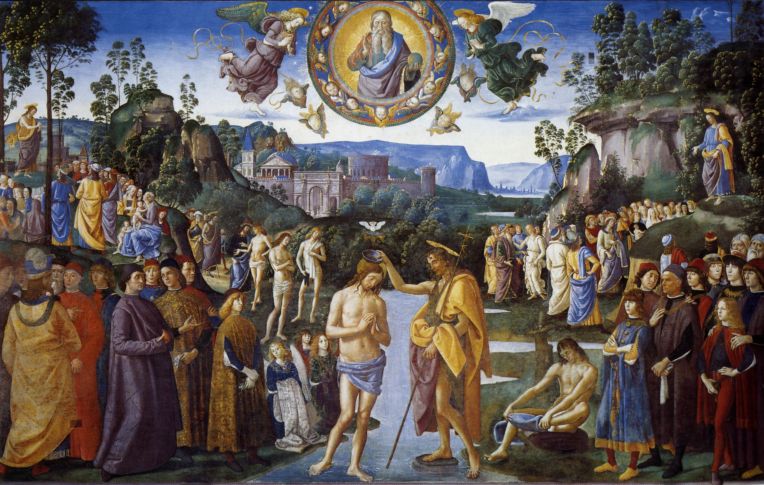
God reveals two important mysteries at Jesus’ baptism in the Jordan River.  The first is an eternal mystery, while the second is bound up with the course of salvation history.

The first mystery revealed at the Baptism of the Lord Jesus is the Most Holy Trinity.  This mystery is not spoken of often in the Gospel accounts, so consider each of the three divine Persons of the Most Holy Trinity in the light of the Lord’s baptism.

Concerning God the Holy Spirit, it’s notable that the Holy Spirit descends in the form of a dove.  The dove calls to mind Noah and the Ark.  After forty days of the Flood, a dove descended to reveal to Noah that dry land had been found and God’s destruction ended.

In the account of the Baptism of Jesus, the order of events is reversed:  Jesus ascends from the water, the dove descends, and then—the next passage in the Gospel according to Mark tells us—Jesus spends forty days in a desert to start His work of restoring life.

In the Flood, God destroyed corrupt human beings to destroy sin.  But in the Gospel, Jesus is destroyed by corrupt human beings in order to destroy sin.  The former effort failed, while the latter—thanks be to God—has truly won for us God’s victory over sin.

Concerning Jesus, it’s revealed at His Baptism that He is the Son of God.  The Church proclaims this truth throughout the Christmas Season, of course.  But Jesus is baptized when He is thirty years old.  Very likely, the events surrounding the birth of Jesus had been forgotten by many at that point.  Yet the Baptism of Jesus was the start of His public ministry.  It was important at this point that God the Father would declare Jesus to be His own Beloved Son.

However, today’s feast reveals a second mystery in addition to the mystery of the Trinity’s inner life.  Today’s feast of the Baptism of Jesus reveals that you yourself are called to be a child of God by means of sharing in the life and death of Jesus Christ.

Jesus, of course, had no need to be baptized.

He was baptized for the same reason that He became human; for the same reason that He taught and worked miracles; for the same reason that He was crucified, died, and was buried:  for us.

Likewise, Jesus was baptized for us.  He was baptized to show us the way, because baptism is the way into the life of Jesus, and through Him into the inner life of the Trinity.

Your baptism was the moment when you became one member of Christ’s Body.  Your baptism was the moment when Christ’s life became the meaning and goal of your life.  Your baptism was the moment when God the Father adopted you as His own child.

Your relationship with God the Father—as one of His very dear children [see Ephesians 5:1)—is the heart of your life as a Christian.

Concerning, finally, the divine Father who adopts sinners through baptism, there are pitfalls that we have to be wary of.  First, God as a Father is a father in His own way, not as we might wish.  In other words, God is not Santa Claus, who gives us what we want.  God is our divine and providential Father who gives us what we need.

Second, God the Father does not remove every obstacle from our path.  Some obstacles He does remove for us, out of love.  But out of love, some obstacles He does not remove, instead showing us how to resolve them ourselves, and demanding that we take responsibility for that which is in our power.

Third, God the Father doesn’t keep us at a remove.  He wants us to become like Himself in all things.  He wants us to become like Him even in offering sacrifice.  Santa Claus never asks us to give up things, or to sacrifice our very selves.

God the Father does ask that of us, because that’s what He Himself did for us in sacrificing His Son Jesus for our sins.  Sacrifice is not the sum total of our relationship with God the Father.  But it is the highest measure of whether each of us becomes like Him, which means:  whether each of us becomes as loving as He is.

Thursday after Epiphany

Thursday after Epiphany
1 John 4:19—5:4  +  Luke 4:14-22

… whoever does not love a brother whom he has seen cannot love God whom he has not seen.

God loves every person, for it’s God’s very nature to love.  Certainly, God at times withholds certain graces from His beloved children so that they might be purified, or grow in longing for Him.  Likewise, God bestows certain graces called “charisms” upon certain of His children but not upon others.  Nonetheless, God never at any moment fails to love each human person.  This love sustains each person in being and calls each fallen person to greater holiness.

Since God loves unconditionally, and since man is called to live in the likeness of God, each human being is called to love unconditionally.  Naturally, it’s more difficult to love one’s neighbor than to love God, for God is more lovable.  Yet God does not love a person because that person is lovable.  God loves a person in order to make that person lovable.  St. John points to this truth in today’s First Reading:  “Beloved, we love God because He first loved us.”

If and when you do not love another human person, then, you are not acting in the likeness of God.  This truth does not mean that love never makes any demands of another.  Indeed, God’s love demands that one become like God in how one loves, in all the forms that love takes, including the forgiveness of sins.  In the Crucifixion of Jesus we see most profoundly that God does not love us in spite of our sins.  He loves us right through our sins.