Saturday of the Twenty-second Week in Ordinary Time

Saturday of the Twenty-second Week in Ordinary Time
Luke 6:1-5

“How he went into the house of God, took the bread of offering, which only the priests could lawfully eat, ate of it, and shared it with his companions?”

If the physical setting of today’s Gospel passage – Jesus and His disciples walking through a field of grain on a sabbath – does not alert us to the passage’s Eucharistic overtones, Jesus’ words ought to.

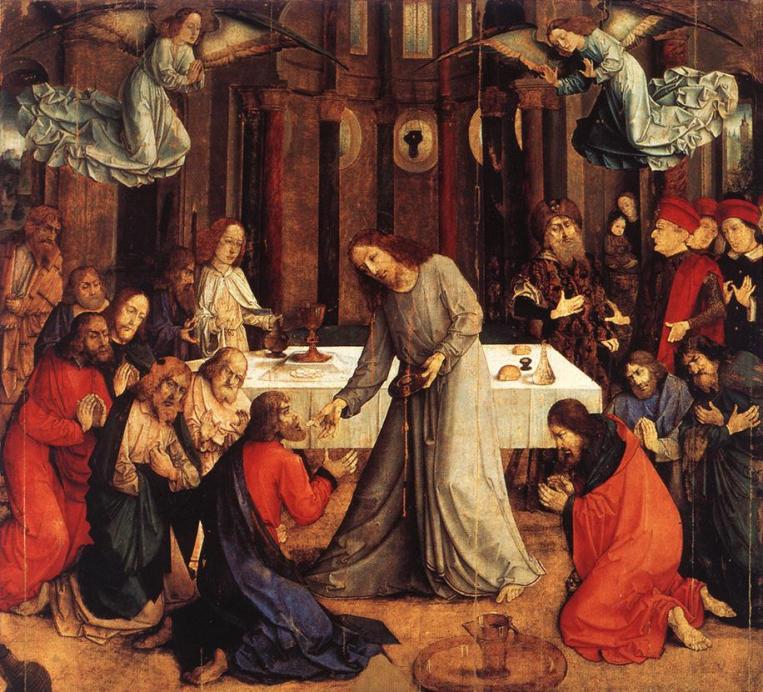
To the objections of the Pharisees, Jesus speaks about King David.  Yet David is a biblical “type” of Jesus, a type being someone or something who foreshadows another person or thing.  What Jesus describes David doing foreshadows what Jesus will establish at His Last Supper.  The Last Supper, of course, was the first Mass:  the ritual celebration of the new and everlasting Covenant of which Jesus speaks at the Last Supper in the words of consecration.

St. Thomas Aquinas, in the sixth verse of his Eucharist hymn Sacris Solemniis, describes the Eucharist in terms that echo what Jesus says of David.  “Panis angelicus / fit panis hominum”:  “Thus angels’ bread is made / the Bread of man today”.  Jesus describes how David shared something reserved to the Old Testament priests with his companions.  In an infinitely profounder way, Jesus takes the Eucharist – the bread of angels – at His Last Supper and gifts it to His disciples.

St. Gregory the Great, Pope and Doctor of the Church

St. Gregory the Great, Pope and Doctor of the Church
Colossians 1:15-20  +  Luke 5:33-39
September 3, 2021

“Rather, new wine must be poured into fresh wineskins.”

Depending on circumstances, two given cousins may resemble each other very closely, or not at all.  Today’s Gospel passage presents a contrast between Jesus and His cousin, John the Baptist.  Jesus confirms the differences between Him and John, although these differences lead in the same direction.

The context of this contrast is a complaint lodged against Jesus by the scribes and Pharisees.  They uphold the practice of fasting and prayer, but at the same time note that Jesus’ disciples don’t seem to engage in either.

Jesus responds with a metaphor and a parable.  Consider the former.  Jesus describes Himself as a bridegroom.  We as modern Christians understand that by this metaphor Jesus is referring to Himself as the bridegroom of the Church, though that part of the metaphor would have been lost on His original hearers.  But He continues by noting that when the bridegroom is taken away, then the wedding guests will fast.

The latter part of the metaphor can be applied in two ways.  The first we can reflect on in terms of Jesus’ earthly life, and the time of His Passion and death during Holy Week.  The second we can reflect on in terms of our own earthly lives as pilgrims on our way to Heaven:  that is to say, as members of the Church Militant.  We may only share fully in the wedding feast of the Lamb in Heaven, and so while still here below we fast and pray, hoping for complete union in Heaven with the Lord.

OT 22-5

The Twenty-third Sunday in Ordinary Time [B]

The Twenty-third Sunday in Ordinary Time [B]
Isaiah 35:4-7  +  James 2:1-5  +  Mark 7:31-37

“Then will the eyes of the blind be opened, the ears of the deaf uncleared ….”

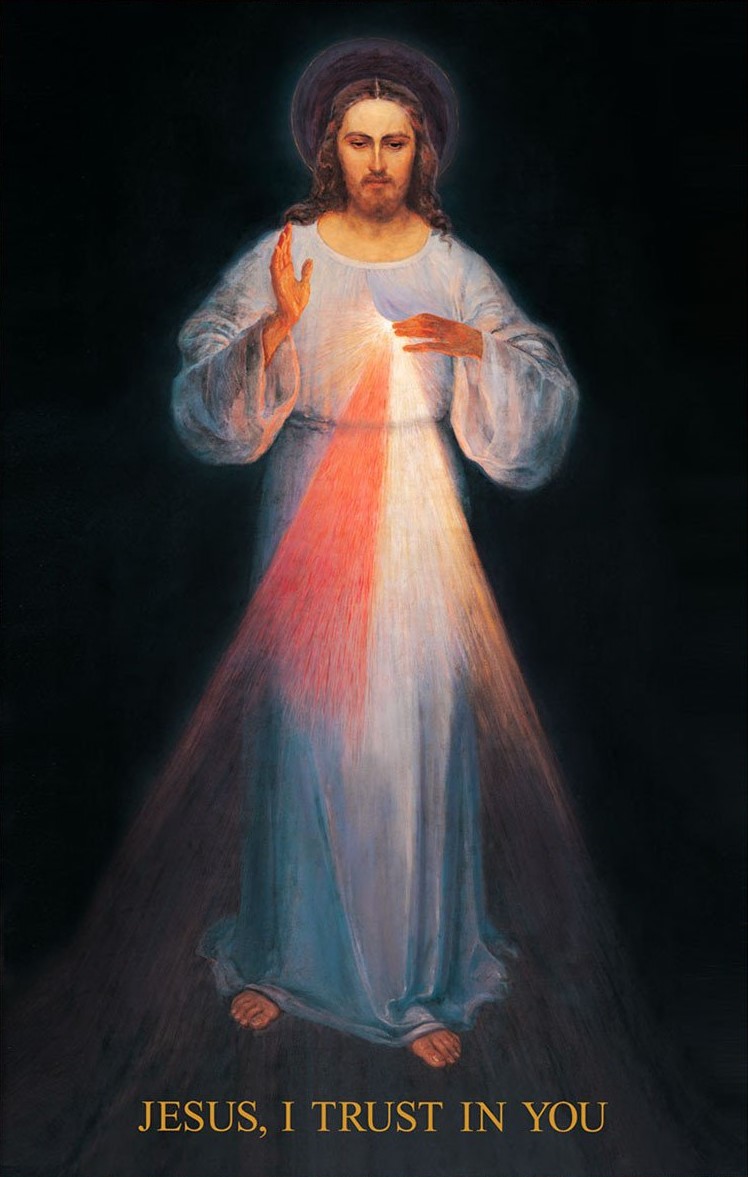
Mercy is the key that unlocks the human heart.  Mercy makes it possible for the human heart to become what God created the human heart to be.  Yet once a person has opened his heart to the gift of mercy, God is free to pour in all manner of gifts.  But if the sinner refuses to accept mercy, his heart remains tight shut, and God respects that decision.

It’s in this sense that mercy is God’s primary gift to fallen man.  Mercy is not primary in importance, in the sense that there is no mercy bestowed to those in Heaven.  Yet mercy is primary in the order of fallen man.  God always respects human free will, even though His divine Will is infinitely more powerful.  But if you don’t accept God’s gift of mercy, your heart is shut to all His other gifts.

The Church, as our mother, has for two thousand years preached that mercy is the primary need of mankind.  This is true not only within the Church, but outside the Church as well.  That is to say, each of us Christians needs to accept mercy so that we can be forgiven and hopefully one day enter Heaven.  However, we also need to accept God’s mercy because He calls us to bear the Good News of mercy to the fallen, divided, hateful world in which we live.  Yet we can’t be messengers of God’s mercy to those outside the Church if we haven’t first been on the receiving end of God’s mercy.  So consider the meaning of mercy.

By way of practical example, consider the way that a child does or does not experience mercy from those around him.  A child who doesn’t know that he’s loved at his worst will never accept the gifts that will make him his best.  Remember the Parable of the Prodigal Son.  If the prodigal son hadn’t turned to his father for mercy, then the father—who all along was deeply hoping and praying for his son to return—could not have rushed out to give him mercy and then also other gifts such as a ring and a feast.

It’s the same in your life as a sinner.  Because you are a sinner, God the Father’s merciful love is primary.  He has already accomplished the work of forgiving your sins by the offering of His Only-Begotten Son on the Cross two thousand years ago.  But you have to accept that gift of mercy.  Once you accept that gift into your heart, mind, and soul, the flood-gates are opened and God the Father can pour into your life many other gifts.

Imagine the life of a child in a wealthy family.  Imagine the child’s father is named Daddy Warbucks.  Daddy Warbucks is a man who constantly gives material gifts to his child.  But there’s one thing that Daddy Warbucks never gifts his child with, and that’s mercy.  Fortunately, this child’s conscience is smart enough to tell him that he needs mercy in order to have an authentic relationship with his father.  Unfortunately, this child’s conscience also knows that without mercy, no other gift has final meaning, no matter how expensive.

But keeping that first example in mind, imagine a second scenario.  It’s very similar, with the same child and the same generous Daddy Warbucks.  However, while Daddy Warbucks in this case does offer mercy to his child as a loving gift, the child—for whatever mysterious reason—refuses to accept his father’s gift of mercy.  Some might think it odd that a child would refuse the gift of mercy.  Unfortunately, for whatever mysterious reason, it’s far more common than people think.  There are many adults who have grown up without ever accepting the gift of mercy into their hearts.

It sounds simple, but we know from experience how divided we find ourselves in trying to put our Catholic Faith into practice.  We often blame God, claiming that God isn’t granting to us what we need to grow in holiness.  In this, we might remember a saying of the Little Flower’s namesake, St. Teresa of Avila:  “Christ does not force our will.  He takes only what we give Him.  But He does not give Himself entirely until He sees that we yield ourselves entirely to Him.”
Thursday of the Twenty-second Week in Ordinary Time [I]

Thursday of the Twenty-second Week in Ordinary Time [I]
Colossians 1:9-14  +  Luke 5:1-11
September 2, 2021

“But if you say so, I will ….”

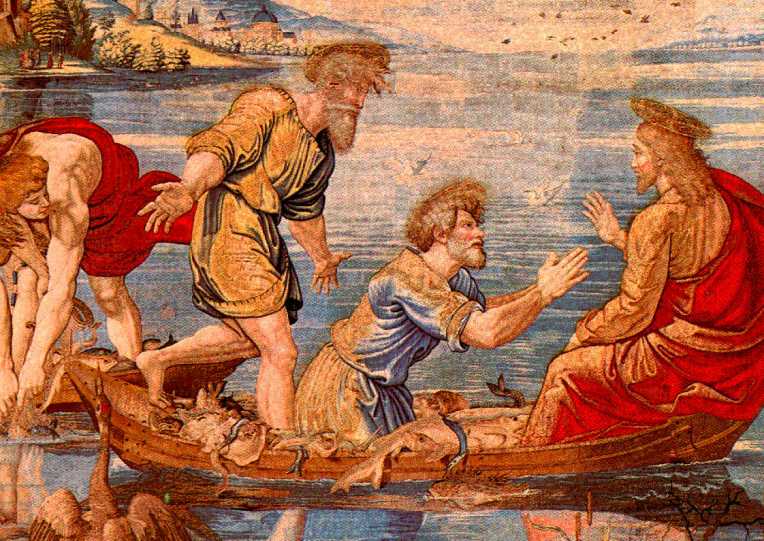
In spite of Peter’s knowledge and experience in fishing, and in spite of his having been up all night long, Peter and his fishing partners had caught absolutely nothing.  Sometimes in what we do, also, we try our best, even at things we’ve done before and know a lot about, but things don’t work out for us.  That’s a natural part of life in this fallen world.

But in today’s Gospel passage, we hear about Jesus coming along.  Jesus was a carpenter, not a fisherman.  Jesus tells Peter to put out the fishing boat into deep water (not the best place to catch fish), and after the sun had risen (not the best time).  Peter starts out with a protest against Jesus’ idea, but then has second thoughts, and replies to Jesus, “But if you say so, I will….  I will lower the nets.”

Remember that God’s ways are not our ways.  Sometimes, when we pray, we end up telling God what He should be doing.  And when we hear God talking to us, we think His ideas are bad ideas.  When Jesus asks us to do something for Him, we should listen.  And through the grace that we receive in Holy Communion, we should speak as Peter speaks, and say to Jesus, “But if you say so, I will….”

OT 22-4