The Exaltation of the Holy Cross

The Exaltation of the Holy Cross
Numbers 21:4-9  +  Philippians 2:6-11  +  John 3:13-17
September 14, 2021

… He humbled Himself, becoming obedient to death, even death on a cross.

We know that silence can be deafening.  Sometimes silence is very embarrassing, as when a teacher asks a question about something that’s been studied for weeks, and no one knows the answer.

On the other hand, silence can be a very good thing.  It is in silence that the highest kind of prayer happens.  St. John of the Cross is supposed to have said that silence is God’s native language.  Regardless, there are many different ways to pray.  One of the first ways that we learn is prayers that others teach us, like the “Our Father”, the “Hail Mary” and the “Glory Be”.  Prayers like these let us pray together as a group, so that we’re praying the same thing at the same time.

Other times, though, we pray on our own, and so we make up our own words in prayer.  In this kind of prayer—which is like a conversation with God—we can say anything we want.  We don’t have to remember the right words to pray.  We just pray from our heart, and offer to God whatever is most on our mind.

But there’s another part of prayer that sometimes gets overlooked.  That is silence.  Actually, in our prayer, most of our time should be spent listening rather than speaking.  As the saying goes, this is why God gave each of us two ears, but only one mouth:  we are to listen twice as much as we talk.  This is as true of prayer as it of conversations with our fellow human beings.

It is in our silence—in listening to God—that our deepest prayer can take place.  This makes sense, if we think of it, because after all, isn’t what God wants to say to us probably more important than what we want to say to Him?

Humility is one of the virtues, and silence is one form of humility.  That’s why it’s often difficult to quiet ourselves down.  When we’re forced to be silent, we usually want to talk instead.

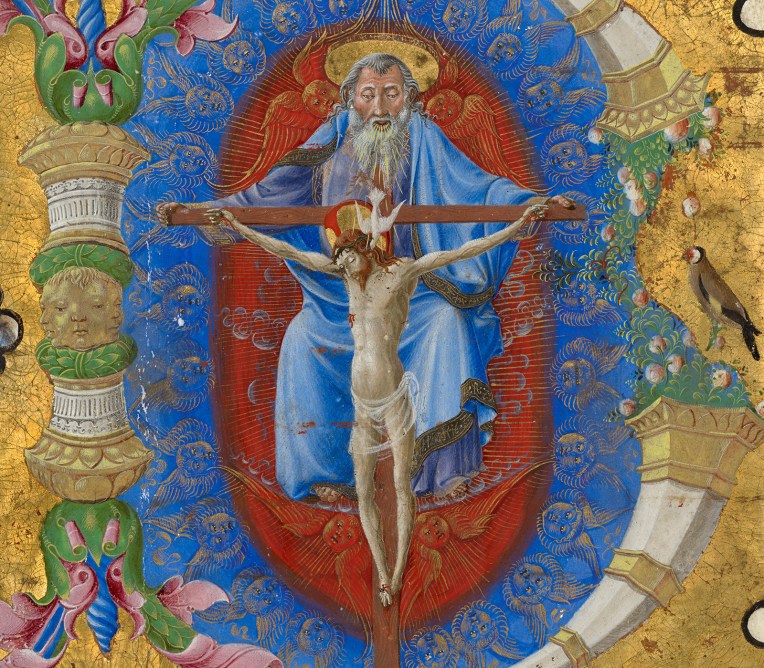
Even though we have lots of opportunity to grow in humility, as human beings our greatest call to be humble is when we face death:  the deaths of others whom we love, but eventually, our own death.  This is where Christ reveals to us God’s love.  This is what we celebrate today, on the Feast of the Triumph (or Exaltation) of the Holy Cross.

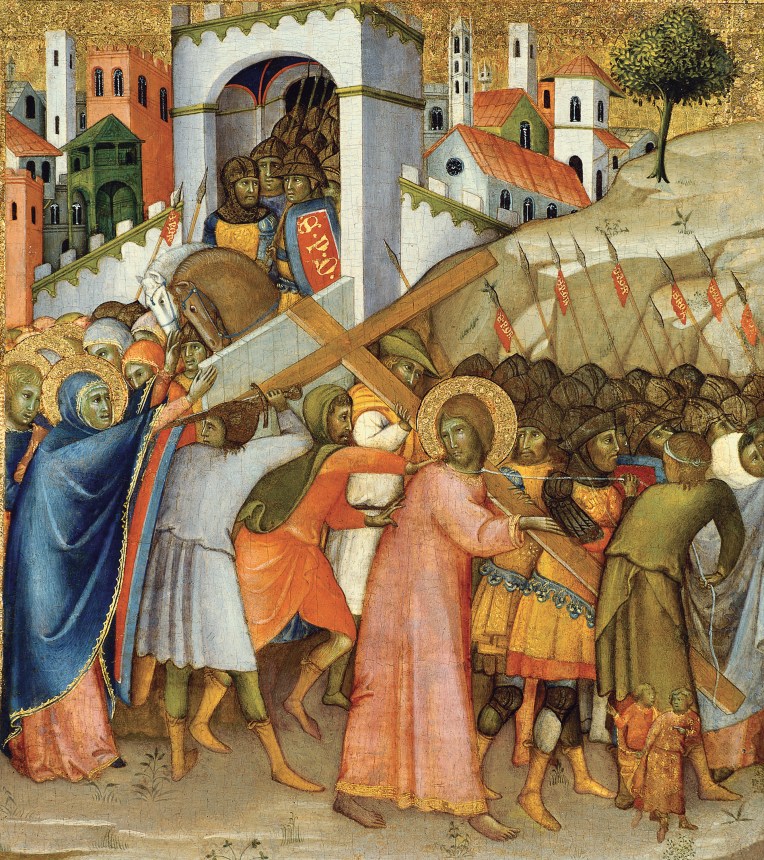
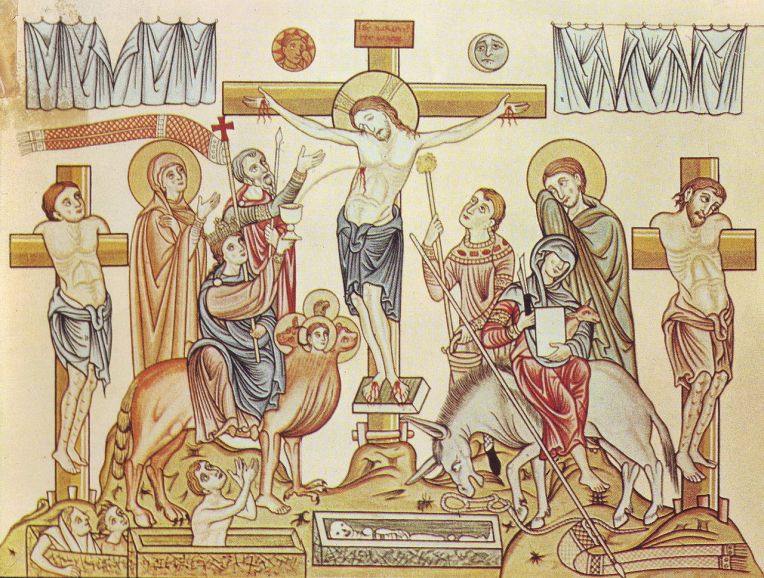
Picture in your mind the scene at Calvary.  Saint John was the only apostle who stood at the foot of the Cross in silence, and it was into his care that Christ, the only child of Mary, entrusted His Blessed Mother.  In turn, Christ entrusted John to the care of Mary.  In these words we hear the only teaching that is possible from the Cross:  that we must entrust ourselves to each other’s care, bound to each other by Our Father’s love.
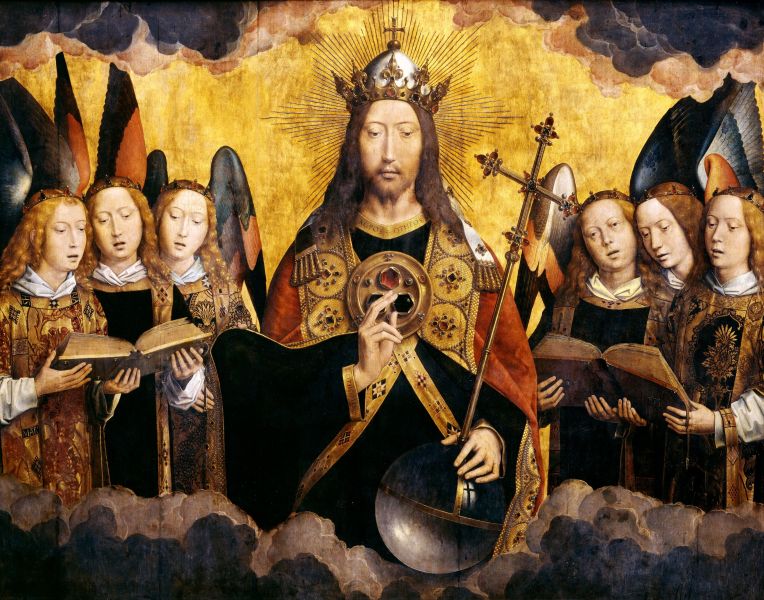
Triumph of the Cross

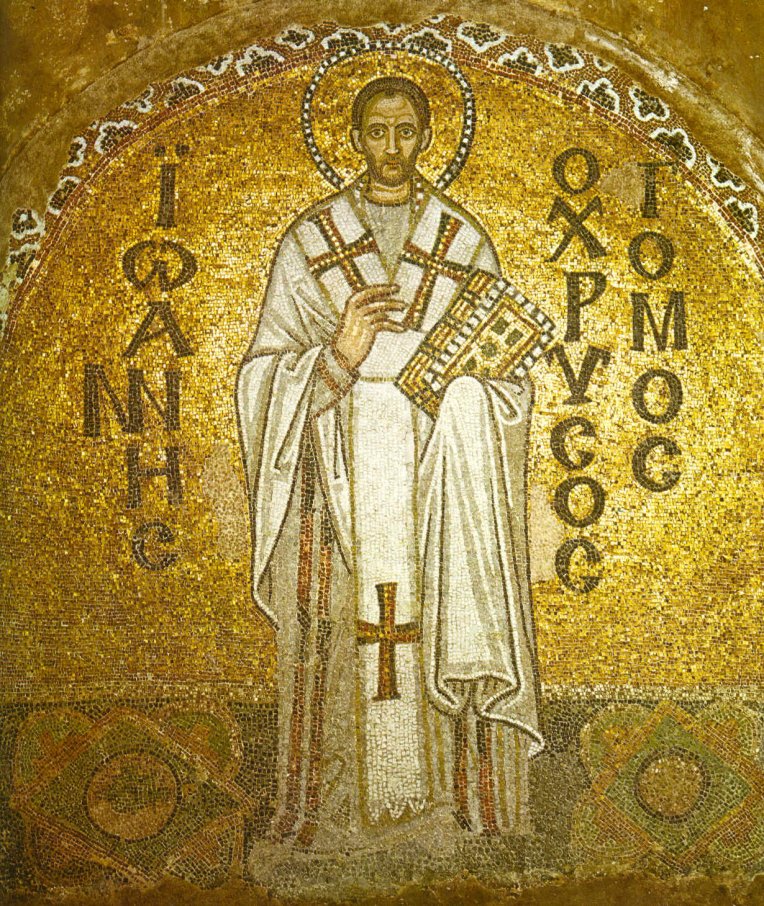
St. John Chrysostom, Bishop & Doctor of the Church

St. John Chrysostom, Bishop & Doctor of the Church
1 Timothy 2:1-8  +  Luke 7:1-10
September 13, 2021

“I tell you, not even in Israel have I found such faith.”

With few exceptions, the translation of the Mass introduced in 2011 has been hailed by bishops, scholars and folk in the pews for its advances over the hurried translation made soon after Vatican II.  One of the key improvements in the translation is its greater fidelity to Sacred Scripture.  Today’s Gospel passage offers an example.

The centurion sends the message:  “Lord… I am not worthy to have you enter under my roof.  … but say the word and let my servant be healed.”  This very clearly is the origin for the invocation that each Catholic makes to Jesus shortly before Holy Communion.  Such clarity impels us today to reflect deeply on the context of these words, so that our invocation before Holy Communion is more meaningful each time we offer it.

Here, consider just one point of context.  While we might focus on the humility of the centurion, reflect by contrast on the power of the Lord.  The Lord’s power is such that physical proximity to the sick person is not necessary.  The Lord needs only to “say the word”.  This power evokes awe in the communicant because while in today’s Gospel passage Jesus did choose to heal from a distance, at Holy Mass Jesus He deigns to enter into our very person, body and soul.  This intimate indwelling is a mystery for which we cannot possibly finish giving thanks.

St. John Chrysostom,
Bishop & Doctor of the Church

Saturday of the Twenty-third Week in Ordinary Time

Saturday of the Twenty-third Week in Ordinary Time
Luke 6:43-49

“For every tree is known by its own fruit.”

The first of Jesus’ brief parables today might seem-evident.  He instructs us that a “good tree does not bear rotten fruit, nor does a rotten tree bear good fruit.”  Yet some reflection suggests an argument against this lesson.

History shows us many examples of wolves not only wearing sheep’s clothing, but acting like sheep.  History reveals many rotten trees bearing what seems good fruit.  The devil at times clothes himself in light, not in order to bear the Lord a fruitful harvest of souls, but for his own devious purposes.

Given this, how should we interpret Jesus’ words?  Perhaps the problem is in someone using His words as a tool to judge others rather than a means of one’s own conversion.  God in His all-seeing Providence certainly can act along the line of Jesus’ words as He judges his children.  But we cannot do this for many reasons, among which is that we can only judge exterior fruits, whether good or rotten.  We cannot see spiritual fruits that are visible only to God and to the consciences of others.  Nor can we see the motives of others.  Better, then, that each of us use Jesus’ words as part of an examination of one’s own conscience, asking God to conform our minds and hearts to His.

Friday of the Twenty-third Week in Ordinary Time [I]

Friday of the Twenty-third Week in Ordinary Time [I]
1 Timothy 1:1-2,12-14  +  Luke 6:39-42
September 10, 2021

“Remove the wooden beam from your eye first ….”

When you make your nightly examination of conscience, and prepare monthly for the Sacrament of Reconciliation, there’s a simple way to recollect yourself for the needed self-scrutiny.  After all, if it’s been a long day or month, we can feel overwhelmed and unsure how to assess our efforts to live (or our failures to live) in Christ.

This simple means is to recall that all the commandments of the spiritual life converge in Jesus Christ.  What does this mean?  Today’s Gospel passage offers a concrete example.  The imagery with which Jesus preaches today seems only to be about the challenge of loving our neighbor:  specifically, a sinful (“blind”) neighbor.  But the two great commands of Jesus—to love God fully, and to love our neighbor as our self—converge in Him.

We are not to look down on our sinful brother, but rather to look up to him.  This is possible because of our authentic need for humility.  Christian humility is in one sense nothing more than honesty.  Both my brother and I are sinners.  We are equal in this.  But Jesus calls me to serve as brother as if I were serving Jesus Himself.  For this reason, from my state of sinfulness, I look up to my sinful brother.  From this stance, I may help him remove the splinter from his eye.  Jesus, of course, never sinned, but He did “become sin”—in the phrase of St. Paul—so that in my sinful brother I can see the Jesus whom I am to serve.

The Twenty-fourth Sunday in Ordinary Time [B]

The Twenty-fourth Sunday in Ordinary Time [B]
Isaiah 50:5-9  +  James 2:14-18  +  Mark 8:27-35

“For whoever wishes to save his life will lose it ….”

“What do you want to be when you grow up?”  If you’re an adult, you were surely asked that many times when you were little.  But imagine that you travel back to the first decade of the first century A.D.  Arriving in the town of Nazareth, you come across the child Jesus and ask Him, “What do you want to be when you grow up?”  How will He answer?

His answer might be gleaned from what He demands from us in today’s Gospel passage.  “Whoever wishes to come after me must deny himself, take up his cross, and follow me.”  For you to be a Christian, you must do these three things:  deny your self, take up your cross, and follow Jesus.  Consider just the first of these.  What does it mean for you to deny your self?

What is your self?  Reflect on just three possible answers to this question.

The first self is the fallen, sinful self.  This is not the self God created you to be.  Instead, this is the self that concupiscence helps you become as a child of Adam and Eve.  This is the “selfish self”:  the self who sins.

You can deny this first self by declaring a strong “No!” to sin and temptation.  Hopefully you declare that “No!” as soon as you experience the movement of temptation:  as soon as you recognize that you’re within the proximity of the occasion of sin.

Of course, each of us on earth is a sinner.  That’s why Jesus, on the evening following His Resurrection, instituted the Sacrament of Confession.  Part of the beauty of Confession is that God allows us, after we’ve sinned, to practice self-denial:  that is, to say “No!” to the sins we’ve already committed by placing them in the confessional at the foot of Jesus’ Cross.

The second self that you must deny if you want to follow Jesus is the “animal self”.  Although God raised us above the other animals of the earth in that we can speak, create works of art and literature, and split the atom, each of us remains an animal with basic needs such as eating, drinking, and sleeping.

The second form of self-denial that each Christian must practice is prudent, occasional denial of basic needs like food, drink, and sleep.  The Gospel accounts tell us that the Son of God Himself practiced these types of self-denial:  fasting from food and drink, and spending entire nights in prayer with God the Father.  If Jesus practiced these, how can you not do the same?

Unfortunately, many Catholics today have never been told that the Church obligates every Catholic to practice penance on almost every Friday of the year, not just the Fridays of Lent (Fridays that are solemnities are exempt).  The Church only specifies what form this penance must take during Lent:  on Fridays of Lent, Catholics must abstain from meat as their penance.  On the other Fridays of the year, Catholics are free to decide the form of their penance.

The third self that you have to deny if you want to follow Jesus might be called the “aspiring self”.  Being human naturally means planning, dreaming, and imagining where one wants to be in the future.

However, “the best laid plans of mice and men oft go astray”.  The future is unpredictable for several reasons.  First, life on earth is chaotic by its nature.  Second, sin and its consequences constantly throw monkey wrenches into the gears of human hopes.  But third and most importantly, God’s grace is Providential.  God often bestows His graces upon us by surprising, unpredictable, and unexpected means.

So in life on this earth, we sometimes have to deny our “aspiring self”.  While the most responsible thing we can do is plan for the future as best we can, we also need to remember that God sometimes offers us something better than our best.  We don’t know when that might happen, so we have to be alert every day to the possibility, standing ready to deny our plans for the sake of God’s Providence.

That leads us back to the first century, where we asked the child Jesus, “What do you want to be when you grow up?”  There’s really only one possible answer.  Jesus replies, “I want to be faithful to my Father’s Will.”  Every thing, person, circumstance, success and failure in this world must be subordinated to that final goal.

Thursday of the Twenty-third Week in Ordinary Time

Thursday of the Twenty-third Week in Ordinary Time
Luke 6:27-38

“Do to others as you would have them do to you.”

In today’s Gospel passage Jesus bids us to follow the Golden Rule.  “Do to others as you would have them do to you.”  The Golden Rule is heard within the setting of admonitions by which Jesus leads us to share in His Cross:  “Love your enemies.”  “Do good to those who hate you.”  “Pray for those who mistreat you.”  These admonitions are examples of living out on the moral and spiritual planes what Jesus accomplished on the Cross.

We all know that it’s very hard to live out these admonitions.  But it’s good to remember that Jesus is not only our teacher, who set us an example on the Cross.  He is also our Savior, who from the Cross on Good Friday bestows grace upon all who beseech Him as they strive to imitate Him.

In the final part of today’s Gospel passage Jesus offers us some rhetorical questions.  The first is representative:  “If you love those who love you, what credit is that to you?”  By the questions that follow Jesus leads us to see the Face of His heavenly Father.  When we live the Golden Rule, we will be “children of the Most High”.  Finally, to sum up everything He’s been exhorting us to live, He offers a simple principle that you and I might take and repeat throughout this day whenever there is a quiet moment:  “The measure with which you measure will in return by measured out to you.”

The Nativity of the Blessed Virgin Mary

The Nativity of the Blessed Virgin Mary
Micah 5:1-4 [or Romans 8:28-30]  +  Matthew 1:1-16,18-23
September 8, 2021

“She will bear a son and you are to name Him Jesus ….”

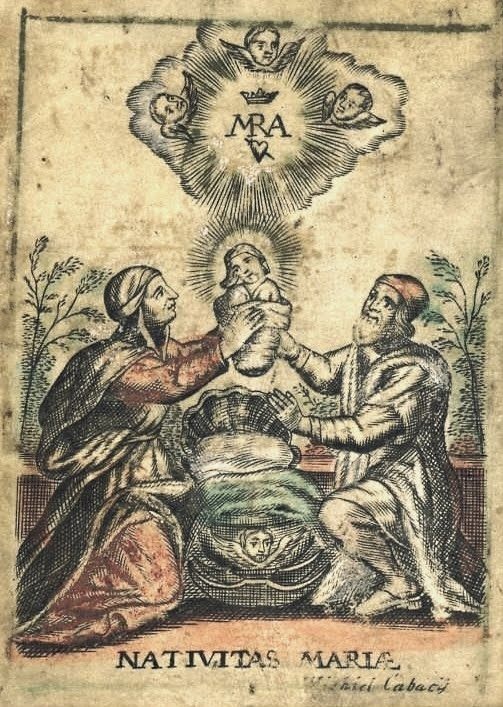
As the Church today celebrates the nativity of Mary, we reflect on human nature.  In the great universities of the Church, this is the study of theological anthropology:  that is, the study of man vis-à-vis God who is man’s Creator, Redeemer and Sanctifier.  God in Himself—as Father, Son and Holy Spirit—had no need whatsoever to create man.  Nor did He have need to care for fallen man.

But God chose, and still chooses, to redeem and sanctify individuals.  He does this through Christ Jesus, who entered our world through the life of Mary.  In the field of theological anthropology, Jesus and Mary stand at the head of our prayer, reflection, and study:  Jesus as a divine Person who took on a human nature, and the Blessed Virgin Mary as the perfect human creature.

Today we hear in the Gospel about the family tree of Jesus.  There were some great figures in Jesus’ family tree, such as King David.  But most of the people in Jesus’ family were very ordinary.  Maybe the most ordinary was Mary.

That might seem strange to say, because we might want to say that Mary was the most extraordinary.  Of course, Mary was the most holy of Jesus’ ancestors:  she was the only person to come before Jesus who had never sinned.  But still, at the same time, Mary was really the most ordinary person to come before Jesus.

If you were to walk down a busy street in a large city, and Mary walked by you, you probably would never recognize her.  That’s because Mary lived out the Gospel so fully.  She lived out the Gospel even before Jesus became a human being.  It’s because Mary lived out the Gospel so completely that Jesus became a human being.  But living out the Gospel is really very simple, very quiet, and very ordinary.  It doesn’t mean being famous, or looking for attention from others, or wanting to be better than those around you.

For me to live the Gospel means living like Mary:  listening for God’s voice every day, letting his Will for my life sink into my heart, and carrying out that will with the love of my own human heart.

Tuesday of the Twenty-third Week in Ordinary Time [I]

Tuesday of the Twenty-third Week in Ordinary Time [I]
Colossians 2:6-15  +  Luke 6:12-19
September 7, 2021

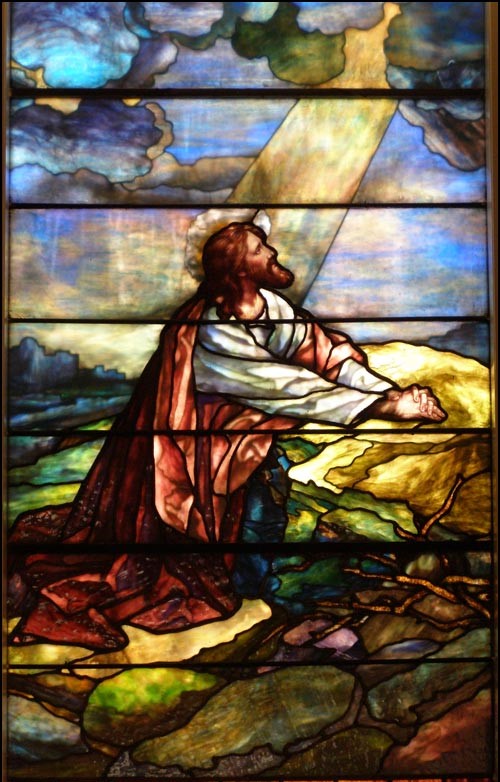
Jesus departed to the mountain to pray, and He spent the night in prayer to God.

St. Luke the Evangelist seems to speak more about prayer than the other evangelists.  He does so both by giving us Jesus’ words about prayer, and by illustrating occasions on which Jesus prayed.  In today’s Gospel Reading we have an example of the latter.

In the example of Jesus’ prayer shown us today by the evangelist, two things stand out.  The first is that Jesus “spent the night in prayer”.  Most of us Catholics in the Western world live very spoiled lives.  We consider the making of a Holy Hour a great sacrifice on our part.  The Gospel accounts of Jesus’ life show how common it was for Jesus to spend an entire night “in vigil”.  The lives of the saints show men and women from various stations in life all taking up this practice of the Lord in order to be close to Him.

The second notable thing about Jesus’ prayer in today’s Gospel passage is that He is engaged in prayer before a significant choice.  This reveals that the choice that follows—here, the choosing of the Twelve—is a choice made together by the Father and the Son, in the unity of the Holy Spirit.  For ourselves, the choosing of the apostles shows that great sacrifices in prayer, such as vigils, ought to spent for the sake of God’s work, and not for our own personal interests.

OT 23-2

Monday of the Twenty-third Week in Ordinary Time [I]

Monday of the Twenty-third Week in Ordinary Time [I]
Colossians 1:24—2:3  +  Luke 6:6-11
September 6, 2021

In God is my safety and my glory.

Jesus in today’s Gospel passage (and on many other occasions during His earthly life, leading to the Cross) faced those who had turned the meaning of religion inside out.  Jesus in this passage heals the man with the withered hand, and the response of the scribes and Pharisees is to become enraged:  they discussed together what they might do to Jesus.

In this we see a similarity between Jesus’ day, and our day:  a similarity between the world of Jesus, and the world in which we live.  The world in which we live today may be much larger than Jesus’ world:  there may be more countries, and more peoples who have to speak with each other, and work to get along.  Likewise, the Church today extends throughout the world instead of consisting of a small band of disciples.

Yet there are today people, just as in Jesus’ day, who return evil for good:  whose actions make no sense.  Whether we reflect upon the example of the scribes and Pharisees in today’s Gospel passage, or Pontius Pilate, or Judas Iscariot, the question we have to ask is:  how did Jesus respond to those who hated Him, and nailed Him to the Cross?  Can we be like our Lord Jesus, even in a situation like this?