St. Kateri Tekakwitha, Virgin

St. Kateri Tekakwitha, Virgin
Exodus 3:1-6, 9-12  +  Matthew 11:25-27
July 14, 2021

“Come no nearer!  Remove the sandals from your feet ….”

Both the First Reading and the Gospel Reading today proclaim the power of divine revelation.  Jesus in today’s Gospel Reading makes an exclamation to His Father, something rare in the four Gospel accounts.  During this exclamation, Jesus says, “no one knows the Father except the Son and anyone to whom the Son wishes to reveal him.”

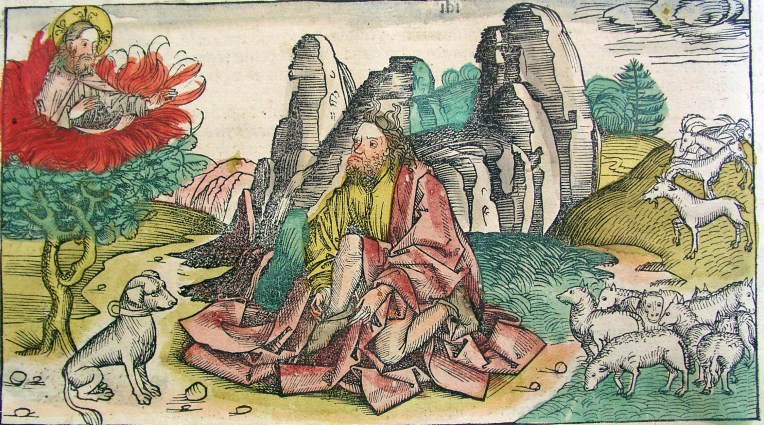
Reflect on Jesus’ exclamation in light of today’s First Reading.  This week we’re hearing some of the most profound readings of the Old Testament.  The origin of Moses’ vocation has been a treasure-trove for saints who’ve wanted to explore the riches of the Christian Faith.  Today’s passage from Moses’ “vocation story” proclaims the “what and how” of God revealing Moses’ vocation.  What do Jesus’ words today have to do with Moses’ “vocation story”?

In today’s passage from Exodus, God the Son wishes to reveal His Father.  That might seem an odd claim.  Nowhere does the God who speaks in the third chapter of Exodus say that He is either God the Father or God the Son.  There is, of course, no notion of “God the Son” in the Old Testament.

Nonetheless, we can begin today to consider how God the Son wishes to reveal the Father to Moses by considering that God is calling Moses—through Moses’ vocation to liberate Israel—to be His son.  In this, Moses’ fidelity or infidelity to his vocation can be measured by the degree to which Moses’ thoughts, words and actions correspond to those of Jesus Christ in His vocation.  Reflect on this in the coming days as we continue to hear from Exodus at weekday Mass.

OLYMPUS DIGITAL CAMERA

Tuesday of the Fifteenth Week in Ordinary Time [I]

Tuesday of the Fifteenth Week in Ordinary Time [I]
Exodus 2:1-15  +  Matthew 11:20-24
July 13, 2021

   … she said, “I drew him out of the water.”   

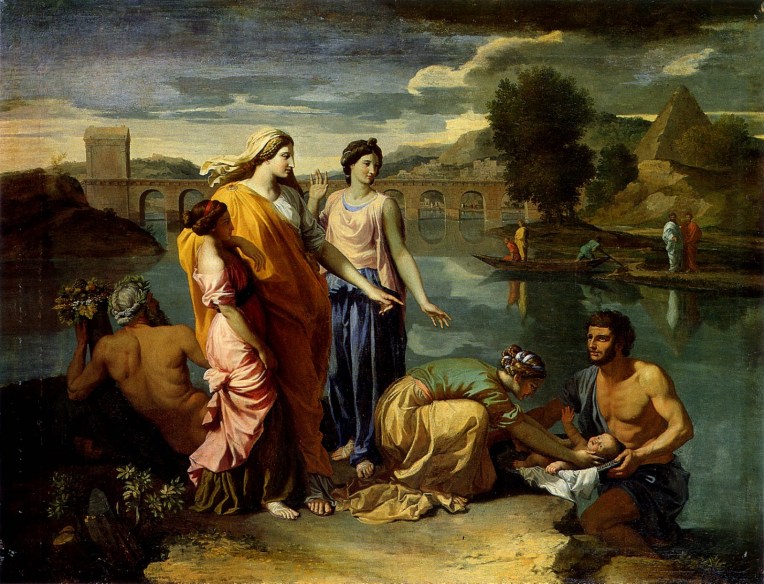
Today’s First Reading gives us the “origin story” of Moses.  The Bible does not tell us the names of Moses’ parents, but the first sentence of today’s passage reveals that both of them were of the house of Levi.  The Levites were the priestly tribe of Israel.  Right off the bat, this foreshadows something important about the role that Moses will play in salvation history.

Likewise, Moses is put by his mother into the river.  In a sense, his mother has observed the Pharaoh’s evil command to throw every boy into the river, but his mother uses papyrus, bitumen and pitch to prevent her son from drowning.  The Pharaoh’s daughter adopts the son and makes him her own, naming him Moses, which literally means, “I drew him out of the water.”

Although it might first seem odd, here the Pharaoh’s daughter’s actions reflect God’s saving action, especially as He begets and names Christians through the waters of baptism.  These waters represent both the destructive power of sin and the cleansing power of grace.

The last section of today’s First Reading leaps forward to Moses’ youth.  The actions and interactions here foreshadow Moses’ role in salvation history.  In the conflict between Egypt and Israel, Moses defends his native people.  Yet Moses is forced to flee as a consequence of his defense.  Nonetheless, this flight is part of God’s Providence, as Moses’ flight leads God’s People to the land for which they were born.

Monday of the Fifteenth Week in Ordinary Time [I]

Monday of the Fifteenth Week in Ordinary Time [I]
Exodus 1:8-14,22  +  Matthew 10:34—11:1
July 12, 2021

The Egyptians, then, dreaded the children of Israel and reduced them to cruel slavery ….

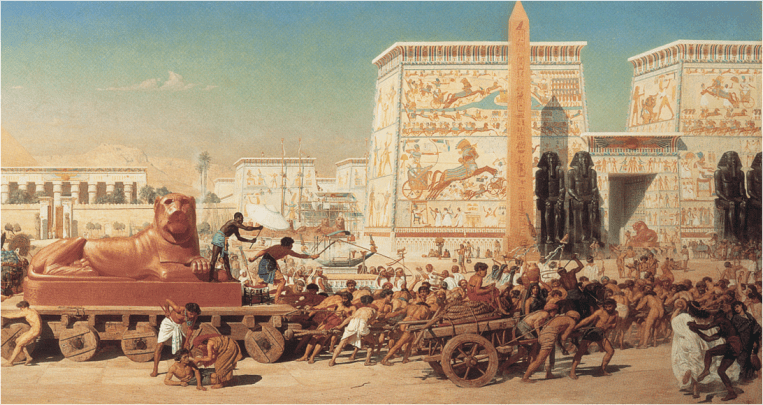
Today we begin at weekday Mass to hear from the Book of Exodus.  We’ll continue to hear from this book for about three weeks.  Today’s passage from Exodus is from its first chapter.  Moses does not appear.  What we hear today forms the backdrop for his entrance.

The “whole cruel fate of slaves” is described at length.  While we in our modern day might consider the description of the Israelites’ slavery very sad, it seems at a remove from our culture of affluence and independence.  At least, this might seem so until we take this historical description and apply it to the Christian spiritual life.  By doing this, we can see what Exodus tells us here as an illumination of the slavery to which sin subjects the sinner.

In order to ensure the success of his regime of slavery, the Pharaoh at the end of today’s passage issues a command.  Every boy born to the Hebrews is to be thrown into the river.  This river historically foreshadows the Red Sea, in which the Egyptian power over the Israelites is destroyed.  But the river spiritually foreshadows the waters of Baptism, in which the power of sin over Christians is destroyed.  In the light of this double foreshadowing, we begin to see how Moses himself foreshadows Jesus.

Saturday of the Fourteenth Week in Ordinary Time [I]

Saturday of the Fourteenth Week in Ordinary Time [I]
Genesis 49:29-32; 50:15-26  +  Matthew 10:24-33
July 10, 2021

“… not one [sparrow] falls to the ground without your Father’s knowledge.”

Jesus preaches today about Our Father’s providential knowledge and will.  God knows all things.  We know this abstractly, but perhaps we fail to consider all that this truth of our Faith means.

When we say that God knows all “things”, what sorts of things are we talking about?  Facts that would win God a championship on trivia shows?  God knows all objective facts about science, history, etc.  But God’s knowledge is not trivial.

God’s infinite knowledge extends to what is most personal.  God knows every action you have ever done (or failed to do).  God also knows every thought you’ve ever had, and every word you’ve ever said.  He knows the hopes and desires of every human heart.  He knows of every emotion you’ve ever felt, and of the circumstances that led to those emotions.

But in human earthly providence, knowledge leads to the will.  God’s knowledge of you, as complete as it is (more complete, in fact, than even your own self-knowledge!), leads God only to love you more.  At times, we hide ourselves from God, not understanding the depth of His providential love.  But when we submit ourselves completely to God, we are not only more at peace:  we are more flexible in serving as an instrument of His peace.

OT 14-6

Friday of the Fourteenth Week in Ordinary Time

Friday of the Fourteenth Week in Ordinary Time
Matthew 10:16-23

“Behold, I am sending you like sheep in the midst of wolves ….”

Jesus was always realistic during His earthly life.  So it’s no surprise that He says to His Apostles, “I am sending you like sheep in the midst of wolves”.   His words were true in the first century, and are so also today.

What is surprising is His subsequent command:  “be shrewd as serpents and simple as doves.”  What does it mean for Jesus’ followers to “be shrewd as serpents”?  We might recoil from His command because we associate the serpent with the Devil.  So what can His words mean?

One of the simplest ways to understand Jesus’ words is to look at His actions.  After all, Jesus practiced what He preached.  While it’s true that on Calvary Jesus was the sheep that opened not His mouth [see Isaiah 53:7], during the three years of His public ministry He acted differently.  For example, at the beginning of His ministry in Galilee, when Jesus infuriates the people in the synagogue with His preaching, the people try to kill Jesus, but “He passed through the midst of them and went away” [Luke 4:16-30].  One lesson for us disciples is to know that conflict will inevitably arise from our fidelity to the Gospel, but that with shrewdness we may often find safety with the Lord.

OT 14-5

The Fifteenth Sunday in Ordinary Time [B]

The Fifteenth Sunday in Ordinary Time [B]
Amos 7:12-15  +  Ephesians 1:3-14  +  Mark 6:7-13

“In Him we also were chosen ….”

If you had to pick two words to summarize today’s Scripture passages, the words “foundation” and “rejection” would be good choices.  Both are meant to be part of the Christian’s life.

The foundation upon which every Christian builds his or her life is, of course, Jesus Christ.  Christ is the subject of Sunday’s Second Reading.

All that you are as a Christian is in Christ.  Saint Paul proclaims this in the very first sentence:  “Blessed be the God and Father of our Lord Jesus Christ, who has blessed us in Christ …”.  Later in the same first sentence Paul explains that the Father “chose us in Him”—that is, in Christ—“to be holy and without blemish before Him.”  Paul begins the second sentence by declaring that “In love [the Father] destined us for adoption to Himself through Jesus Christ ….”  So it goes throughout this passage:  Paul stresses over and over how all that you are and are called to be as a Christian is found in Christ.

That includes the call to be a prophet.  This is a call that is part and parcel of your reception of baptism.  No matter whether He later called you to Holy Orders or Holy Matrimony or consecrated life (or to none of these three), if you were baptized, then on the day of your baptism you were made a prophet by the Father in Christ.

Many people in our day and age, unfortunately, don’t think that the lay faithful within the Church are called to exercise the role of prophet.  So consider what the role of the Christian prophet entails.  Some think of a prophet as being like a fortune-teller with a crystal ball.  But that’s a mistaken idea.  The Christian prophet is not so much concerned about the future as about the past.

If there’s one word that sums up the message that a prophet delivers, it’s the word “fidelity”.  The prophet calls God’s people to fidelity:  or more precisely, the prophet calls God’s people back to fidelity.  The prophet reminds God’s people of the promises that they made with God, and then calls them back to fidelity to their word.  The prophet calls God’s people to integrity between their past promises and their actions in the present day.  To the extent that the prophet speaks about the future, it’s in order to explain to God’s people the consequences of infidelity.

In today’s Gospel Reading, Jesus sends the Twelve on their first mission.  Jesus is not sending the Twelve out to preach about the saving death and Resurrection of Jesus because those events haven’t happened yet.  Instead, this mission is preparatory.

This early mission is about preaching repentance.  Jesus is very clear in explaining to the Twelve that this won’t be easy.  He offers only two sentences of explanation about how the Twelve ought to go about this mission.  As Jesus says these words, you and I ought to think of Jesus as saying these words to us who see and hear falsehood being promoted as truth within civil society.  Jesus says plainly:  “Wherever you enter a house, stay there until you leave.  Whatever place does not welcome you or listen to you, leave there and shake the dust off your feet in testimony against them.”

In our own day, these words of Jesus apply not only to those who preach at pulpits.  After all, a preacher is called by God to preach from the sanctuary:  as a consequence, he can only preach to as many people as there are in the church building.  This is the way that God designed His holy Catholic Church.  Within the Body of Christ, the message of the Gospel that is preached from the pulpit is meant to be carried out from the church building and into the world by those lay persons participating in the Sacred Liturgy.

You have been called to be a prophet, even if in a different manner than the one who is ordained to preach.  Your call as a baptized Christian is to proclaim the Truth to those out in the world, and this obviously involves a risk of rejection.  That’s the rejection that Amos and the other Old Testament prophets faced, and that’s the rejection that Jesus has spoken about in today’s Gospel Reading and accepted as the price of His Self-offering on Calvary.

Thursday of the Fourteenth Week in Ordinary Time [I]

Thursday of the Fourteenth Week in Ordinary Time [I]
Genesis 44:18-21,23b-29;45:1-5  +  Matthew 10:7-15
July 8, 2021

“Whoever will not receive you or listen to your words—go outside that house or town and shake the dust from your feet.”

One of the items on my “bucket list” is to spend a considerable amount of time writing about The City of God by St. Augustine of Hippo.  He lived in a cultural setting similar to ours.  The book is a contrast between the City of God and the city of man.  His comparison of the two leads to many reflections on the nature of divine Providence.  Many of these reflections consider how God chooses to bring moral good out of moral evil.

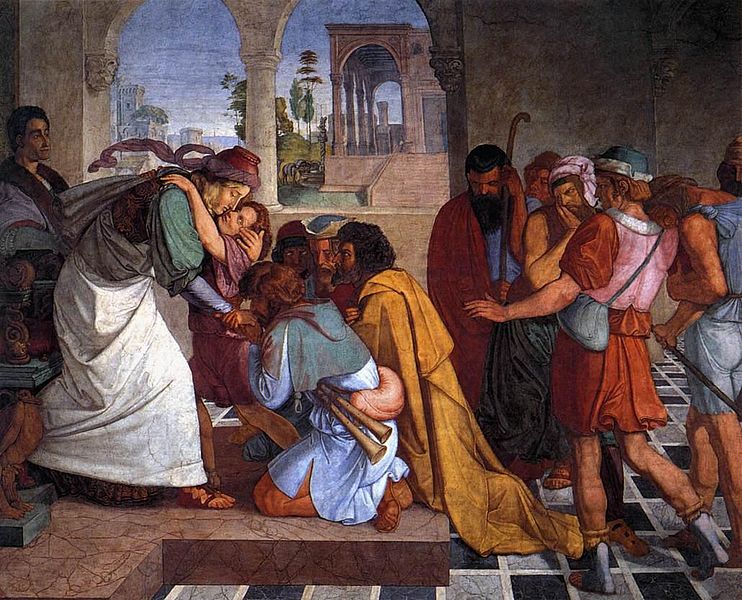
In today’s First Reading we hear one of the Old Testament’s chief examples of God’s providential will to bring goodness out of evil.  The Old Testament patriarch Joseph recognizes God’s Providence.  Joseph exhorts his brothers:  “do not be distressed, and do not reproach yourselves for having sold me here.  It was really for the sake of saving lives that God sent me here ahead of you.”  The wisdom with which Joseph says this is striking, and worthy of long reflection.  But consider just Joseph’s phrase, “for the sake of saving lives”.

This phrase lays bare for Christians that Joseph is a “type” of Jesus Christ.  “Type” is a technical theological term for someone (or even some thing) whose role in the Old Testament foreshadows Jesus.  So reflect back on the story of the patriarch Joseph that we’ve been hearing at weekday Mass, and consider how the story of his rejection and redemption foreshadows the Gospel of Jesus Christ.

Wednesday of the Fourteenth Week in Ordinary Time [I]

Wednesday of the Fourteenth Week in Ordinary Time [I]
Genesis 41:55-57;42:5-7,17-24 +  Matthew 10:1-7
July 7, 2021

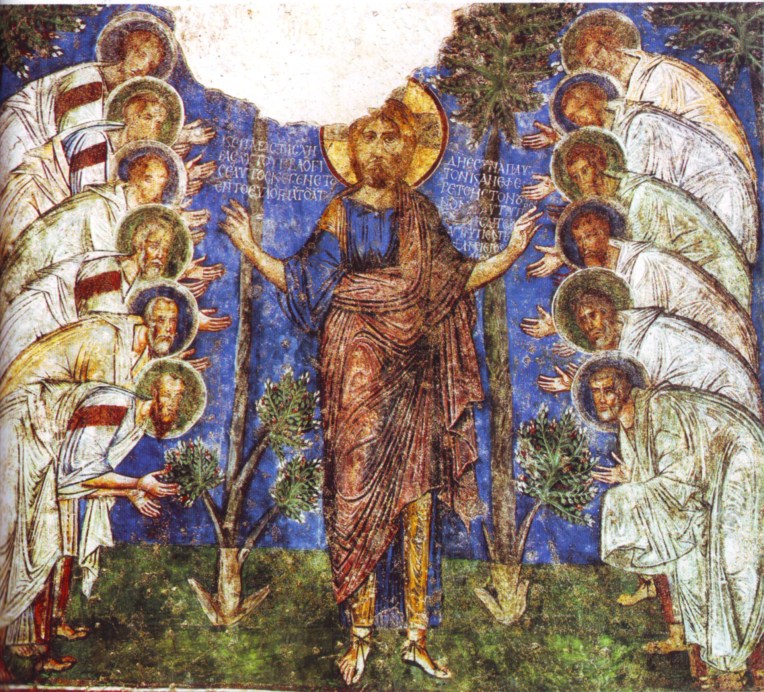
   Jesus summoned his Twelve disciples and gave them authority….   

Today’s Gospel passage speaks about reaching out to those who are hurt and sick.  We hear Jesus sending his twelve apostles to go out and heal “every disease and every illness.”  More than just a prophet, Jesus has authority not only to call back the repentant to Himself, but also to heal them.

When Jesus sends the apostles, his instructions are for them to go to “the lost sheep of the House of Israel”.  In our own day, there are many fallen-away Catholics, and of course we pray for them.  But we can do more for them than just pray.  With the sort of love that Jesus held in His Sacred Heart when he looked at the crowds and said, “the harvest is abundant, but the laborers are few”, we can listen with compassion to those who are wounded.

We can offer gentle instructions to those who don’t know how to begin living their faith again:  to begin again to receive the sacraments as gifts of grace from the apostles’ ministry.  It’s the bishops’ responsibility—and the responsibility of those priests who work under their bishops—to bring those lost sheep back into the fold through the sacraments.  But often, it will be ordinary Christians who point those lost sheep in the right direction.

Tuesday of the Fourteenth Week in Ordinary Time [I]

Tuesday of the Fourteenth Week in Ordinary Time [I]
Genesis 32:23-33  +  Matthew 9:32-38
July 6, 2021

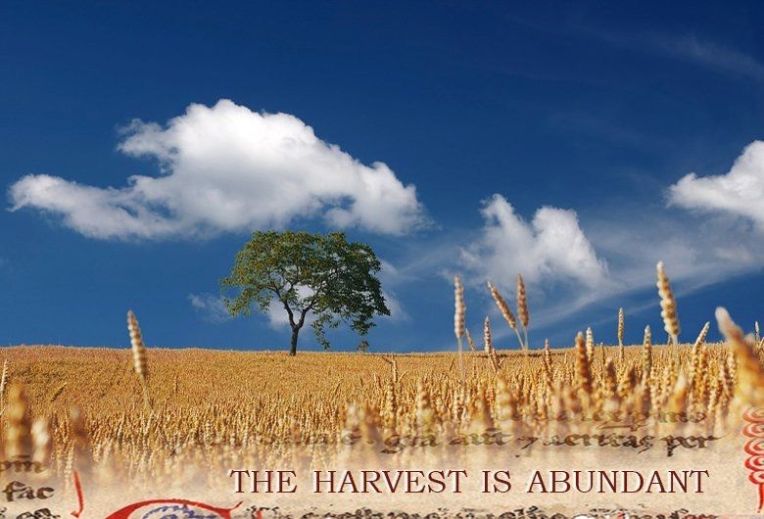
“… the harvest is abundant, but the laborers are few ….”

We usually associate the cry that Jesus utters in today’s Gospel passage with the need for vocations in the Church.  But Jesus also speaks through these words about the harvest of one’s own heart, and the fruits of one’s soul.  In each person is a soul created by God, and each soul is capable of being completely filled, as much as it is able:  to be “perfected” by God’s grace.

Unfortunately, this “harvest of the soul” is neglected by so many of us by our actions and our inaction.  We are not willing to believe what the Church teaches about every single human person being called by God to be a saint.  The Church at the Second Vatican Council spoke strongly about the “universal call to holiness”.

God gives each one of us many gifts, but only when we talk with God—and are strengthened by God—do we learn how to use them correctly, in accord with His plan.  Through our prayer, and God’s grace, our minds and wills can be shaped in His image, so that each of us can be more perfectly the saint God wants us to be.