Friday of the Second Week of Lent

RSL banner

Friday of the Second Week of Lent
Genesis 37:3-4,12-13,17-28  +  Matthew 21:33-43,45-46
March 5, 2021

“… the Kingdom of God will be taken away from you and given to a people that will produce its fruit.”

The person who lives within his emotions acts only according to those emotions.  When a person’s emotions are the only norm of human behavior, any action is justifi­able, even selling one’s own brother for twenty pieces of silver.  Or thirty.

The Church, on the other hand, teaches us that as human beings we are created in the image and likeness of God, and that even though this image has been distorted by Original Sin, it is supposed to be at the center of the human soul, which is at the center of the human person.

The norm for Christian behavior is the Will of God, which we discern in our lives more clearly—most especially during the holy season of Lent—when we give ourselves to God in prayer, when we abandon our own will in penance, and when we give ourselves to others in charity.  If the Will of God is to have an abiding presence within our human soul—in order to animate all of our thoughts, words, and actions—we must cultivate a place in our souls for the Holy Spirit to take root and bear fruit.  We cannot take credit for these fruits; we do not claim them as our own.  When God asks us to make a return to Him for all the good He has done for us, we do so immediately and humbly, recognizing that He is the harvest master, and we are his servants.

The landowner’s son in today’s Gospel passage is obviously a symbol of Christ, the Son of God rejected by those to whom he came, those who were his own.  At the heart of Christ’s life was the Will of God.  We need today to meditate upon the truth that we see and receive in Christ:  that we exist because of the sheer love that God has for us, and that this love is expressed most perfectly in the sacrifice Christ offers us from the Cross.

Lent 2-5

The Third Sunday of Lent [B]

RSL banner

The Third Sunday of Lent [B]
Exodus 20:1-3,7-8,12-17  +  1 Corinthians 1:22-25  +  John 2:13-25

His disciples recalled the words of Scripture,  “Zeal for your house will consume me.”

This Sunday’s Scriptures remind us of the primacy of God the Father’s love for us.  This reminder comes to us via a particular sign.

St. Paul proclaims in today’s Second Reading that “Jews demand signs”.  Yet they are like all mankind in this regard.  Signs are helpful and useful.  Can you imagine driving on the interstate or in a business district if there were no signs?

The signs that the Jews demanded were religious signs, however.  They demanded signs, and they demanded these signs from God Himself.  Still, here also we are like our forefathers in faith.  We ask God for signs that we are loved, that things are going to turn out all right, and even that He exists and is listening to our concerns.

So while the first-century “Greeks look for wisdom,” and the Romans respect the rod and the whip, the “Jews demand signs”.  We hear how this is true of the Jewish persons within today’s Gospel Reading.

After Jesus initiates conflict in the Jewish Temple, “the Jews answered and said to Him, ‘What sign can you show us for doing this?’”  Jesus shows them the sign of the Cross through His words:  “‘Destroy this temple and in three days I will raise it up.’”  On Good Friday, Jesus proclaims the sign of the Cross by sacrificing His Body and Blood on it.  But most around Him reject both His word and His sacrifice.  In today’s Gospel Reading, those around Him refuse to believe what He foretells about the Temple of His Body.  On Good Friday, they will nail that Body to the Cross.

Lent is a season of sorrow and bitterness.  In our Lenten devotions such as the Stations of the Cross, we rightly feel sadness at the fact that Jesus suffered so intensely because of our sins.  St. John the Evangelist paints the lines of bitterness and sorrow in his portrait of Jesus in today’s Gospel passage.  This passage is set two years before Jesus’ Passion and Death on the Cross, “while He was in Jerusalem for the feast of Passover”.  On that occasion, “many began to believe in His Name when they saw the signs He was doing.”  That sounds like a good thing, since  Jesus’ ministry seems to be growing successfully.

If God the Father had sent His son to save us by miracles, the popular response that He received might have brought joy to Jesus’ heart.  But the evangelist tells us something far different:  “Jesus would not trust himself to them because He knew them all, and did not need anyone to testify about human nature.”

John’s commentary here foreshadows the events of Holy Week.  God the Father did not send His Son to save us through a miraculous sign, but through a sign of failure:  betrayal, false condemnation, public humiliation and physical torture all led up to the sign of the Cross.  The Cross on Calvary was meant to serve as a human sign, and a divine sign.  Humanly, Jesus had His hands and feet nailed to a cross at the top of a mountain.  This was meant by sinful rulers to serve as a sign for anyone who might dare reject the rule of the Romans and the Law of the Levites.

But as a divine sign, the sign of the Cross reveals that God’s very nature, His divine Life, is a paradox.  St. Paul makes this plain to the Corinthians:  “the foolishness of God is wiser than human wisdom, and the weakness of God is stronger than human strength.”  This is what those of Jesus’ day fail to understand, both on this Passover two years before Jesus’ crucifixion, and also on that day so tragic that we call it “Good Friday”.

Yet even today, God means for the sign of the Cross to serve as a sign for you, a sinner, to experience forgiveness, mercy, and spiritual healing.  Lent is a season of preparation.  This preparation is necessary.  In other words, you cannot and will not celebrate Easter rightly without engaging in the mysteries of Lent.  Lent prepares us for Easter by putting before us—for our devotion and imitation in daily life—the truth that the Cross of Jesus is “the power of God and the wisdom of God.”

Thursday of the Second Week of Lent

RSL banner

Thursday of the Second Week of Lent
Jeremiah 17:5-10  +  Luke 16:19-31
March 4, 2021

“‘… neither will they be persuaded if someone should rise from the dead.’”

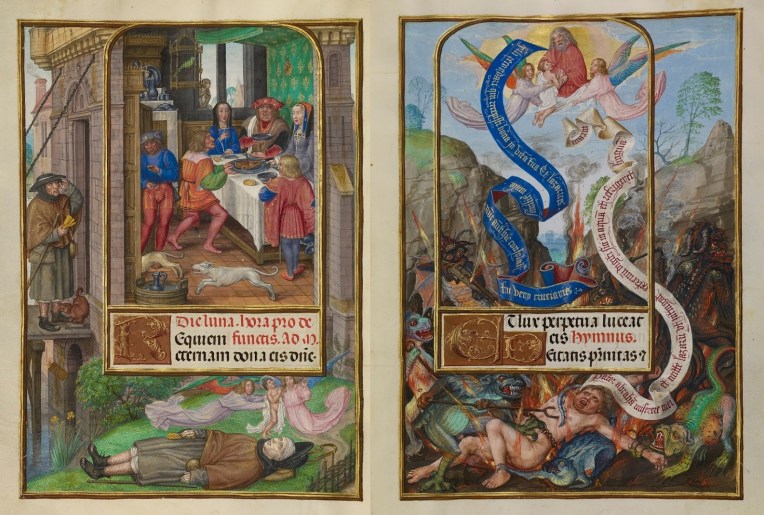
At first hearing, the Parable of the Rich Man and Lazarus might fool us, in just the same way that the Parable of the Prodigal Son can fool us.  When St. Luke the Evangelist narrates his account of Jesus teaching the Parable of the Prodigal Son, the evangelist makes clear that Jesus is teaching this parable to the scribes and the Pharisees.

So who in the Parable of the Prodigal Son symbolizes the scribes and the Pharisees?  It’s not the Prodigal Son.  Nor is it the Prodigal Son’s father, who prodigally—that is to say, lavishly—bestows mercy on his prodigal son.  No, it’s the older son who symbolizes the scribes and the Pharisees:  the older son who refuses to enter the feast thrown by the father for the prodigal son.  So then, if we were to name this parable after the audience to whom Jesus preached it, we might well call this the “Parable of the Miserly Son”:  that is, the son who was miserly when it came to showing mercy.

With that in mind, consider today’s Gospel passage.  Here Jesus teaches what’s commonly called the Parable of the Rich Man and Lazarus.  But that name for the parable, like all the names of the parables, are modern inventions.  Jesus never gave a name to any of His parables.  But in the first line of today’s Gospel passage, the evangelist tells us that Jesus preached this parable to the Pharisees.

We need to remember that the same dynamic at work in the Parable of the Prodigal Son is at play here also.  The Pharisees are not symbolized by either the rich man or Lazarus.  Who in today’s parable symbolize the Pharisees?  The five brothers of the rich man symbolize the Pharisees.  When Abraham declares, “If they will not listen to Moses and the prophets, neither will they be persuaded if someone should rise from the dead”, the clear reference is to the Pharisees not being persuaded by Jesus’ future resurrection from the dead.  Jesus wants the Pharisees to accept the graces that God offers, even if those graces come through simple and humble messengers.

Just as the rich man during his life on earth failed to lead his five brothers to God, so each of us has a choice about whether or not to be a messenger from God to others.  Or in other words, each of us needs to be a human angel—metaphorically speaking—because the word “angel” literally means a “messenger”.  Whether we intend to or not, we send messages to others all the time.  But are the messages we send others of God’s kindness, mercy, compassion, and forbearing?

Rich Man and Lazarus medieval

Wednesday of the Second Week of Lent

RSL banner

Wednesday of the Second Week of Lent
Jeremiah 18:18-20  +  Matthew 20:17-28
March 3, 2021

Remember that I stood before you to speak in their behalf, to turn away your wrath from them.

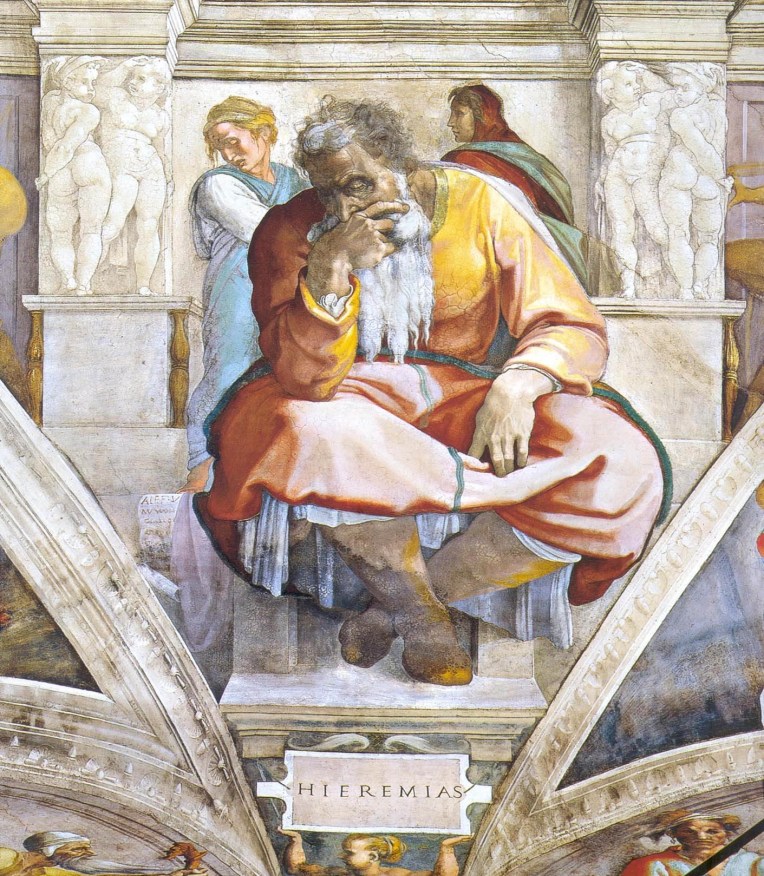
Today’s First Reading is taken from the Old Testament prophet Jeremiah, whose prophecy echoes throughout the season of Lent.  One of the hallmarks of the Book of Jeremiah is his account of how he must suffer in order to be a faithful prophet.  As such, this hallmark reveals two points for the attention of Christians, though the second grows out of the first.

First, Jeremiah’s suffering as a prophet foreshadows the vocation of Jesus Christ.  Jesus was not only a prophet, of course, but during His three years of public ministry, His prophetic preaching and prophetic miracles were a prime motive for those who sought His death.  So we ought to listen again to the First Reading and imagine it as describing the suffering of Jesus.

Second, each Christian is called by God to live fully in Christ.  This means that each Christian is called by virtue of his or her baptism to share in the three roles that Jesus exercised during His earthly life:  the roles of priest, prophet and king.  Each Christian, in his or her own way, is meant to speak and act prophetically.  In this, we ought to keep in mind that a biblical prophet is not someone who predicts the future, but someone who reminds others—by word and example—of the demands of God’s Word.

Lent 2-3

Tuesday of the Second Week of Lent

RSL banner

Tuesday of the Second Week of Lent
Isaiah 1:10,16-20  +  Matthew 23:1-12
March 2, 2021

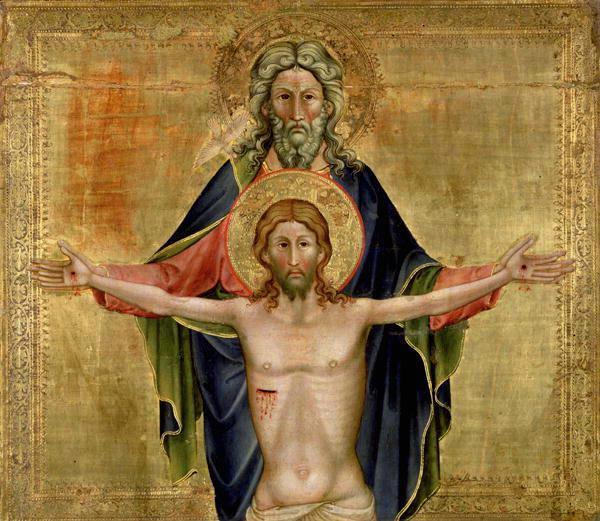
“You have but one Father in heaven.”

Sometimes this verse is quoted against Catholics, who address their priests as “Father”.  However, you don’t at the same time hear the New Testament Letter to Philemon quoted, where Saint Paul says, “I appeal to you for my child, Onesimus, whose father I have become in my imprisonment” (verse 10).  Are these words of Saint Paul un-biblical, and un-Christian?

Or ought we, rather, look at today’s Gospel passage in its own scriptural context?  Scripturally, the first and last verses of today’s Gospel passage help us see the meaning of Jesus’ words:  “You have but one Father in heaven.”

Jesus begins by pointing out the contradiction of the scribes and Pharisees.  They legitimately hold the “chair of Moses”, but the choices of their lives are illegitimate.  They do not practice what they preach.  These first words of the passage present the problem.

The passage’s last words present the answer:  “Whoever humbles himself will be exalted.”  Everything in between is a means to this end.  Today, then, reflect on this question:  “How often do I pray specifically to God the Father, and nurture my relationship with Him as if I were indeed a humble child of His?”

Lent 2-2