Thursday of the Fifth Week in Ordinary Time [I]

Thursday of the Fifth Week in Ordinary Time [I]
Genesis 2:18-25  +  Mark 7:24-30
February 11, 2021

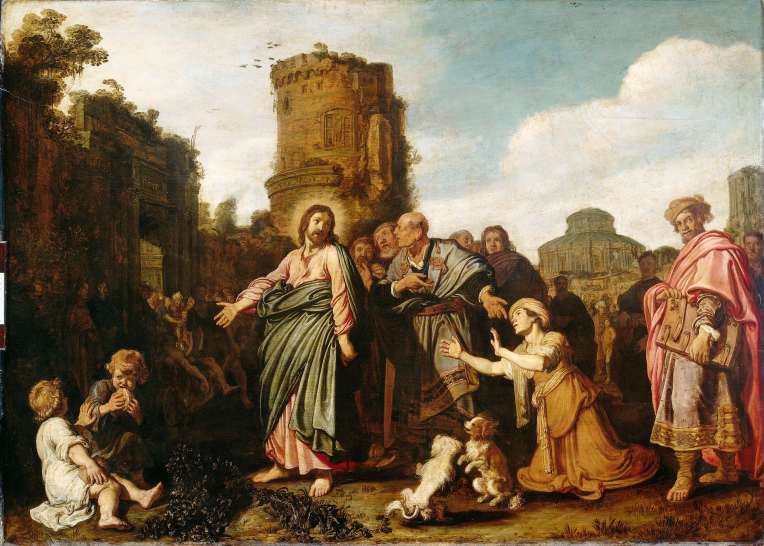
“Lord, even the dogs under the table eat the children’s scraps.”

St. Mark the Evangelist tells us that a Greek woman—that is, an outsider—came to Jesus and “begged” Him to help her daughter.  This woman, despite not being a Jew—despite not being among that people of the Covenant, who had been waiting for the Messiah to come—nonetheless cried out to Jesus for help.  But what happened when she cried out to Jesus for help?

Jesus essentially calls the woman and her daughter dogs!  He says to this outsider, “It is not right to take the food of the children and throw it to the dogs.”  The “children” Jesus is referring to are the children of Israel, the ones the Father sent Him to teach, while this woman is an outsider, a “dog”.  But why is Jesus talking this way?

Scripture scholars tells us that our English translation “dogs” doesn’t fully capture what Jesus says.  The actual word is more gentle, and specific, meaning “puppies”:  something adorable, if pesky.  The woman’s response to Jesus shows that she knows what Jesus is up to, and is willing to play along.

God knows you better than you know yourself.  God demands faith from us, even when we believe we have none.  He is willing to “pull” our faith out of us—we might even say that He is willing to test us—in order to purify our faith.  Jesus knows what sort of faith this woman has.  And He is willing to draw it out, because without faith on this woman’s part, he will not work a miracle.  Pray for the sort of confident faith that this woman has to “banter” with God and to recognize that your being an outsider is not an impediment to the grace God wishes to give you.

Saint Scholastica, Virgin

Saint Scholastica, Virgin
Genesis 2:4-9,15-17  +  Mark 7:14-23
February 10, 2021

“… the things that come from within are what defile.”

Jesus speaks at length, and quite unflatteringly, about what comes from “within the man, from his heart”.  He mentions thirteen evils, though one gets the impression that He easily could have continued.  He is describing the fallen human heart, which does not have the law of God within.  Jesus wants us to realize our utter need for grace.

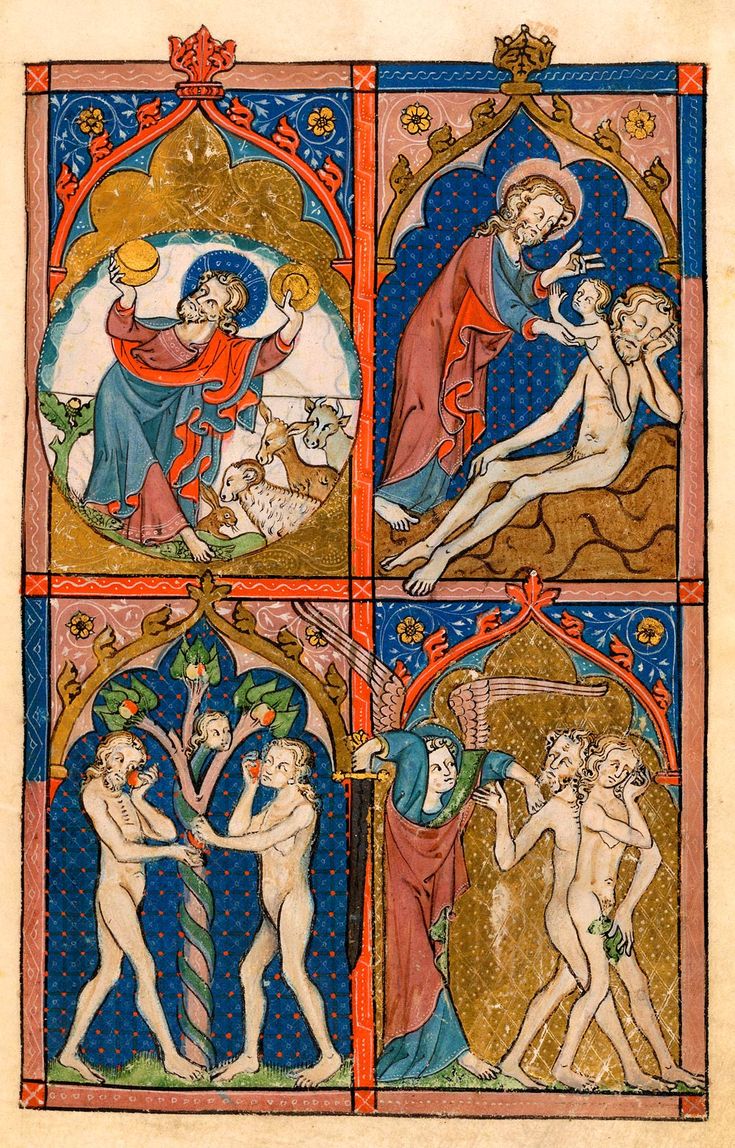
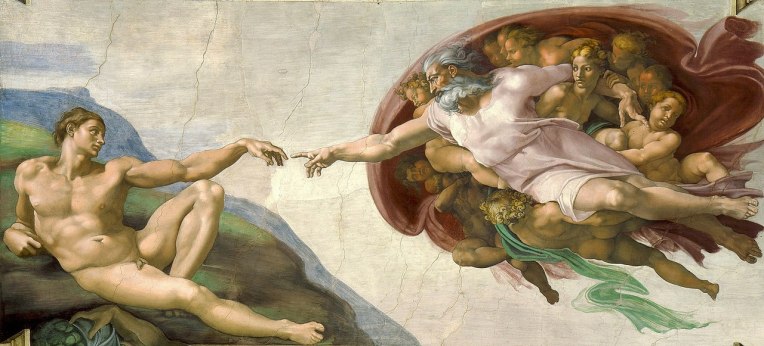
Consider this in light of today’s First Reading from the Book of Genesis.  We hear the beginning of one of Scripture’s accounts of the creation of man:  “the Lord God formed man out of the clay of the ground and blew into his nostrils the breath of life, and so man became a living being.”  The phrase “the breath of life” we might consider as a description of the human soul.  While man resembles other animals in many ways, it’s by means of this breath that man transcends them.

However, the Latin proverb reminds us that “corruptio optimi, pessima”:  “the corruption of the best results in the worst.”  By sin—as we will hear in Friday’s and Saturday’s First Readings—God’s gift of the breath of life becomes the very source of death.  This death has many names, and Jesus give us only thirteen in today’s Gospel passage.  Such is the power that each human person has:  to disallow God from working through God’s own creation.

Tuesday of the Fifth Week in Ordinary Time [I]

Tuesday of the Fifth Week in Ordinary Time [I]
Genesis 1:20—2:4  +  Mark 7:1-13
February 9, 2021

“Be fertile and multiply; fill the earth and subdue it.”

If you were to ask a Catholic third grader, “What’s the first of God’s Commandments?”, the child might dutifully reply, “I am the Lord your God:  you shall not have strange gods before me.”  While we might congratulate Johnny for his studiousness, we’d assume he meant we were asking about the Ten Commandments.

Of course, the Ten Commandments first appear in the Book of Exodus.  But God gives many commands before that point in the Bible.  In today’s First Reading—from the first two chapters of the Bible—we hear the “original first commandment” to His human children, who were created in His Image and likeness.  “Be fertile and multiply; fill the earth and subdue it.”  Note that there are two elements to this command, each shedding light on the other.

The first is God’s command to be fertile.  In honoring this command, man—male and female—reflect the abundance of God’s own love.  That’s why the Church teaches that deliberately thwarting the gift of fertility is a grave offense against God’s loving creation of man in His own Image.

The second is man’s subduing of the earth.  The following sentence clarifies the meaning of “subdue” through God’s command to man to “have dominion”.  “Dominion” is related to the Latin word for “Lord” (“Dominus”).  Mankind’s dominion over the earth is an on-going act of stewardship, caring for God’s creation with respect for God—not man—as the Creator.

Monday of the Fifth Week in Ordinary Time [I]

Monday of the Fifth Week in Ordinary Time [I]
Genesis 1:1-19  +  Mark 6:53-56
February 8, 2021

God saw how good it was.

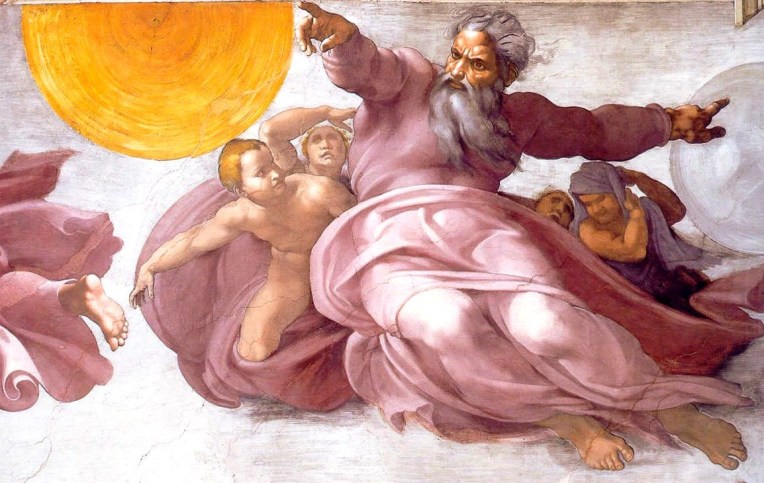
In today’s First Reading the Church proclaims the first nineteen verses of the Bible.  The Church proclaims the First Reading at weekday Mass from Genesis for almost two weeks during Ordinary Time:  this week and next.  Today and tomorrow the First Readings present the narrative of God’s six days of creation, and His rest on the seventh.

Today’s Responsorial is a commentary on the First Reading.  To some degree, this psalm repeats what we hear in Genesis 1:1-19.  But the psalm also does more.  The Responsorial’s refrain points to this something “more”.

“May the Lord be glad in His works.”  Regarding each of the created works of the first, third and fourth days, “God saw how good it was.”  Within the narrative of God’s work of Creation, this sentence serves as a refrain, repeated over and over.

But today’s Responsorial refrain adds something more.  To God’s “seeing” the goodness of creation, the psalm refrain points to the Lord being glad in His works.  This “being glad” (the Latin Vulgate uses the verb ‘laetare’, meaning ‘to rejoice’) tells us something about God Himself, and likewise about us who are created in His Image and likeness.  Indeed, we can imagine that God’s “rest” on the seventh day was not some sort of “Sunday afternoon nap”, but a “day long” rejoicing in the works He worked by His divine Word.

St. Paul Miki and Companions, Martyrs

St. Paul Miki and Companions, Martyrs
Hebrews 13:15-17,20-21  +  Mark 6:30-34
February 6, 2021

“Come away by yourselves to a deserted place and rest a while.”

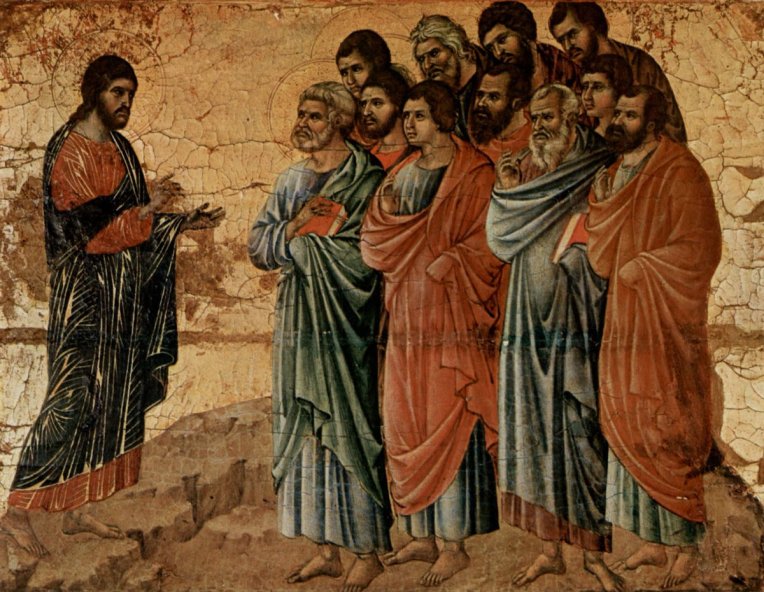
In listening to the words of the Gospel passage and applying them to our lives, perhaps we have not listened as carefully—or as fully—as we should have.  In this passage Jesus says to us what Jesus says to His apostles:  “Come away by yourselves to a deserted place and rest a while.”  He invites them by His words to imitate Him:  He calls them to follow Him to a deserted place.

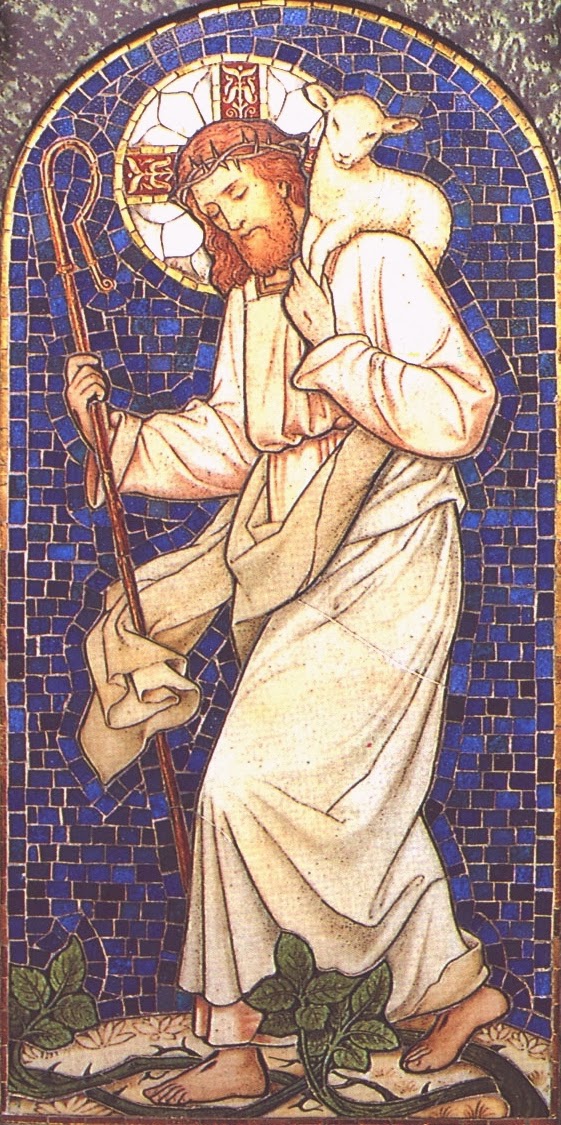
Jesus leads the apostles there, but when they arrive at the place, Jesus sees a vast crowd.  What does he do?  Jesus, the Good Shepherd, begins feeding the flock with his teaching.  Again Jesus is speaking to His apostles, but this time He invites them by His actions to imitate Him:  He calls them to follow Him into the midst of the crowd.

Jesus’ life in this passage teaches us the meaning of the words sometimes attributed to Saint Francis of Assisi:  “O Divine Master / grant that I may not so much seek to be consoled as to console / to be understood as to understand / to be loved as to love.  / For it is in giving that we receive….”

These words lead us back again to the scene of the Gospel.  Can we see that Jesus is teaching us that to be a faithful shepherd is to be a faithful steward, to offer everything to God, both our work and our rest?  Nothing, not a thing, is ours, not even the rest that we enjoy in the midst of a busy day, for even the rest we are granted prepares us only to serve both God and others more fully.

St. Agatha, Virgin Martyr

St. Agatha, Virgin Martyr
Hebrews 13:1-8  +  Mark 6:14-29
February 5, 2021

When his disciples heard about it, they came and took his body and laid it in a tomb.

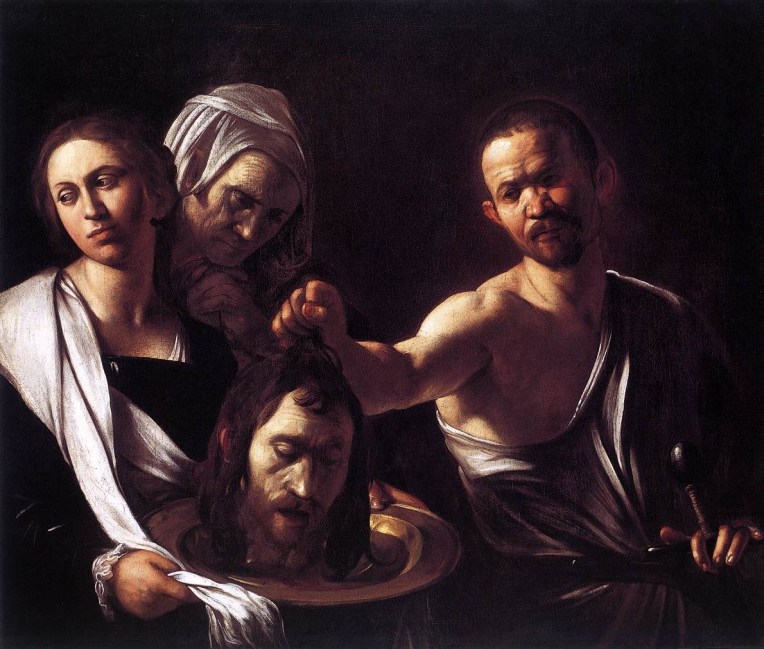
Today’s Gospel passage presents a long flashback to the martyrdom of St. John the Baptist.  It’s notable that St. Mark the Evangelist, so concerned with brevity in his Gospel account, gives so much attention to this narrative.  St. John was obviously a figure of importance in relating the Good News to early Christians, even in regard to his death.

What distinguishes St. John the Baptist as a saint?  We might say that it’s his particular combination of humility and courage.  Sometimes humility (and also meekness) are seen in opposition to courage.  In this false light, humility is a form of weakness and submission, involving an inability to stand up for oneself.

In one sense, humility truly is a form of submission.  Humility truly means not seeing oneself as the center of the universe, or the king of the hill.  In turn, humility truly means recognizing one’s true place in life.  This truth tenders a capacity for strength that doesn’t consider earthly life as one’s purpose in life.  This truth leads to a courage willing to forfeit one’s earthly life for eternal life.  St. John the Baptist witnessed to Christ in his penitence, in his preaching, in his knowing that Jesus must increase and he must decrease, and in his acceptance of the gift of martyrdom.

The Fifth Sunday in Ordinary Time [B]

The Fifth Sunday in Ordinary Time [B]
Job 7:1-4,6-7  +  1 Corinthians 9:16-19,22-23  +  Mark 1:29-39

“For this purpose have I come.”

+     +     +

references to the Catechism of the Catholic Church cited for this Sunday by the Vatican’s Homiletic Directory:

CCC 547-550: healing as a sign of messianic times
CCC 1502-1505: Christ the Healer
CCC 875, 1122: the urgency of preaching

+     +     +

In Sunday’s Gospel Reading, the people around Jesus seem to believe that the cures He’s working are the “good news” of the Gospel.  We have to remember that the word “gospel” literally means “good news”, and that Jesus had gone around Palestine for some time preaching that he had a message of “good news” for them.

But here we see a common misunderstanding among those who heard Jesus.  They didn’t exactly understand what Jesus’ “good news” concerned.  Was it good financial news?  News of good weather for the crops for the next hundred years?  Was it news of Israel’s freedom from its slavery to the Roman Empire?  The people in today’s Gospel Reading focus their attention upon the “good news” that Jesus has for them about their physical suffering.

Now we as Catholics living in modern times know that the meaning of the Gospel is that we are freed from slavery to sin, not simply that we are freed from the slavery of our bodies to disease.  The people in Palestine, however, were so caught up in the wonder of Jesus’ physical cures that they couldn’t understand that Jesus was simply using these cures as signs.  These miracles were healings of the body that foreshadowed the more radical healing of the soul.

We shouldn’t fault these people in the Gospel.  After all, who among us, when faced with disease, doesn’t find it easy to get caught up in the misery and suffering it brings about?  All you want is for the suffering to be over.  “Life on earth is a drudgery,” as Job says in the First Reading.  Suffering seems to consume your life.

So it’s easy to see why a person in the first century, suddenly and dramatically freed from serious sickness, would look upon Jesus as his Messiah for that very reason.  Nonetheless, Jesus’ purpose in working these cures is to point our attention beyond them to something infinitely greater.

By putting our faith in Jesus—that is, by believing that through His holy Cross He has redeemed the world—we are freed from the slavery of our souls to sin.  But the larger question that Jesus points to in this Gospel passage is not, “What are you a slave to?” (the correct answer being, “Sin”).  The larger question that Jesus points to is, “Who is it who has enslaved you to sin?”  This isn’t a question that the people in the Gospel were ready to hear, but we as Catholics ought to consider this question seriously.  “Who has enslaved you to sin?”

The answer is:  “you have.”  Practically speaking, this is one of the hardest teachings of the Church.  It’s a teaching that often derails a Christian’s efforts at spiritual direction.  We might take it for granted that we are responsible for our actions.  But if we look closely at our actions, we might be surprised how often we deceive ourselves.

Like our first parents, Adam and Eve, there is a constant tendency within us to shift the blame.  “Who ate the apple?  Well, I did, but she made me do it.”  We may not even shift the blame to another person, but rather to the circumstances in which we find ourselves in life.  “If only I didn’t have to be around that person so much, I wouldn’t be so bothered by him,” or “if only if I didn’t have to finish that work by next week, I would do a better job on it.”

There is no denying that we are influenced by others, even at times perhaps by the Devil himself.  Nonetheless, each person must accept responsibility for his or her sinful actions.  A good Examination of Conscience each night can be a great help in this regard.

When we recognize how powerless we are to do good on our own, and when we accept the fact that it is through God’s grace that we can both be saved and do good works, then we are moving in the direction that Jesus points in today’s Gospel Reading.  He is pointing us, through His Cross, towards the very source of all good:  namely, Jesus’ own eternal Father, who, as the priest names Him in the confessional when giving absolution, is “God, the Father of mercies.”

Thursday of the Fourth Week in Ordinary Time [I]

Thursday of the Fourth Week in Ordinary Time [I]
Hebrews 12:18-19,21-24  +  Mark 6:7-13
February 4, 2021

[Jesus] summoned the Twelve and began to send them out two by two.

The meaning of Jesus’ two-fold action of summoning and sending in today’s Gospel passage is based on the literal meaning of the word “apostle”, which is “one who is sent”.  But today’s summoning and sending, in chapter 6 of St. Mark’s Gospel account, is different from a second apostolic mission on which these men will be sent.  That latter mission occurs in the final chapter, where in fact only eleven apostles remain.

The key distinction is what the Twelve here are sent to do.  This is a preparatory mission:  to preach repentance, drive out demons, and anoint and cure the sick.  Here the Twelve turn people around from the negative, to prepare them to receive the positive.  Their mission here is something akin to the vocation of St. John the Baptist:  to prepare for something—Someone—greater.

In Mark’s final chapter, the apostles are sent to accomplish something radically different.  They are sent not just to the sick, but to “the whole world”.  They are sent not just within the Holy Land, but “to the whole world”.  They are sent not to preach repentance, but to “proclaim the Gospel” [16:15].  For each of us, in the on-going conversion of our lives to Christ, we need to listen and be receptive to the works of both of these missions:  turning away from our sins, so that we within our own vocations can proclaim the Gospel by living the Gospel.

Wednesday of the Fourth Week in Ordinary Time [I]

Wednesday of the Fourth Week in Ordinary Time [I]
Hebrews 12:4-7,11-15  +  Mark 6:1-6
February 3, 2021

He was amazed at their lack of faith.

Today’s Gospel passage, from the sixth chapter of Mark, doesn’t really end on a high note.   In His native place, Jesus was not able to perform any mighty deed, apart from curing a few sick people.  He was amazed at their lack of faith.

Why did they lack faith?  Why do we lack faith?  Why do we focus on the less important things in life:  the less important types of freedom?  St. Mark begins his Gospel account by answering this question.  The first recorded words of Jesus are proclaimed immediately after He spends forty days in the desert, tempted by Satan.  He emerges from the desert, and the first words He speaks frame the entire Gospel.  Jesus proclaims, “This is the time of fulfillment.  The kingdom of God is at hand.  Repent, and believe in the Gospel.” 

Repent, and believe in the Gospel.  We might say that these two demands of Jesus sum up the entire Christian faith.  They lead us to faith.  They lead to true freedom.  And they require us to exercise our freedom in its deepest sense:  that is, in our relationship with God.

True repentance means to turn oneself around 180°:  to turn oneself away from sin, and towards God, not simply towards ourselves, and what we think we want.  This is the highest type of freedom:  to be able to do things for others, or in other words, to give our very self to another (another human person, or God).