St. Charles Borromeo, Bishop

St. Charles Borromeo, Bishop
Philippians 2:12-18  +  Luke 14:25-33
November 4, 2020

… work out your salvation with fear and trembling.

Saints of the Church have noted that every aspect of the Christian faith is inevitably distorted twice, in opposite directions.  Take St. Paul’s words in today’s First Reading as an example, where he preaches about the drama of the Christian spiritual life.

On the one hand, St. Paul commands the Philippians:  “work out your salvation with fear and trembling.”  This command speaks clearly of the centrality of human effort in the spiritual life.  Salvation is not a “done deal” at one’s baptism.  Salvation is assured only to the Christian who perseveres in God’s love to the very end of her earthly life.  Unfortunately, there are some who have only considered this truth in isolation, claiming that salvation comes through human effort, to the exclusion of God’s help.

On the other hand, St. Paul preaches clearly about God’s centrality in the spiritual life.  “God is the one who… works in you both to desire and to work.”  There are, unfortunately, those who have exaggerated God’s role in the spiritual life, claiming that man cannot contribute anything good to his own salvation.  When we listen with both ears, however, God reveals to us that the spiritual life is a drama:  God is in the lead role, but asks us to follow Him in the acts that lead to Heaven.

Tuesday of the Thirty-first Week in Ordinary Time

Tuesday of the Thirty-first Week in Ordinary Time
Luke 14:15-24

“Blessed is the one who will dine in the Kingdom of God.”

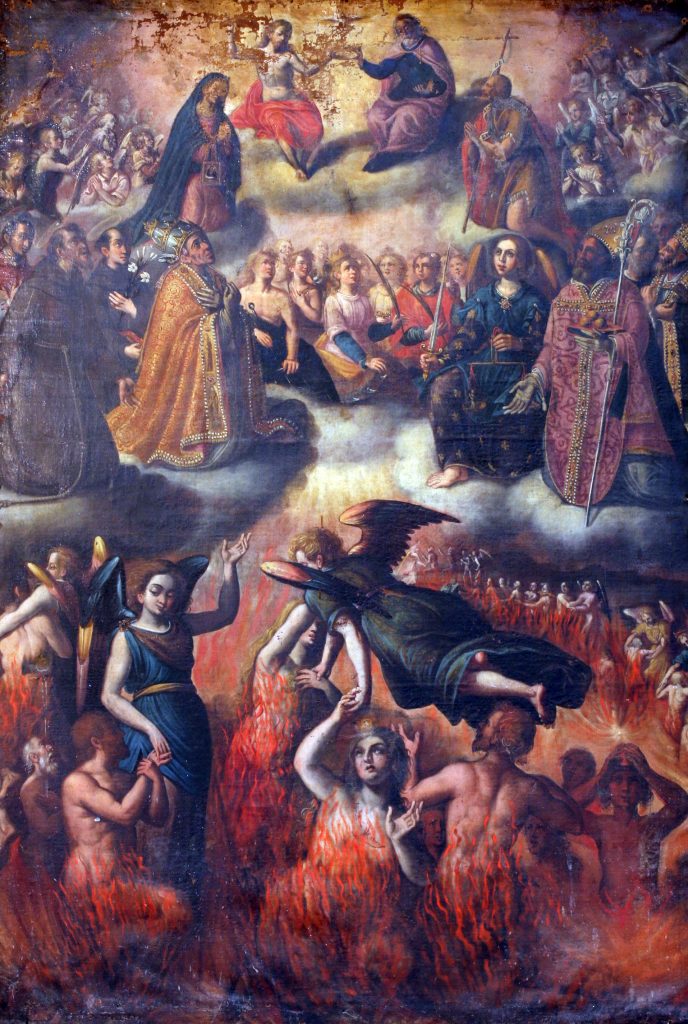
During the last weeks in Ordinary Time, as the Church year draws to a close, Holy Mother Church calls us to meditate upon the Last Things: Heaven and hell, death and judgment. During November, we also pray for the faithful departed, especially our beloved dead and the Poor Souls.

Often we wonder what our beloved dead—when they, we hope and pray, reach Heaven—will experience there. Jesus’ teachings and parables about the very human and earthly experience of dining gives us insight into the nature of Heaven, which is often described as “the Heavenly Banquet”. In yesterday’s Gospel Reading, Jesus invited a Pharisee to be more generous about inviting to his home those he might consider “undeserving”.

In today’s Gospel Reading, Jesus gives us a parable to reflect upon God the Father’s generous invitation to share in the “Kingdom of God”. It’s true that the Kingdom of God to a certain measure can be experienced while on earth. However, the fullness of the Kingdom of God, and the banquet experienced in that Kingdom, can only be known fully in Heaven.

In Jesus’ parable in today’s Gospel Reading, “A man gave a great dinner to which he invited many.” It’s easy to see how this represents God the Father inviting many to the Banquet of Heaven. “But one by one, [those invited] all began to excuse themselves.” That’s perplexing, and might make us wonder whether the parable still applies to God inviting people to Heaven. After all, no one would turn down an invitation to Heaven, we might think. Unfortunately, if we thought that, we would think wrongly. People reject God’s call to Heaven just as they reject God’s call to Sunday Mass, just as they reject God’s call to daily prayer.

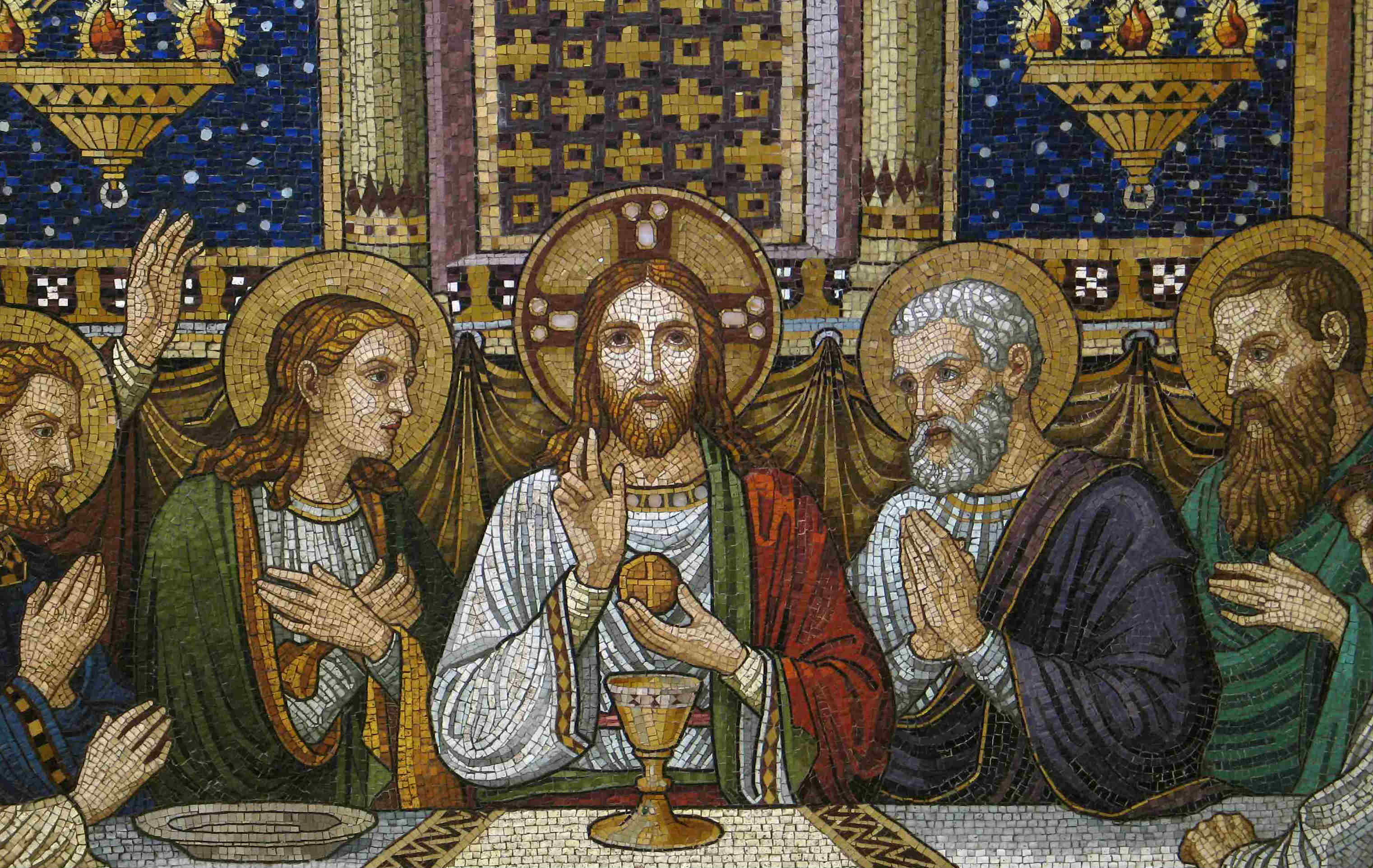
Prayer, Sunday Mass, and the Eternal Banquet of Heaven: God invites us, step by step, to share in the fullness of His divine life. The excuses that we often give God for turning down His invitations are just as foolish as the excuses offered by those invited in the parable. Fortunately for us, God the Father continues to invite us each day of our earthly life. It’s up to each us of to respond to God’s invitation, and recognize ourselves in the words recited shortly before Holy Communion: “Blessed are those called to the supper of the Lamb” [see Revelation 19:9].

The Commemoration of All Souls

The Commemoration of All Souls
Wisdom 3:1-9  +  Romans 5:5-11  +  John 6:37-40
N.B.  There is a wide selection of Scripture readings for today.
November 2, 2020

The souls of the just are in the hand of God.

The belief the Church celebrates today is part of the “communion of saints”.  That’s a familiar phrase—we recite it in the Apostles’ Creed—but the “communion of saints” isn’t just those who are canonized saints in Heaven, but also the members of the Church who are in Purgatory, as well as those on earth.  Today we who are members of that third group pray for those in the second, so that joined through prayer, we all may become members of the first.

Sometimes we feel torn like Saint Paul.  While it’s better to be in heaven, God wants us here on earth for His purposes.  Those purposes call each of us to help others in many ways.  One of the most important of these is prayer for others, which is formally called “intercession”.

Even in heaven, saints are given missions by God.  Saints are not simply fixed on God, without regard for others.  Saints in heaven pray for the rest of the “communion of saints”.

We on earth are like the saints in Heaven in this regard.  While we might want to fix our attention on God alone, God wants us to offer our lives for others, because this is often where we find God revealed in our lives.  So it is through our prayers of intercession, both for fellow pilgrims on earth, and for those in Purgatory.

Does this take away from God?  No.  God wants us to turn to each other.  Intercessory prayer is a form of Jesus’ command to “love your neighbor as yourself”.  If it’s valid in God’s eyes to pray for oneself, why wouldn’t it be to pray for others?  When a family suffers a tragedy, they draw closer together.  Part of this occurs through prayer, and they all are stronger afterwards, and more closely knit together.

Our prayer for others draws us closer to those we pray for.  Those in Heaven, in Purgatory, and on earth are drawn closer together through intercession.  When we intercede for another—or ask someone’s intercession—we don’t believe that that person is God.  We ask another to take our prayers to God.  When we call our mother and ask her to pray for us, we’re doing the same as when we kneel and pray a rosary:  we are asking our mother to pray to God for us.

Through all prayers of devout intercession, the Body of Christ grows stronger.  In the person of Christ, God and man are united.  Within Christ, we live as members of his Body.  Within Christ, we build others up, and so find God’s love for us.