Wednesday within the Octave of Easter

Wednesday within the Octave of Easter
Acts 3:1-10  +  Luke 24:13-35
April 15, 2020

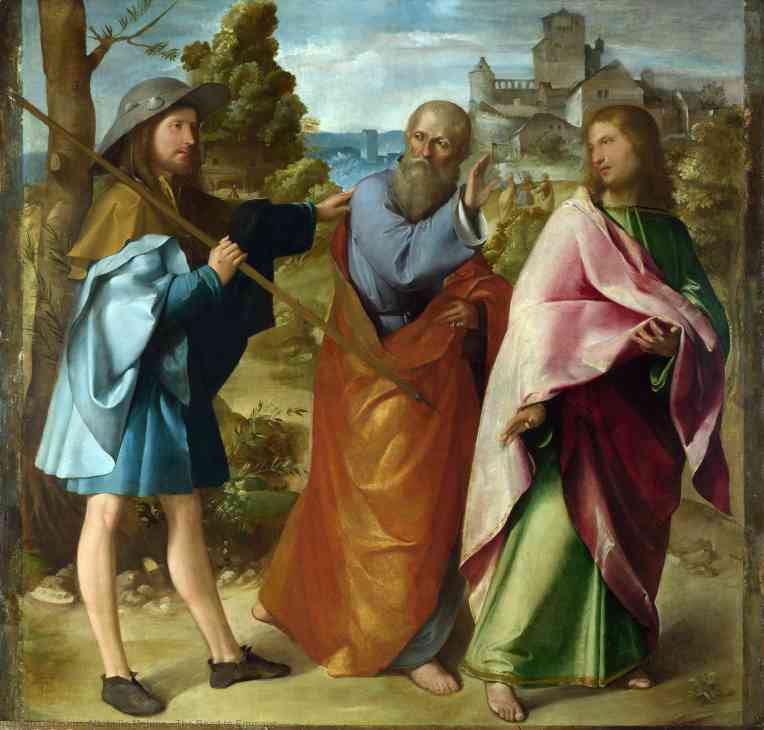
But they urged him, “Stay with us, for it is nearly evening and the day is almost over.”

Easter Monday we heard the chief priests and the elders respond to the news of the Resurrection by covering their tracks with lies.  Yesterday, we heard Mary Magdalen respond to Our Risen Lord when He called her by her name.  She cried out, “Teacher!”  Yet we are called to recognize in Christ much more than simply a teacher.

Today we hear of more events which took place on the day of the Resurrection.  The word “disciple” means “one who learns”, and the two disciples of today’s Gospel passage are obviously devoted to learning.  Undoubtedly they asked themselves what all these amazing events could mean.

We are told that Jesus joins them in their journey, though the disciples, like Mary Magdalen, do not recognize who He is.  Jesus preaches to them the meaning of the Scriptures, which help them learn.  These Scriptures help them learn the meaning of what had happened over the previous few days.  But still, they do not recognize Jesus.

Only in “the breaking of the bread” do they come to know Jesus, and only in the Eucharist do we Christians become more than disciples.  Only by sharing in the Sacrifice of Christ’s Body and Blood can we begin to imitate Him in our lives as He wills.

Easter 1-3

Tuesday within the Octave of Easter

Tuesday within the Octave of Easter
Acts 2:36-41  +  John 20:11-18
April 14, 2020

Those who accepted his message were baptized, and about three thousand persons were added that day.

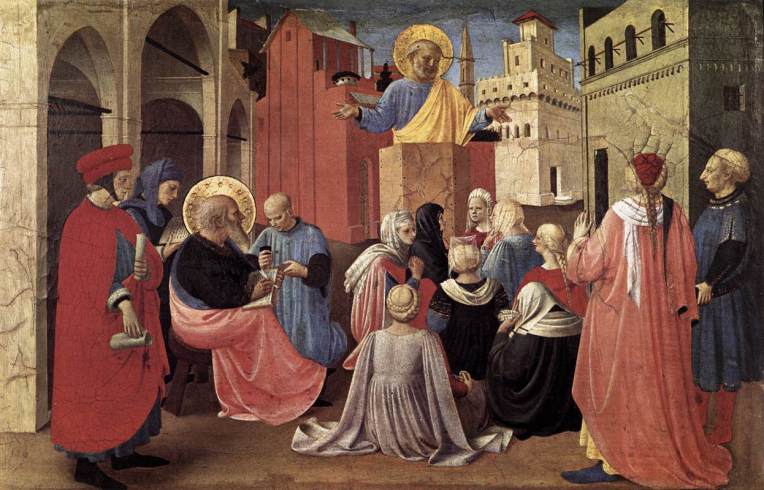
On the day of Pentecost, Peter boldly proclaims to the Jewish people:  “Let the whole house of Israel know for certain that God has made Him both Lord and Christ, this Jesus whom you crucified.”  The response of these Jews is pretty easy to guess.  Acts tells us that “when they heard this, they were cut to the heart, and they asked Peter and the other Apostles, ‘What are we to do…?’”  You can almost imagine what they, in their fear, expect Peter to reply.

But Peter delivers to them Good News:  “Repent and be baptized, every one of you, in the Name of Jesus Christ, for the forgiveness of your sins; and you will receive the Gift of the Holy Spirit.”

Acts then tells us that there were two groups in that crowd:  there were those who accepted this Good News—some 3,000 persons—and there were those who did not accept this Good News.

Here is the first lesson of the Church’s life and saving mission.  Unfortunately, it’s a difficult lesson to put into practice.  We need to choose to be in that first crowd, the crowd of 3,000.  We need to accept the Good News about the love that God wants to give us.  This is the love that Jesus, from the Cross and in the Holy Eucharist, is dying to give us.

Easter 1-2

Monday within the Octave of Easter

Monday within the Octave of Easter
Acts 2:14,22-33  +  Matthew 28:8-15
April 13, 2020

Mary Magdalene and the other Mary went away quickly from the tomb, fearful yet overjoyed….

During most of the liturgical year, the First Reading at Holy Mass comes from the Old Testament.  But Easter is different.  During Easter, we hear first from Acts of the Apostles.  Why is this?  There are plenty of apostolic letters that could be proclaimed:  Romans, Galatians, Ephesians, 1 John, Jude, and so on.  These New Testament epistles preach about the Resurrection.  So why do we hear, each and every day of the Easter Season, from Acts of the Apostles?

The answer is that what the apostles were about throughout Acts is what God is calling us to throughout Easter.  In a phrase, this answer is:  forming the Church.

The Church was conceived, so to speak, from the water and blood that poured forth from the side of Jesus crucified.  But the Church was born some fifty days later, on the feast of Pentecost.  The story of Acts is the first history of the Church:  going forth, out into the world, to proclaim in word and action the saving mystery of Jesus, crucified and Risen.  This Church has lived on earth for some 2000 years, and each of us is called to share in her life and saving mission.

Easter 1-1

Easter Sunday

Easter Sunday of the Resurrection of the Lord
Acts 10:34,37-43  +  Colossians 3:1-4  +  John 20:1-9
April 12, 2020

So Peter and the other disciple went out and came to the tomb.

+     +     +

click HERE to read Monsignor Charles Pope’s Easter homily

click HERE to watch Bishop Michael Burbidge’s homily for Easter (6:47)

click HERE to watch Archbishop Alexander Sample’s homily for Easter (12:36)

click HERE to watch Archbishop Charles Chaput’s homily for Easter (17:05)

+     +     +

click HERE to read the 2019 homily of Pope Francis for Easter

click HERE to read the 2012 homily of Pope Benedict XVI for Easter

click HERE to read the 2000 homily of Pope St. John Paul II for Easter

+     +     +

references to the Catechism of the Catholic Church cited for this Sunday by the Vatican’s Homiletic Directory:

CCC 638-655, 989, 1001-1002: the Resurrection of Christ and our resurrection
CCC 647, 1167-1170, 1243, 1287: Easter, the Lord’s Day
CCC 1212: the Sacraments of Initiation
CCC 1214-1222, 1226-1228, 1234-1245, 1254: Baptism
CCC 1286-1289: Confirmation
CCC 1322-1323: Eucharist

+     +     +

Easter is not just the single day of Easter Sunday, but a season of seven weeks plus one more day.  The Church celebrates Easter for fifty days in order to ponder thoroughly the mysteries of this holiest season of the Church’s year.  There are three mysteries of our Faith that the Church gives special attention to during Eastertide.  They are the first three Glorious Mysteries of the Rosary.  Here, consider just the first and third.  Consider how they relate to each other.

The First Glorious Mystery is the proper focus of today:  the Resurrection.  This mystery is presented by this morning’s Gospel passage, where the young apostle John serves as a model of how to ponder.

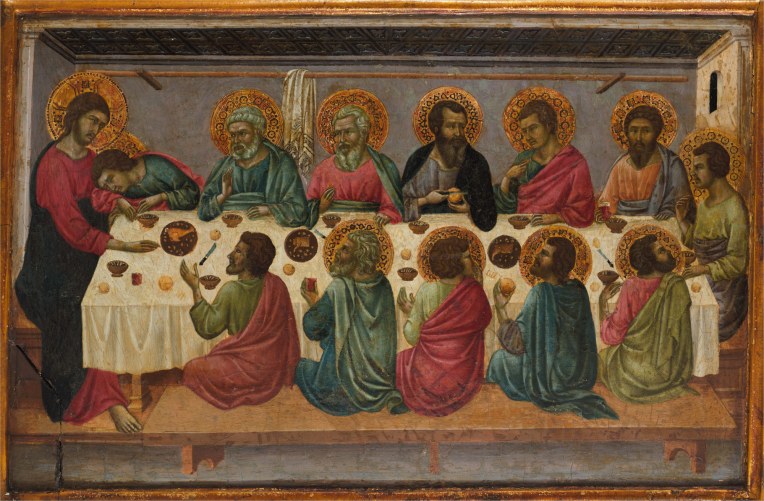
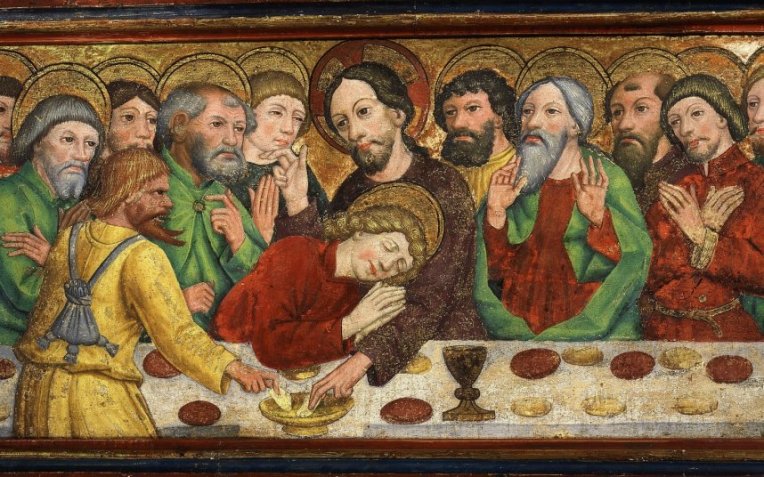
St. John, called by God to serve the Church as both apostle and evangelist, accomplished all he did because he was the Beloved Disciple.  As an apostle and evangelist, he was like a zealous Martha.  But first he was a faithful Mary.  At the Last Supper he took the stance that the sister Mary did at the meal in her home:  sitting, listening at the feet of the Word made Flesh.

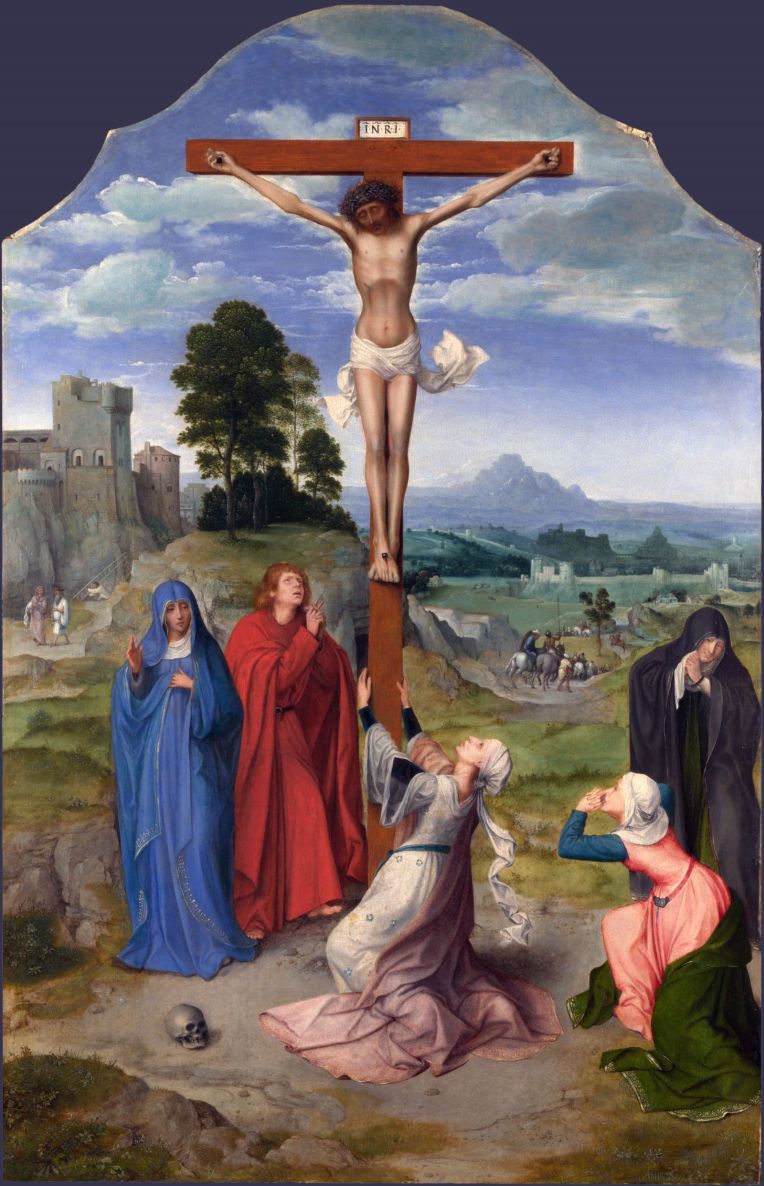
In many churches, we see above the high altar the youngest of the apostles—St. John the Beloved Disciple—standing to one side of the Cross, and our Blessed Mother to the other.  This is the scene of the Crucifixion that the Church celebrated just days ago.

But on the third day, it was with St. Peter that John ran to the tomb.  Along with Saint Peter and the Beloved Disciple, we see the wrappings on the ground.  But do we see as John saw?  John saw and believed.  With no sign of Jesus and without a word from Jesus, John saw and believed because the tomb was empty.

It’s ironic that on the greatest feast of the Christian year, Christ doesn’t even appear in the Gospel Reading or speak a word.  We see only His empty tomb and hear only silence.  But we might consider that this emptiness and silence are an invitation to greater faith, and through faith, an even greater gift.  This is where we ought to look at the end of Eastertide.

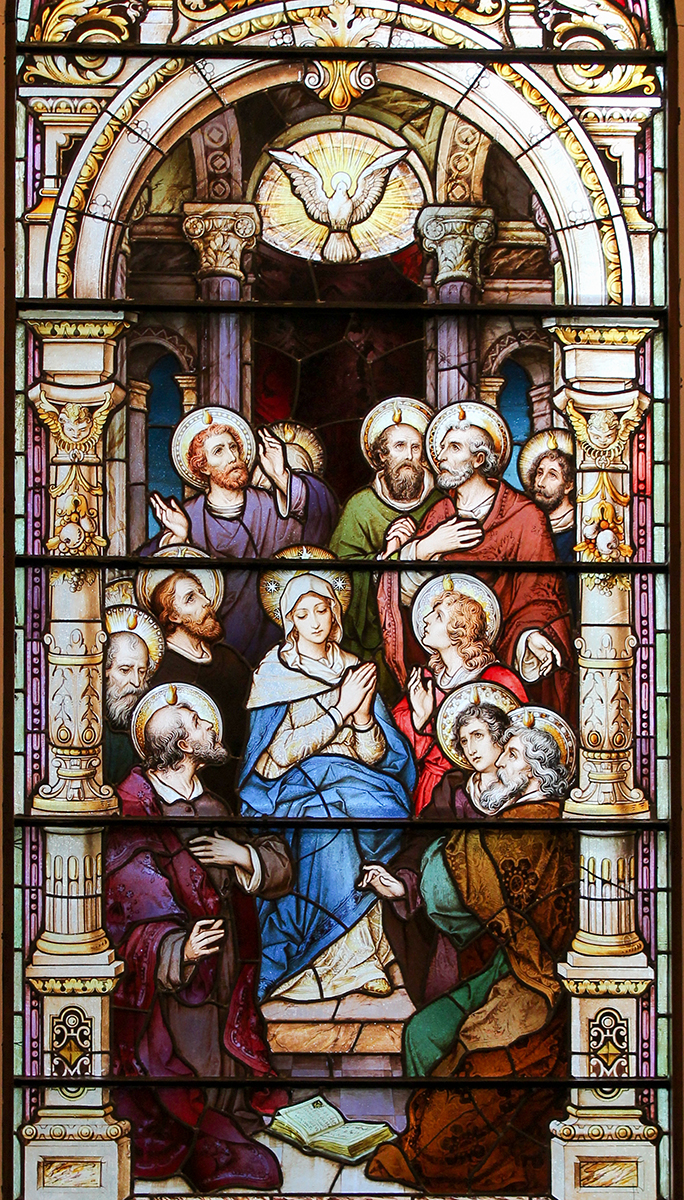
St. John teaches us to pray during these fifty days of Easter for a great gift.  God has a gift ready for us:  the Gift of the Holy Spirit.  The first 49 days of Eastertide are days of preparation for the feast of Pentecost.  As Christ rises on Easter Sunday in His risen and glorified Body, so on the feast of Pentecost His Mystical Body—the Church—rises through the power of the Holy Spirit.  Christ rises in His glorified Body at the Ascension to make way for His Mystical Body, so that His disciples may be more than followers.  Through the gifts and fruits of the Holy Spirit, Jesus’ followers become members of His Mystical Body, and share in His earthly mission.

It’s with this end in mind—the end of Pentecost—that the Church proclaims at every Mass of Eastertide a passage from Acts of the Apostles, the book that describes the Church at work through the Power of the Holy Spirit.  The descent of the Holy Spirit at Pentecost is the culminating mystery of Eastertide.  We don’t simply celebrate it on the last day of Easter as an afterthought.  Pentecost is the mystery that Jesus leads us towards through His Resurrection and Ascension.  So make your celebration of Easter this year a time of seeking and imploring the Holy Spirit, in order to be not just a follower of Jesus, but a member of His Mystical Body who shares in His very life.
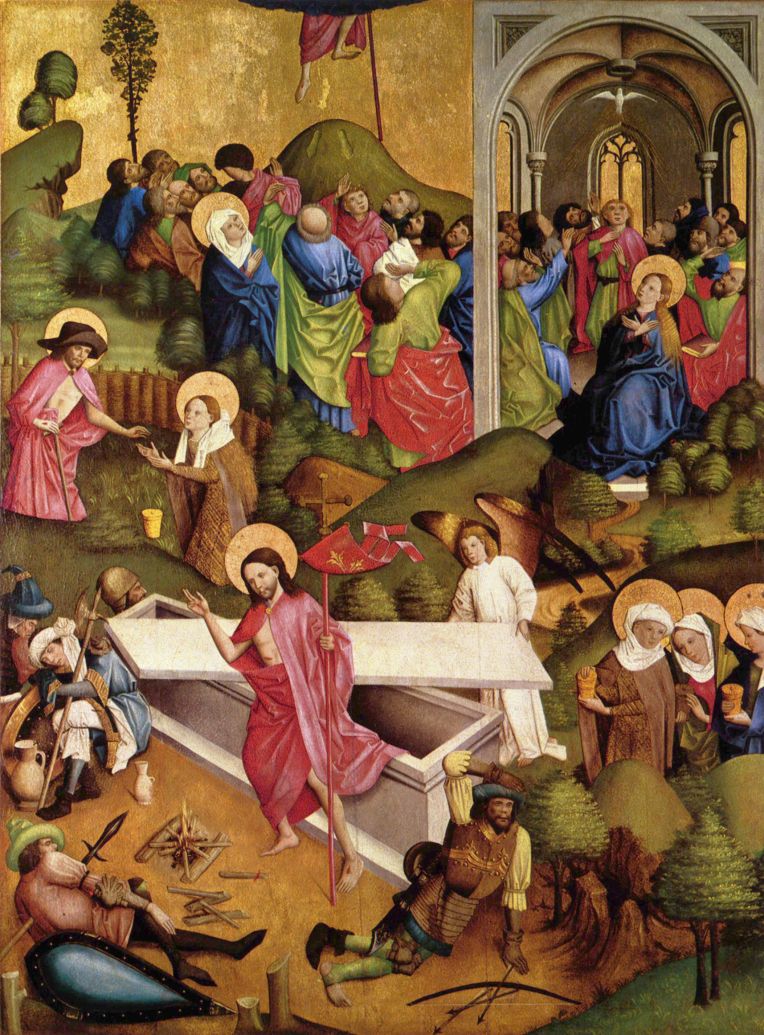
Resurrection appearances multiple

Holy Saturday

Holy Saturday
April 11, 2020

… suffered under Pontius Pilate, was crucified, died and was buried; he descended into hell ….

How ought Christians spend Holy Saturday morning and afternoon?  Is this time simply an extension of the tenor and tone of Good Friday?  What happened to Jesus during the time between His Death and Resurrection?

Although Jesus was not subject to death as every sinner is, Jesus submitted to death.  His sacred Body did not undergo corruption or decay during this time.  However, Jesus was “divided”, so to speak, during the time between His Death and Resurrection.

When a sinner such as you or I dies, the sinner’s body and soul are separated.  The body decays, while the soul heads off towards its eternal reward or punishment.  The souls of those headed for Heaven may have to wayfare through Purgatory.  Yet regardless of where the soul heads after death, it will not be reunited with its body until the end of time.  However, after Jesus’ death, something very different happened.

The Nicene Creed, which the Church usually professes at Sunday Mass, does not mention what Jesus did between His burial and His Resurrection.  But the Apostles’ Creed does affirm that “he descended into hell” (Latin: “infernos”; Hebrew: “Sheol”; Greek: “Hades”).  This is not the place where the damned face eternal punishment.  Instead, the Catechism refers to it simply as “the abode of the dead” [CCC 633].

Even morally good persons who died before Christ’s saving Death were destined for this “abode of the dead”.  Due to the merit of sin, both Original Sin and actual sin, even those who were just in terms of their human moral actions could not enter Heaven.  Only by the grace and merit of Christ’s Passion and Death could anyone enter into the presence of the Trinity in Heaven.

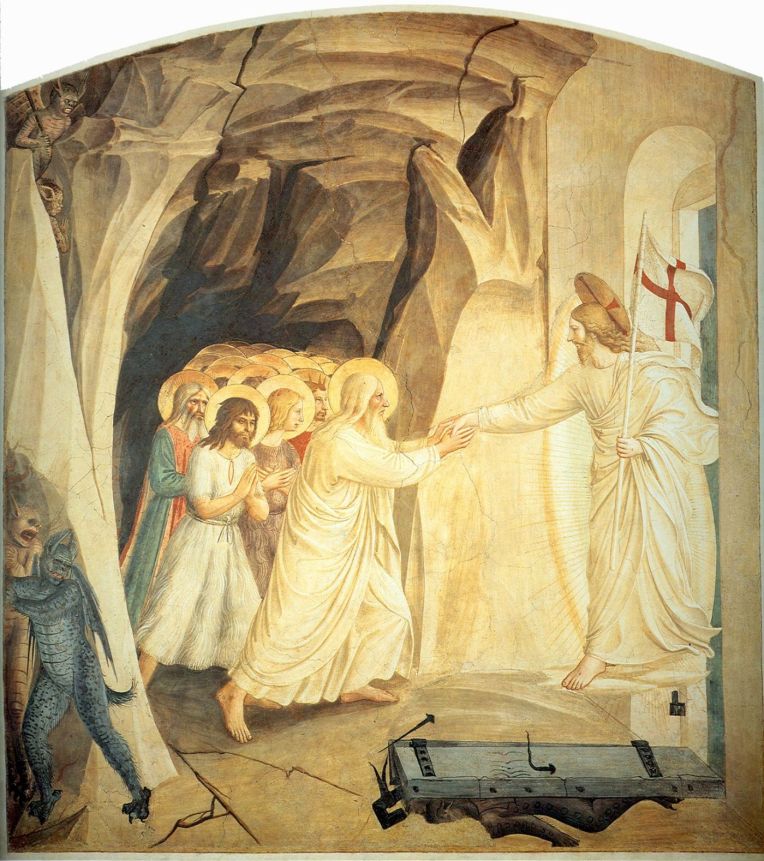
So when Jesus descended into the abode of the dead, He revealed Himself—bearing the wounds of His Passion and Death—to the just.  Those who wished were able to follow Jesus out of that abode and into Heaven.  This saving work that Jesus carried out is traditionally called “the harrowing of Hell”.  This saving work that Jesus performed even as His sacred Body lay in death reminds us of the depth and extent of God’s love.  At the same time, this work is a call to Jesus’ disciples to bear in daily life a love for others that is as deep and extensive.

Lent 6-6

Good Friday

Good Friday
Isaiah 52:13—53:12  +  Hebrews 4:14-16;5:7-9  +  John 18:1—19:42
April 10, 2020

We had all gone astray like sheep, each following his own way; but the Lord laid upon him the guilt of us all.

+     +     +

click HERE to read Monsignor Charles Pope’s reflection

click HERE to watch Bishop Thomas Olmsted’s homily (11:44)

click HERE to watch Bishop Michael Burbidge’s homily (5:19)

click HERE to watch Archbishop Alexander Sample’s homily (14:42)

+     +     +

click HERE to read the 2014 Good Friday address of Pope Francis

click HERE to read the 2009 Good Friday address of Pope Benedict XVI

click HERE to read the 1998 Good Friday address of Pope St. John Paul II

+     +     +

references to the Catechism of the Catholic Church cited for this day by the Vatican’s Homiletic Directory:

CCC 602-618, 1992: the Passion of Christ
CCC 612, 2606, 2741: the prayer of Jesus
CCC 467, 540, 1137: Christ the High Priest
CCC 2825: Christ’s obedience and ours

+     +     +

What is most striking about the scene in Gethsemane is not the betrayal of Judas, but the wandering of the other apostles.  Only two continued to follow Jesus after his arrest, Peter and John.  They follow Jesus, bound and carried away by the soldiers, at a distance:  their faith is wavering.  We know that before the night is over, Peter denies his Lord and Savior three times.

It is only John, the Beloved Disciple, who continues to journey with Jesus.  It is John who is beneath the cross with our Blessed Mother Mary.  We can be sure that even at the Cross, John, the youngest of the apostles, perhaps in his early twenties at this time, did not fully understand the death of his Master.  He wept for his Lord but could not fully understand what was taking place there on Calvary.

We know that of the apostles, only one did not become a martyr, and that apostle was Saint John.  It was he who had been faithful to the Lord’s Cross, who had shared Our Lord’s death not at the end of his life, but near the beginning.  Throughout the rest of his life as an apostle he prayed deeply about this great gift, this great sacrifice that Christ made.  Throughout the rest of St. John’s life, as he continued to serve others, his mind turned back, year after year, to that Good Friday and the hill of Calvary, where the love and the glory of God were brilliantly revealed.

Through the Eucharist which Christ, at the Last Supper, had given St. John the power to celebrate, John was able to enter into that scene once again, to return to that day which is today, and to that hill of Calvary.

There is no offering of the sacrifice of the Mass on Good Friday.  Yet still we are able to share in the fruits of that sacrifice.  As we enter into Holy Communion with Our Lord, let us turn our minds again to the sacrifice of Calvary, and the love in Christ’s Sacred Heart which allowed Him to offer it for our salvation.

Crucifixion - Massys

Holy Thursday

Holy Thursday—Mass of the Lord’s Supper
Exodus 12:1-8,11-14  +  1 Corinthians 11:23-26  +  John 13:1-15
April 9, 2020

Before the feast of Passover, Jesus knew that His Hour had come to pass from this world to the Father.

+     +     +

click HERE to read Monsignor Charles Pope’s reflection

click HERE to watch Bishop Thomas Olmsted’s homily (14:40)

click HERE to watch Bishop Michael Burbidge’s homily (8:01)

click HERE to watch Archbishop Alexander Sample’s homily (16:43)

+     +     +

click HERE to read the 2018 homily of Pope Francis

click HERE to read the 2012 homily of Pope Benedict XVI

click HERE to read the 2003 homily of Pope St. John Paul II

+     +     +

references to the Catechism of the Catholic Church cited for this day by the Vatican’s Homiletic Directory:

CCC 1337-1344: the institution of the Eucharist
CCC 1359-1361: Eucharist as thanksgiving
CCC 610, 1362-1372, 1382, 1436: Eucharist as sacrifice
CCC 1373-1381: the real presence of Christ in the Eucharist
CCC 1384-1401, 2837: Holy Communion
CCC 1402-1405: the Eucharist as the pledge of glory
CCC 611, 1366: institution of the priesthood at the Last Supper

+     +     +

You might be tempted to think that Jesus, knowing that in just a few hours He was going to be nailed to a cross, would have had more important things on his mind than a meal.  If someone came up to you, and told you that you were going to be killed in less than 24 hours, would you sit down for a meal?  Many people would skip eating all together:  after all, if you really knew that you were going to die in less than 24 hours, why feed your body?  Wouldn’t there be more important things to put first?

But if you would answer “yes, I’d sit down for a meal,” then ask yourself, “Would you sit down for a banquet?”  Would you spend about three out of your remaining 24 hours at a banquet?  That’s what Jesus did.  Of course, to use the word “banquet” is still selling short what Jesus did at the Last Supper.  Yet the Last Supper was a banquet.

The Passover Meal was the ritual meal by which the Jews declared that the sacrifice of their ancestors had been worth it.  If they had to choose for themselves, they would do it all over again.  They would make that choice because freedom from slavery is worth the price that had to be paid, for God had something greater in mind for His Chosen People than slavery.

Some Jews, like Judas Iscariot, thought that that “something greater” was a powerful kingdom on earth.  But Jesus came into this world for something that goes beyond any earthly hopes, plans or desires.

Jesus came into this world to destroy the power of sin and death.  Jesus came into this world to offer freedom from sin, not from Pharaoh.  Jesus came into this world to open up again the gates of Heaven, not the Red Sea.  This is the freedom that Jesus won by dying on the Cross.  But tonight, Jesus institutes the Eucharist.  He establishes the Holy Eucharist in the form of a sacred meal.  In reality, it is a sacrament that allows us to share in the power of the Cross, and makes us present at Calvary.

This Sacrament of the Eucharist is the foretaste of all of the goodness that God has prepared for us.  Jesus gave us this Sacrament on the night before He died as a way of sharing in His promise to deliver us from every form of slavery.  He wills to free us through the Eucharist from every one of our sins, and to lead us from this world into something that is greater and that lasts forever.

Lent 6-4

Wednesday of Holy Week

RSL banner

Wednesday of Holy Week
Isaiah 50:4-9  +  Matthew 26:14-25
April 8, 2020

… from that time on he looked for an opportunity to hand him over.

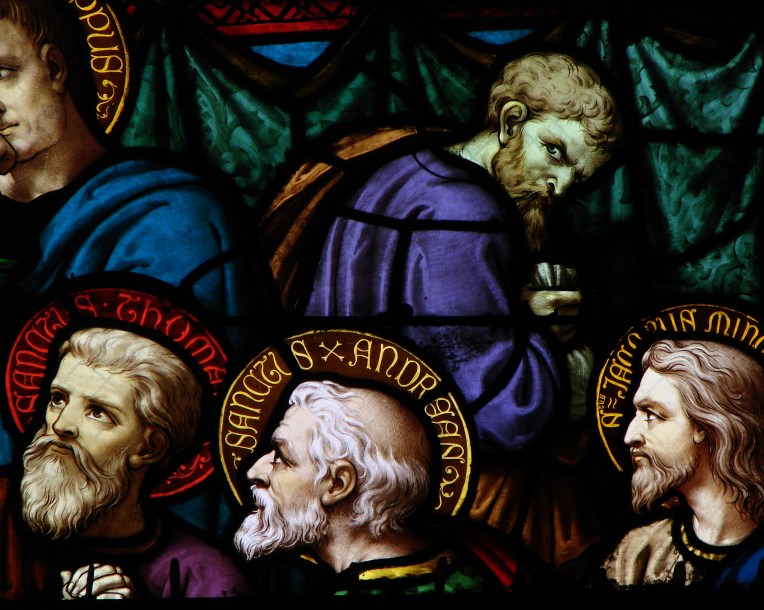
Recent scandals in the Church prompt reflection upon the person of Judas Iscariot.  Why did Jesus choose him to be an apostle?  Didn’t Jesus know that Judas would betray Him?  Or is that precisely why He chose Him?

Divine Providence is difficult to parse.  It’s difficult, and perhaps even pointless, for us to reflect upon Judas from God’s providential point of view.  However, the Church does call us to reflect upon Judas from our own point of view:  that is, as sinners like Judas.

Can each of us imagine hearing Jesus say about oneself:  “It would be better for that man if he had never been born”?  Surely such words only apply to the worst of sinners, such as Judas?  In fact, Jesus did not choose Judas for eternal damnation:  rather, Judas chose that for himself.  Likewise, each of us chooses each of our sins.  It’s in the face of one’s sins that one has a choice to remain in sin, or to turn to Jesus as the one through whom we can find forgiveness.  Even and especially in our sins, Jesus wants us to turn to Him.  Yet we remain free until death to make the choices that we will.

Lent 6-3

Tuesday of Holy Week

RSL banner

Tuesday of Holy Week
Isaiah 49:1-6  +  John 13:21-33,36-38
April 7, 2020

So Judas took the morsel and left at once.  And it was night.

On the last two days of Lent before the Sacred Triduum starts, the Gospel Reading focuses on Judas Iscariot.  Yet while tomorrow’s passage from Matthew looks solely at Judas, today’s passage from John also looks at Peter, another apostle who will betray Jesus.

Jesus is God.  As a divine person, He could at any moment during Holy Week have turned away from the path leading to Calvary.  Even on the afternoon of Good Friday as He hung upon the Cross, He could have miraculously escaped, transporting Himself far away to safety:  indeed, even to Heaven.

All that is to say that Jesus is the primary “actor” in the drama of Holy Week.  The acts that Jesus did or did not carry out during Holy Week determined man’s salvation.  Any other “actor” within this drama is a second-string player.

Why, then, do the Gospel Readings today and tomorrow focus more upon those who betrayed Jesus than on Our Savior Himself?  The answer is that the Church is calling you to recognize yourself in Judas and Peter.

In the sinful persons of Judas and Peter we witness two different types of betrayal:  Judas by deed, Peter by word; Judas with a kiss, Peter by turning his back.  Judas cries, “Hail, Rabbi!”, while Peter cries, “I do not know the man!”

There are many different ways in our lives by which we betray Jesus.  But there is only one way for the chasm between our sins and God’s love to be bridged, and that is Jesus’ self-sacrifice upon the Cross.

Lent 6-2