Saint Agatha, Virgin Martyr

Saint Agatha, Virgin Martyr
II Samuel 24:2,9-17  +  Mark 6:1-6
February 5, 2020

He was amazed at their lack of faith.

Today’s Gospel passage, from the sixth chapter of Mark, doesn’t really end on a high note.   In His native place, Jesus was not able to perform any mighty deed, apart from curing a few sick people.  He was amazed at their lack of faith.

Why did they lack faith?  Why do we lack faith?  Why do we focus on the less important things in life:  the less important types of freedom?  St. Mark begins his Gospel account by answering this question.  The first recorded words of Jesus are proclaimed immediately after He spends forty days in the desert, tempted by Satan.  He emerges from the desert, and the first words He speaks frame the entire Gospel.  Jesus proclaims, “This is the time of fulfillment.  The kingdom of God is at hand.  Repent, and believe in the Gospel.” 

Repent, and believe in the Gospel.  We might say that these two demands of Jesus sum up the entire Christian faith.  They lead us to faith.  They lead to true freedom, and require us to exercise our freedom in its deepest sense:  in our relationship with God.

True repentance means to turn oneself around 180°:  to turn oneself away from sin, and towards God, not simply towards ourselves, and what we think we want.  This is the highest type of freedom:  to be able to do things for others, or in other words, to give our very self to another, whether to another human person, or to God.

OT 04-3

Tuesday of the 4th Week in Ordinary Time [II]

Tuesday of the 4th Week in Ordinary Time [II]
II Samuel 18:9-10,14,24-25,30—19:3  +  Mark 5:21-43
February 4, 2020

“Do not be afraid; just have faith.”

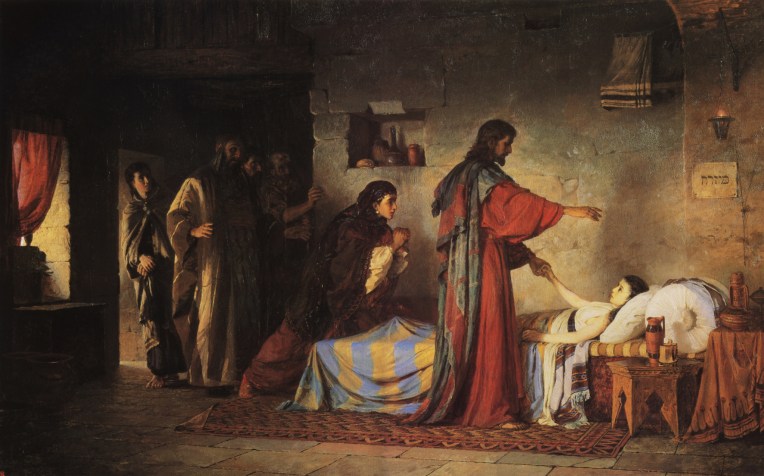
In today’s Gospel passage are two people who see how God wants to be in their lives in time of need.  Each of you, no doubt, fields petition from those whom you serve.  So many people turn to Christ in need.  If it weren’t for petitionary prayer, the prayer lives of many Christians would never get off the ground!  But it’s a start.  God is content to listen to all the prayers of petition that His children wish to make.

Consider the woman in the Gospel, who had suffered for so many years.  She interrupts Christ in the midst of His trying to help someone else.  We should make that woman’s faith our own:  not simply her faith in Christ’s power, but also her faith in His patience and compassion.  There is no true need in our lives that we should not offer to God.

Is every petition answered as we wish, as are the petitions of this woman and the official?  Some Christians stop offering their petitions to God—or even stop believing in God—when He doesn’t provide the response they want.  Growth in prayer includes the experience of accepting God each time He says “No” to us, and learning through those experiences of “No” to trust His providential Will more deeply.

OT 04-2

Monday of the 4th Week in Ordinary Time [II]

Monday of the 4th Week in Ordinary Time [II]
II Samuel 15:13-14,30;16:5-13  +  Mark 5:1-20
February 3, 2020

…they began to beg [Jesus] to leave their district.

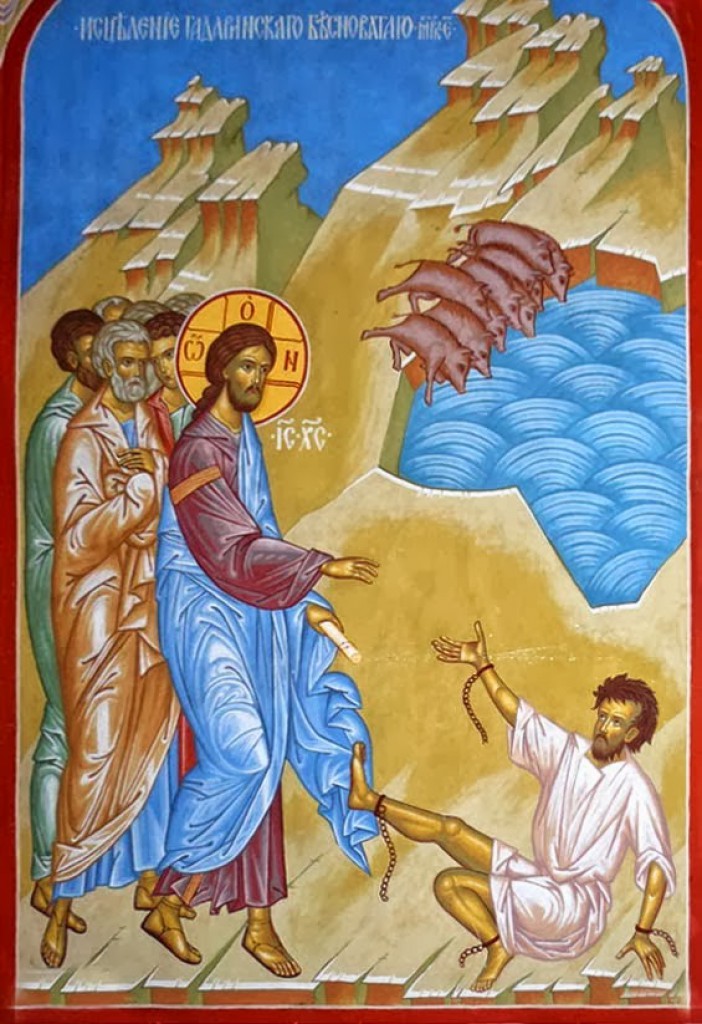
Demonic possession is an extremely serious matter.  While some today dismiss it, suggesting that all reported cases of possession are in fact psychological disorders, the Church takes today’s Gospel passage at its word.

One striking point in this narrative is the reaction of people to the swineherds’ report:  “they began to beg [Jesus] to leave their district.”  Why do the people react this way?  One might expect the people to express gratitude to Jesus, and invite Him to stay as their protector.

Perhaps the people were in shock, never before imagining that demons might dwell among them.  However, demonic possession in the Holy Land was not uncommon in Jesus’ day.  Perhaps the reaction of the people reflects what we see in modern Western culture.  We know that evil exists, but we tend to think of it existing only “out there”.

When evil shows itself plainly in our own towns, our own homes, and our own lives, we express disbelief at how such violence could possibly happen “here”.  The sad truth is that sin, violence and death is everywhere, and in every human life.  After all, if it could exist in the earthly lives of Our Lord and Our Blessed Mother, why should we think of ourselves—who are sinners—as exempt from its power?  While each of us needs to practice prudence to deter suffering, we should have no illusions of escaping it.  In the midst of such illusions, Christ has no place.

OT 04-1