Thursday of the First Week of Advent

Thursday of the First Week of Advent
Isaiah 26:1-6  +  Matthew 7:21,24-27
December 5, 2019

   For the Lord is an eternal Rock.   

Likely you’ve had a conversation with a fellow Christian who insists that the entire Bible—from Genesis to Revelation—must be interpreted literally.  The next time that occurs, offer your fellow Christian this sentence from today’s First Reading—”For the Lord is an eternal Rock.”—and ask if the Lord is literally a rock.  The absurdity of the question shows that a single Scripture verse may have a meaning that transcends the literal meaning.

Most of us would say pretty readily that describing the Lord as “an eternal Rock” is a metaphor that should not be taken literally.  This metaphor tells us how solid, sturdy and dependable God always is.  That’s a pretty simple and straightforward idea.  Jesus in today’s Gospel uses the same metaphor in a little different way.  In the way that Jesus tweaks this metaphor, He gives us a good Advent reflection.

Jesus begins by flatly telling us that “only the one who does the will of my Father” “will enter the Kingdom of heaven”.  Then Jesus presents a comparison in order to describe doing the will of God the Father.  Jesus wants this to be a description of your life.  Here’s Jesus’ comparison:

“Everyone who listens to these words of mine and acts on them[…] will be like a wise man who built his house on rock.”  In Jesus’ comparison here, what does the image of the “rock” stand for?  Jesus Himself answered that question that “the one who does the will of my Father” “will enter… heaven”.  It’s “the will of [God the] Father” that is the “rock” on which the wise man builds.

God’s holy Will, in other words, is rock-solid.  So we might reflect today on Jesus’ words as an encouragement to ourselves to be more like God:  that is, to be dependable in our decisions, and unwavering in the midst of influences that tempt us to take the broad and easy path.  We might furthermore reflect on the need to pray for insight into God’s holy Will before we make decisions, so that our human will is of one accord with God’s holy Will.

But then, thirdly, you might reflect on God’s holy Will in the light of the Messiah for whom we’re waiting.  Remember what the Holy Name of “Jesus” literally means:  it means “God saves”.  This is the Son whom God the Father wills unto sinful man.  The Messiah whose coming we await will not be a general seeking conquests.  He will not be a performer seeking applause.  He will be a Savior seeking lost souls.

God’s holy Will will not waver in seeking lost souls, even if you yourself buffet Him with sins.  God’s holy Will is “an eternal Rock”.  God wills to save you.  Even were you to join the soldiers on Good Friday and buffet Jesus’ holy Face with spitting, His Will would not waver.  All you need to do is to align your will to the Father’s holy Will.  Abandon your sins, and embrace the Father’s holy Will.  Accept in faith the salvation that Jesus is coming to give you.

Advent 1-4

Wednesday of the First Week of Advent

Wednesday of the First Week of Advent
Isaiah 25:6-10  +  Matthew 15:29-37
December 4, 2019

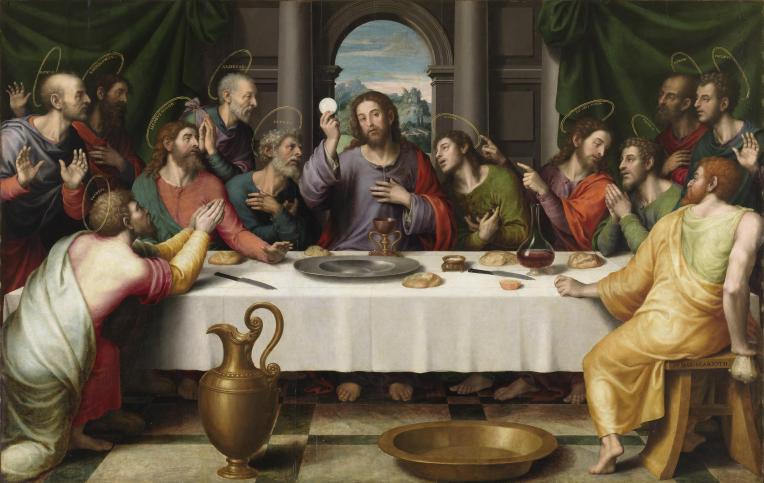
   You spread the table before me in the sight of my foes….   

Today’s Gospel describes the Lord Jesus providing in two ways.  The first sentence sets the scene.  It echoes two earlier scenes in Scripture.  One is ten chapters earlier in Matthew.  There, before beginning the Sermon on the Mount, we hear this:  “Seeing the crowds, [Jesus] went up on the mountain, and when he sat down his disciples came to him.”

These disciples are models for us in their ascent of the mountain to be near Jesus.  Of course, both of these occasions in Matthew echo the scene far earlier in the Bible:  that is, in the Book of Exodus, where Moses brings the Law of God down from the mountain.  In his Gospel account, Matthew goes to great length to portray Jesus as the new Moses.  It’s as the new Moses that Jesus provides for the “great crowds” in two ways.

First, Jesus cures “the lame, the blind, the deformed, the mute, and many others….”  Second, knowing the hunger of the crowds, Jesus compassionately works the miracle of multiplying the loaves and fish.  Both of these works of Jesus—healing and nourishing—are also portrayed in the great 23rd Psalm, the source of today’s Responsorial.  Of course, to receive nourishment and healing from the Lord, we have to be willing to admit our real hungers and hurts.  In your private prayer today, ask the Lord to enlighten you to see clearly where your mind and heart are in need of healing and nourishing.

Advent 1-3

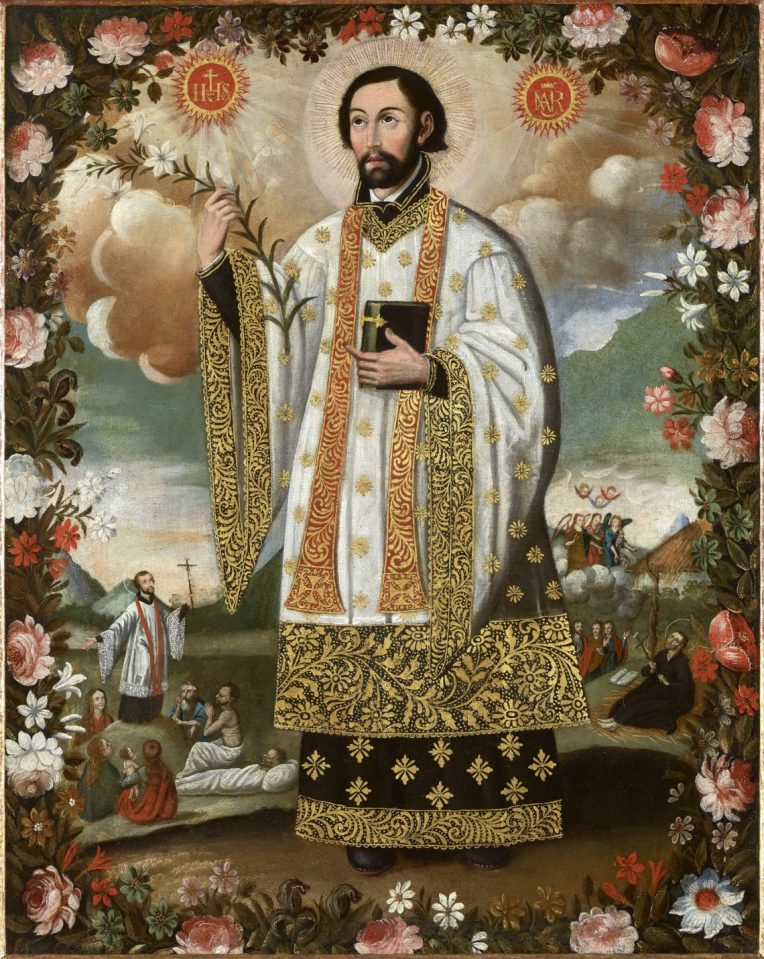
St. Francis Xavier, Priest

St. Francis Xavier, Priest
Isaiah 11:1-10  +  Luke 10:21-24
December 3, 2019

   The Spirit of the Lord shall rest upon him….   

In today’s First Reading, the verbs “judge” and “decide” are each used twice.  The first sentence is negative, in that Isaiah describes how the “root of Jesse” will not judge and decide:  that is, “not by appearance”, “nor by hearsay”.  In the next sentence, Isaiah gives a positive description of the judgments of the “root of Jesse”.  However, these phrases describe not only how he will judge—that is, “with justice” and “aright”—but also for whom he will judge.  He “shall judge the poor”, “and decide… for the land’s afflicted.”

These two brief sentences foreshadow the person of Jesus Christ, the awaited Messiah.  They also describe those who live in Jesus Christ:  those who through the Holy Spirit are empowered to let Christ live in them and work through them.  During Advent, as you wait for the coming of the Messiah, ask yourself (especially as you prepare for the Sacrament of Penance) to what extent Isaiah’s words today describe yourself.

Do you judge the significance of others’ lives, or even worse the significance of your own life, according to appearances or by hearsay?  Or do you judge matters “with justice” and rightly?  I say “even worse” because you have more authority to judge yourself then to judge others.  Also, the ways in which you may rightly judge others are less important than how you must judge yourself in preparation for the Sacrament of Penance.  Thanks be to God, He is all-merciful.

St. Francis Xavier

Today is the Obligatory Memorial of St. Francis Xavier

Monday of the First Week of Advent

Monday of the First Week of Advent
Isaiah 4:2-6  +  Matthew 8:5-11
December 2, 2019

   Let us go rejoicing to the house of the Lord.   

Psalm 122 describes the image of “the house of the Lord”.  In this Old Testament passage, “the house of the Lord” refers not to Heaven, but to the sacred, earthly city of Jerusalem.  The passage also mentions that Jerusalem sits atop a mountain (not on the scale of the Rockies or Himalayas, but a mountain as considered by the ancient peoples of the Holy Land).  That “the house of the Lord” sits atop a mountain implies an ascent, which in turn implies personal sacrifice.  One must stretch and climb to reach His house.  We can relate this ascent both to the long course of Old Testament salvation history, and/or to our own religious practices during the Season of Advent.

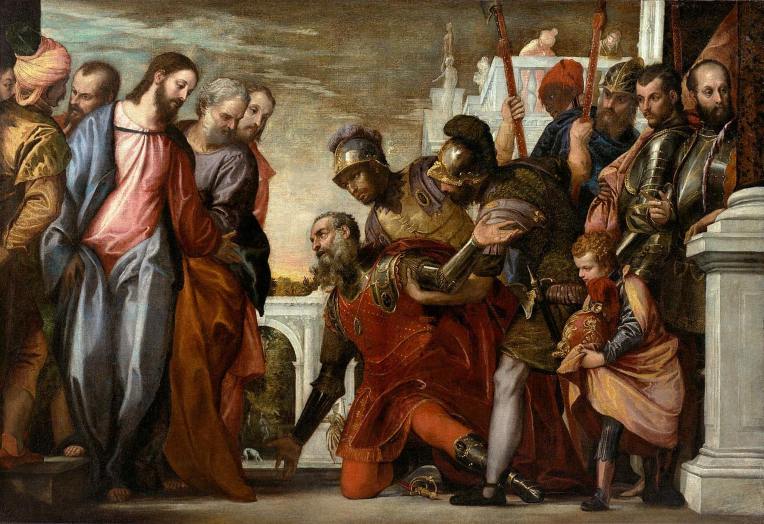
Today’s Gospel passage presents the Lord’s response to such human initiative.  The pagan centurion not only shows initiative in appealing to Jesus, but also faith.  This pagan utters the cry that each of us echoes before Holy Communion:  “‘Lord, I am not worthy to have you enter under my roof; only say the word and my servant will be healed.’”  Jesus responds to him with a prophecy that fulfills Isaiah’s:  “‘… many will come from the east and the west, and will recline with Abraham, Isaac and Jacob at the banquet in the Kingdom of heaven.’”  Jesus adds further to the direction given us by Psalm 122 and Isaiah 2, by pointing our attention beyond any earthly city to the heavenly Jerusalem.

This prophecy can be fulfilled in your own life only because God the Father took the initiative of sending His Son down to be our Messiah.  Jesus offers us the fruits of His sacrifice on the Cross through the Holy Sacrifice of the Mass.  Each of us, even if a member of Christ’s Body from birth, should not presume on God’s grace, but imitate the faith of the pagan centurion.  Make a two-fold prayer on this first weekday of Advent.  (1) Pray that many others will come to Jesus in Holy Mass.  (2) Pray that you will generously take the fruits of the Eucharist to many others though the sacrifices of your daily life.

Advent 1-1