Saturday of the 26th Week in Ordinary Time [I]

Saturday of the 26th Week in Ordinary Time [I]
Baruch 4:5-12,27-29  +  Luke 10:17-24
October 5, 2019

… I have seen the captivity that the Eternal God has brought upon my sons and daughters.

Saturday is dedicated by the Church to our Blessed Mother.  From the many persons and places in the Old Testament which foreshadow Mary, today’s First Reading presents one:  the city Jerusalem.  We might wonder how a city can represent a person, or vice versa.  In this case, one link between the two is that both are mothers.  In today’s First Reading, this mother speaks to her children.

In our modern culture, we might find it strange to think of a city as a mother, but this was (and still is) a common idea in older cultures.  In our own modern Western culture, the mobility of families makes this idea harder to see.  But in cultures where many persons are born, grow, live and die in the same city or town, the words of today’s First Reading are easier to grasp.  For them it’s easier to see one’s “hometown” as a mother, shaping one’s life and identity.

“I have seen the captivity that the Eternal God has brought upon my sons and daughters.”  We can take these words of Jerusalem and place them instead on the lips of the Blessed Virgin Mary.  She continues, “Fear not, my children; call out to God!  He who brought this upon you will remember you.”  Through these words Jerusalem foreshadows the compassion of Our Blessed Mother.  We can picture her on Calvary as described in the Gospel account of the Beloved Disciple, who was himself entrusted to her care by Jesus:  “Woman, behold your son” [John 19:26].  One difference we notice between Jerusalem and Mary is the relationship of the mother to “the Eternal God” to whom her children “call out”.  Our Blessed Lady is the Mother of God, having given birth to the Word made Flesh:  He who through her fidelity has taken on our sinful flesh.

OT 26-6

St. Francis of Assisi

St. Francis of Assisi
Baruch 1:15-22  +  Luke 10:13-16
October 4, 2019

“Woe to you, Chorazin!  Woe to you, Bethsaida!”

Jesus never says, “Woe is me!”  Not once in the four accounts of the Gospel does Jesus ever say such a thing.  However, more than a few times Jesus expresses woe.  He expresses these woes regarding those who do not listen, and do not follow, the Word of God.

We might wonder what emotions Jesus experienced as He pronounced the woes in today’s Gospel passage.  He had just reasons to be angry, as well as frustrated.  Nonetheless, regardless of which emotions might have been running through His mind and heart, we know that Jesus had compassion for those He was preaching against.

In fact, to say that Jesus in pronouncing these woes was preaching against the people of these cities would call for a qualification.  In preaching woes against the people of Chorazin and Bethsaida, Jesus was preaching for them.  Does that sound like a contradiction?  It’s no more of a contradiction than is a father who disciplines his child.  Everything that Jesus did during His earthly life, including the overturning of the money changers’ tables, and the preaching of woes against the unfaithful, was for the sake of those in spiritual danger, to bring them back from a precipice into the arms of a loving Father.

St. Francis receiving the Stigmata

Thursday of the 26th Week in Ordinary Time [I]

Thursday of the 26th Week in Ordinary Time [I]
Nehemiah 8:1-4,5-6,7-12  +  Luke 10:1-12
October 3, 2019

   “I am sending you like lambs among wolves.”   

The Church often quotes verses from today’s Gospel passage in her promotion of vocations.  However, these seventy-two to whom Jesus speaks are appointed and sent for a specific reason.  They are sent “ahead of” Jesus, not in His name or in His person.  They are sent “in pairs to every town and place He intended to visit.”  They are “advance teams”, if you will.  In the general sense in which they are sent ahead of Jesus, we can consider these 72 as symbolizing all baptized Christians.  What Jesus says to them speaks today to each of us Christians.

Jesus offers many brief sayings in today’s Gospel passage.  All are loosely joined together.  Many can be singled out and meditated upon for a long period of time.  Take this proclamation of the Lord:  “behold, I am sending you like lambs among wolves.”  It’s not difficult for a Christian disciple to use these words as a justification for self-righteousness in the face of any opposition, justified or not.  Nonetheless, that possibility doesn’t nullify the meaning of Jesus’ words.  At our best, we disciples are “lambs among wolves”.  We might wonder, if that’s our best, then what’s the worst?

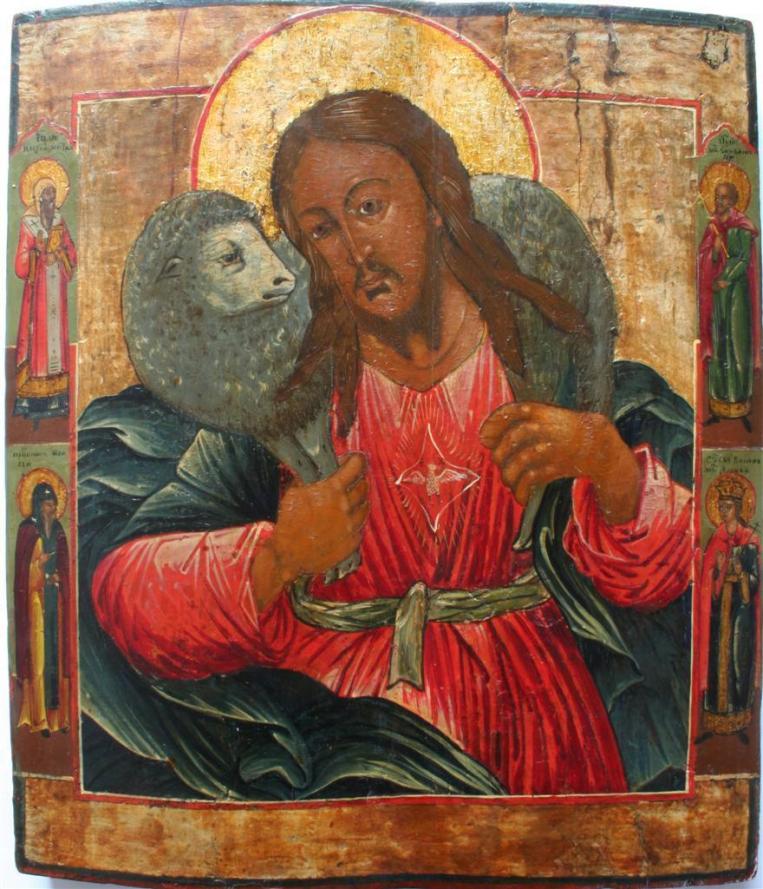
While each Christian might be tempted to turn away from the “vocation” to be a lamb, perhaps we can take solace in two simple Gospel truths.  Our Lord and Savior is the Good Shepherd [John 10:11] as well as the Lamb of God who takes away the sins of the world [John 1:29].

OT 26-4

The Holy Guardian Angels

The Holy Guardian Angels
Nehemiah 2:1-8  +  Matthew 18:1-5,10
October 2, 2019

   “…their angels in Heaven always look upon the face of my heavenly Father.”   

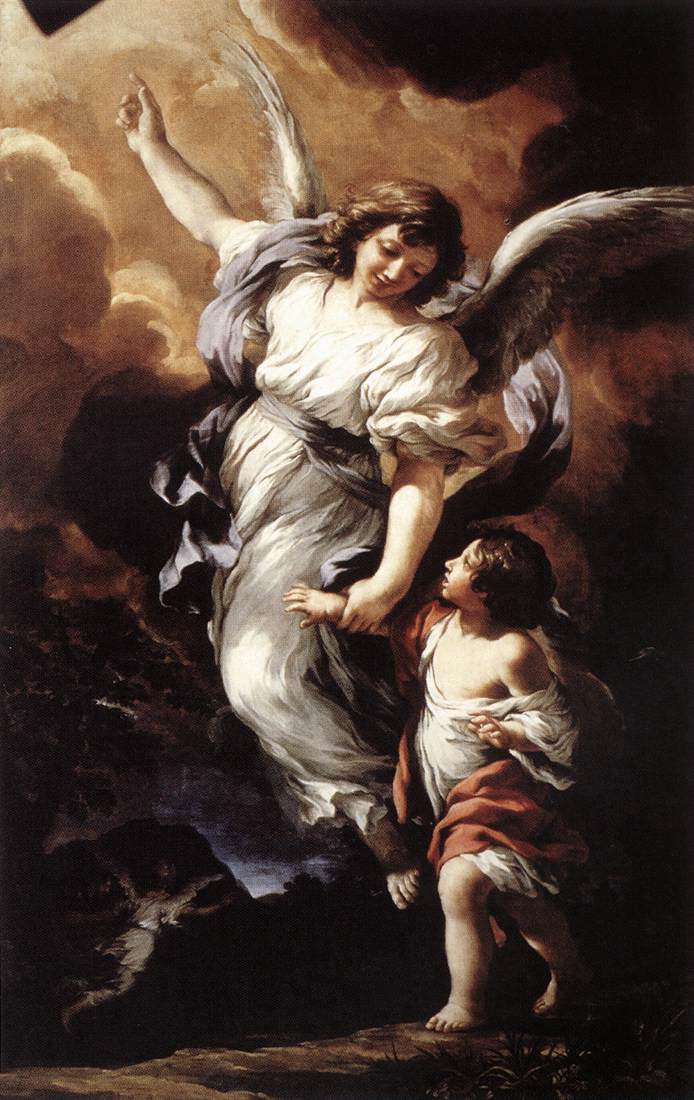
Our Guardian Angels shed light upon the path that we must walk.  When our struggles each day seem too great, they extend a ray of hope down upon us from God.  They allow us to see the face of Our Crucified and Risen Lord, who having shared in our suffering helps us share in His Resurrection, even in the midst of suffering.

Our Guardian Angels guard us from the snares of our enemies.  As the Devil tries time and again to convince us that his way—easier and broader than God’s—is the way that will bring us happiness, our guardians remind us that the Way of the Cross is the only path to the Father.

Our Guardian Angels rule us as we slip from the narrow path.  As we fall prey to the temptations of the Devil, our guardians do not abandon us.  Sharing in the boundless love of our Savior, they do not fail to stand by us even then.  They convince us, as they nurse our consciences back to health, that the Cross is the only true remedy for our constant falling away from God.

Our Guardian Angels guide us by bidding us to share in the sacraments of the Church.  For all their power, our guardians entrust us to the care of Holy Mother Church, since in her care we most truly belong.  For the Church is their Mother, too.  All the angels are fellow members of the Church, and as the Church’s children we imitate the words of Jesus when like little children we recognize and thank those who are our guardians.

Guardian Angel Cortona