Wednesday of the 22nd Week in Ordinary Time [I]

Wednesday of the 22nd Week in Ordinary Time [I]
Colossians 1:1-8  +  Luke 4:38-44
September 4, 2019

   …we have heard of your faith in Christ Jesus….   

Today the Church at weekday Mass begins to proclaim Saint Paul’s Letter to the Colossians.  We will hear from this letter over the next eight days, and will hear from the first three of its four chapters.

Most of St. Paul’s letters have introductions similar to one another, following a format that was common in Paul’s day for letter-writing.  But with greater scrutiny we notice unique touches with which Paul foreshadows the kernel of each letter.  One of these touches that he paints in today’s reading evokes the three divine virtues.

Paul says to the Colossians:  “we have heard of your faith in Christ Jesus and the love that you have for all the holy ones because of the hope reserved for you in Heaven.”  Paul is writing in this letter to commend the Colossians, yet also to caution them in light of temptations to not focus their lives on Christ.  Here at the beginning of the letter Paul is praising the Colossians at the same time he illustrates the reason that they might be commended.

For each of us, also, there is a need to grow closer to Christ, and to leave aside false hopes, empty loves, and blinding faith.  Christ is the means by which to grow in authentic faith, hope and love.  Christ is the fulfillment of all three:  the love of the Father, into the depths of which the Father wants us to enter.
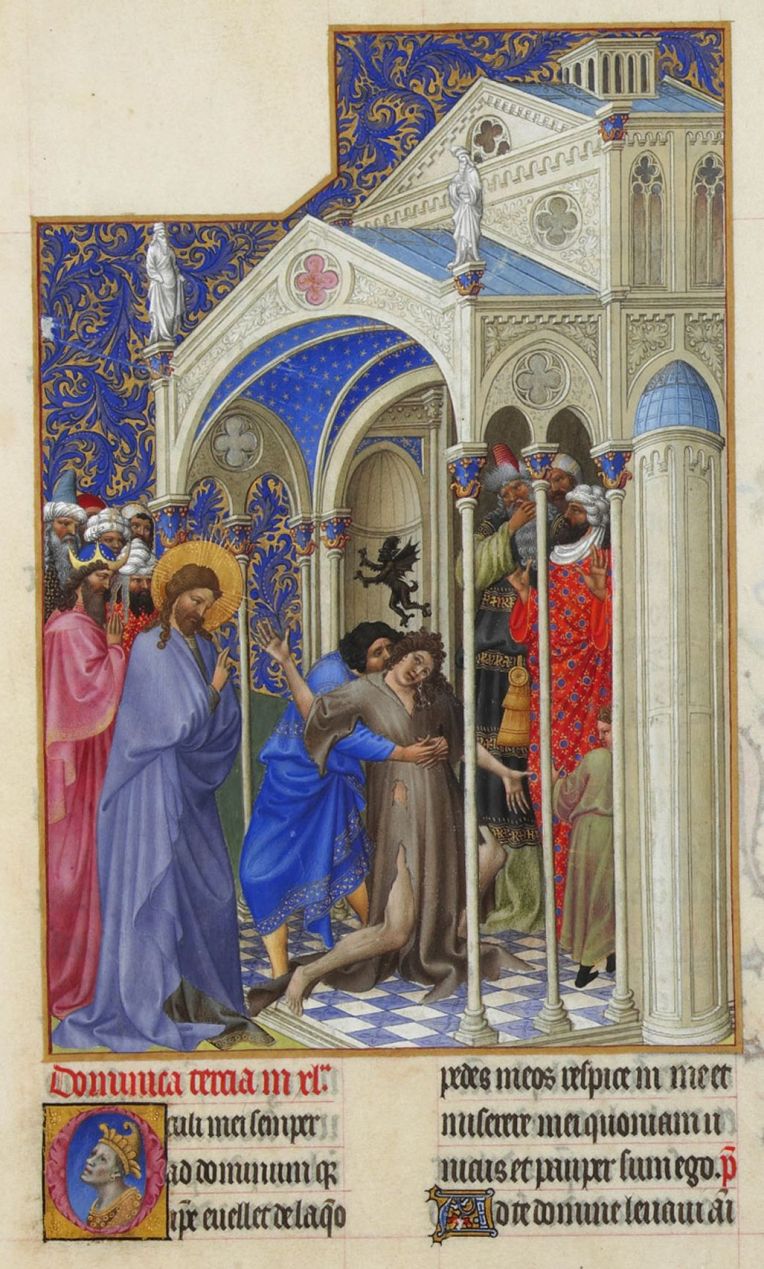
©Photo. R.M.N. / R.-G. OjŽda

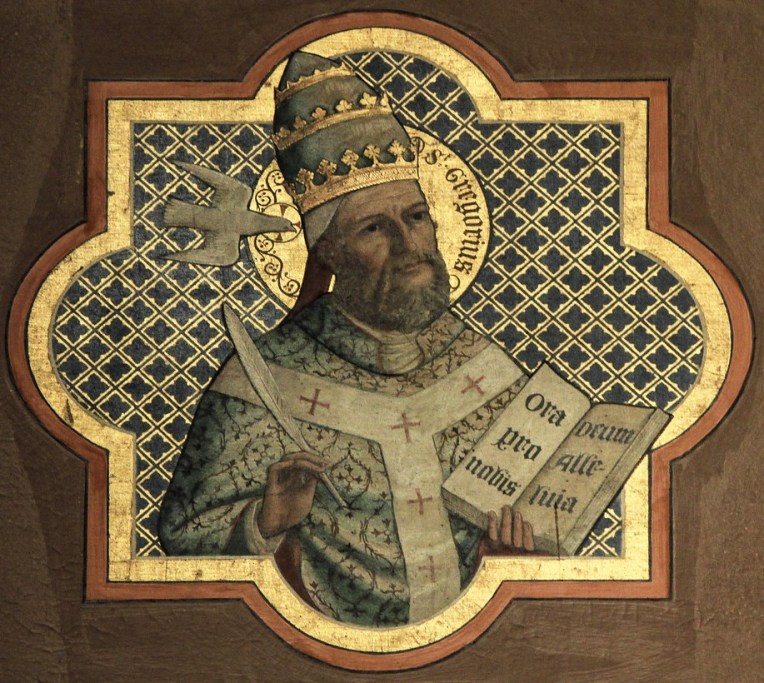
Pope St. Gregory the Great, Doctor of the Church

Pope St. Gregory the Great, Doctor of the Church
1 Thessalonians 5:1-6,9-11  +  Luke 4:31-37
September 3, 2019

   …they were astonished at His teaching because He spoke with authority.   

Astonishment is evoked by the fact that Jesus teaches with authority.  Why is there this astonishment, and what does it mean for Jesus to teach with authority?

In the culture that surrounds us, every person believes himself to be his own authority.  In effect, this wide-spread belief means that no real authority exists.  In our society there is a great need for clarity about the meaning and purpose of authority.

At its most literal level, the word “authority” is related to the word “author”.  The author of a novel can create worlds of his own design from his imagination.  Laws of physics need not apply.  Strange creatures can exist, and fantastic events are commonplace.  Tolkien, Baum and Rodenberry are all authors in this sense.  They have the authority to create worlds and races of creatures, and to confer life upon and take life from individuals.  However, this is merely a fictional form of authority.  In reality, there is only one Author of creation.

Jesus, as God from God and Light from Light, is this divine Author.  Through His divinity He has authority.  He exercises this authority throughout the three years of His public ministry for various persons, and for all mankind on Calvary.  However, in the face of His exercise of divine authority, astonishment arises for varied reasons.

Most cannot believe that a mere man could exercise divine authority.  Jesus, of course, was not merely a man, even though He was fully so.  In our own lives, we should not be astonished by the authority or power of Jesus.  We should root our daily lives in His desire to grant us His divine life.

St. Gregory the Great

Pope St. Gregory the Great, Doctor of the Church

Monday of the 22nd Week in Ordinary Time [I]

Monday of the 22nd Week in Ordinary Time [I]
1 Thessalonians 4:13-18  +  Luke 4:16-30
September 2, 2019

   …the dead in Christ will rise first.   

Today’s First Reading is often proclaimed at funerals.  It’s full of teaching from St. Paul about death and the afterlife, fitting for meditation as fall draws closer and our minds turn to the Last Things.  Unfortunately, some of the Church’s teachings about the Last Things have been distorted.  We can find clarity through the wisdom of holy doctors of the Faith, and the Tradition and Magisterium of the Church.

Consider one of the phrases that St. Paul uses in this passage.  He refers to the dead when he writes of “those who have fallen asleep”.  Are we to understand this phrase literalistically?  That interpretation has been adopted by some Christians to the exclusion of the Catholic belief in the saints being alive and active in Heaven.  The Catholic belief in the afterlife would interpret this phrase of St. Paul as referring to the physical appearance of the dead:  that is, once the soul has left the human body, it seems to our physical senses that the person has fallen asleep.

The various human authors of Sacred Scripture often use such metaphors, which appeal only to what seems to be the case to the outer senses.  This appeal has a pedagogic purpose in teaching those who have yet come to understand the Faith fully.  The context, of course, in which to understand this phrase is Christ.  All depend on Christ for their life.  Those who sleep in death await Christ’s Second Coming for the raising of their bodies.  We who work in life rejoice in Christ coming among us in the Eucharist, to strengthen us in the face of the death that we embrace through our sins.

OT 22-1 YrI