The Twentieth Sunday in Ordinary Time [B]
Proverbs 9:1-6 + Ephesians 5:15-20 + John 6:51-58
“For my Flesh is true food, and my Blood is true drink.”
No would deny that being smart is a good thing. But how far can it get you in life? More importantly, how far can it get you in death?
King Solomon, in our First Reading from the Book of Proverbs, wants to focus our attention on wisdom. King Solomon records divine Wisdom as calling out to mankind: “Let whoever is simple turn in here”; to the one who lacks understanding, she says, “Come, eat of my food, and drink of the wine I have mixed!” Unfortunately, as children of Adam and Eve, our tendency is to think that we’re in control of everything in our lives: that we understand everything. If God’s Wisdom were to take flesh, and appear in our homes, offering this same invitation to the simple, would we consider ourselves invited? Or are we not among the simple? Do we not need help from God’s divine Wisdom?
In the Second Reading, Saint Paul urges us not to continue in our ignorance. He urges us to make “the most of the opportunity” of the present moment. He urges us to be “filled with the Spirit”, to give “thanks to God the Father always and for everything in the name of our Lord Jesus Christ”. We need to give thanks even for the opportunities in our lives not to be in control, and even for the opportunity to die. We need to die, so that Christ can live in us. Or to put today’s scriptures in another way, the question is: are you wise enough to seize the opportunity to die?
That is the opportunity that the Wisdom of God made Flesh offers the crowds in today’s Gospel passage. This Sunday is the fourth of five Sundays this summer when our Gospel Reading comes from John chapter 6. This entire chapter is one long series of narratives in which St. John the Evangelist shows Jesus leading others deeper and deeper into the mystery of the Eucharist: the mystery of His Real Presence as the “Bread of Life”.
Jesus has told the Jewish crowd, “I am the bread of life.” But they ignore his words. For our own part, we need to ask ourselves what we are ignorant of. If we’re willing to ask that question, and listen to the answer, we may grow in wisdom. Here’s one of the differences between a computer and a human person created in the Image of God: a computer doesn’t know what it doesn’t know. A computer only knows what it’s programmed to know, and no more. But a human person can desire to know more, and can search outside himself for the answers, or at least for someone to help him find the answers.
It’s a fairly common experience for us to be frustrated by a situation, and to have no idea what to do next. For example, we may feel ignorant before a jigsaw puzzle, or before a report that’s due next week, or even before a person whom we do not understand. So we ask ourselves, “what am I to do next?” The missing piece to the puzzle is often right in front of our eyes, and we cannot see it. We need someone else to stand before us and point out the missing piece to us with His finger. We need a teacher.
Jesus, like any good teacher, responds to their ignorance with compassion. He takes the initiative, because they don’t even know what they’re ignorant of. The Jews quarreled among themselves, saying, “How can he give us his flesh to eat?” Jesus replies, not by saying that “eating his flesh” is just a figure of speech. Instead, Jesus replies by saying, “if you do not eat the Flesh of the Son of Man and drink His Blood, you have no life in you. …For my Flesh is Real Food and my Blood is Real Drink.”
Jesus is speaking about the flesh and blood that he is going to offer on the Cross on Good Friday. Jesus, at this point in the gospel, cannot offer this real bread and drink just yet. It’s not yet His Hour. He’s trying to prepare them. He does not say, “The bread I am giving you is my flesh.” Instead, He says, “The bread I will give is my flesh, for the life of the world.”
Jesus gave His Flesh and Blood for us when He died on the Cross on Good Friday. But He established the Sacrifice of the Mass on the night before He died, on Holy Thursday evening. In that Upper Room, with His apostles, He prepared a banquet for those in the future who would be willing to admit that they are nothing without Him. This banquet is for those of us who are without understanding, but who at least know what we don’t know. We know we must be like Christ to truly live. But we cannot imitate Christ through sheer will-power. We must be nourished by God Himself. Only when He dwells within you can you live your life as He led His.
This is why we need to prepare ourselves to receive the Holy Eucharist worthily. This is why we need to be generous in spending time with Jesus in Eucharistic Adoration. This is why we need to turn to Jesus for the answer to life’s most important question, and not to technology, or politics, or the entertainment industry.
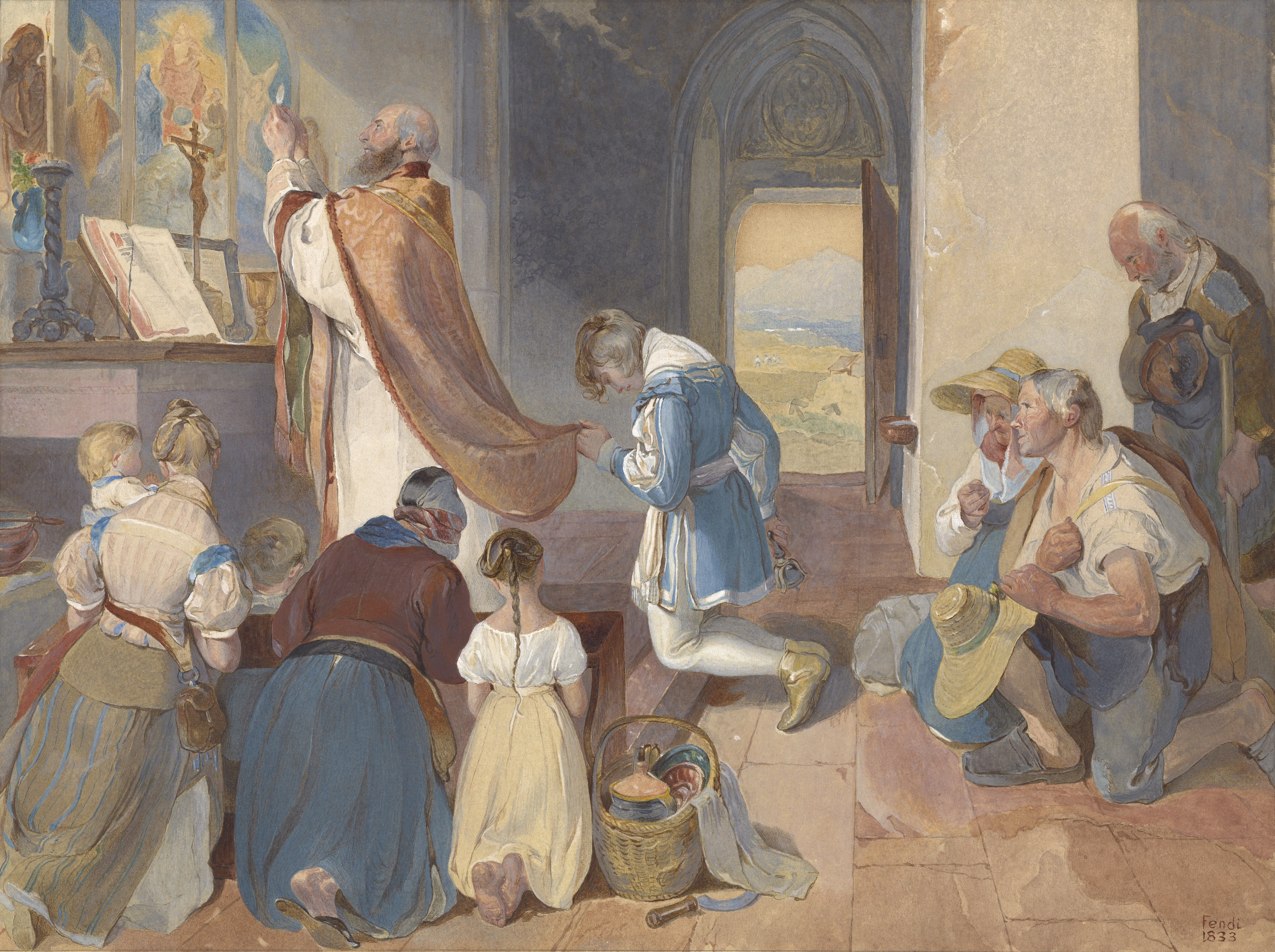
In that Upper Room at His Last Supper, “on the night He was betrayed, he took bread and gave” [God the Father] thanks and praise. Jesus broke the bread,” and offered it to His disciples just as He offers it to you and me every day in the Holy Sacrifice of the Mass. Every day, He says standing plainly before us: “Take this, all of you, and eat it. This is my Body which will be given up for you.” The question before us when we come to Jesus in the Holy Eucharist is, “do we know enough to know how hungry we are?” Or do we think that we are in control of our lives?
 Reflections on the Sacred Liturgy