The Tenth Sunday in Ordinary Time [C]
I Kings 17:17-24 + Galatians 1:11-19 + Luke 7:11-17
“A great prophet has arisen in our midst….”
Back here again in Ordinary Time, we might take up a very plain topic: prayer. How to pray? What’s the best manner in which to pray? How can someone improve his prayer?
Consider those questions from two perspectives: your own perspective, and God’s perspective. One very valid description of prayer is God and the believer gazing on each other. For that matter, that’s what Heaven is about: the believer eternally beholding the Beatific Vision of God, and God beholding His beloved child.
But regarding prayer specifically, reflect first on the human perspective—the human approach, we might say—to prayer. What are human beings trying to do when they pray? One answer in seen in the widows in today’s First Reading and Gospel Reading. These widows are not praying in the sense that you and I do before going to sleep each night, or when we come here on Monday or Tuesday for Eucharistic Adoration. But the struggles that these widows engage in have something in common with prayer, or at least with the type of prayer that we most commonly engage in: namely, the prayer of petition, in which we ask God for things. We ask God to change things in our lives: to give us good things, and to remove bad things.
The two widows agonize over their sons. They rejoice in the miraculous resolution of their sufferings. In their prayer to God, these widows seem victorious. God responds to their hopes as they wanted. Mission accomplished.
But what happened the next day? What happened the day after Elijah called on the Lord and gave the widow’s son back to her? Was her life changed in a lasting way? Did she trust more deeply in the Lord? Or was she herself basically the same person after the miracle that she was beforehand? To put it another way: are miracles external events that happen in front of us, or do they reach within our souls in a lasting way to make us different? Maybe the answer to that question explains why God works so few miracles in our own day and age.
The human approach to prayer has to seek change in us. We have to pray that we change to be more like God, or in other words, that we grow into God. God’s miracles, when all is said and done, are not about us and our needs. They’re about God. They’re about changing our lives so that every day of our lives is fixed on Him: not just the days when we’re in trouble or in need.
As an illustration, we might consider today’s Responsorial Psalm, which comes from Psalm 30. The final section of the Responsorial is Psalm 30:11-13, where the Psalmist sings: “Hear, O Lord, and have pity on me; O Lord, be my helper. You changed my mourning into dancing; O Lord, my God, forever will I give you thanks.”
We could imagine these verses as an illustration of today’s Gospel passage about the widow from Nain. We could imagine the widow speaking these verses as the narrative of today’s Gospel progresses. At the beginning of the Gospel passage, with her only son dead, the widow cries: “Hear, O Lord, and have pity on me; O Lord, be my helper.” But then Jesus has compassion on her and raises her son from the dead, causing the widow to make the following words of the Psalmist her own: “You changed my mourning into dancing”. The widow is rejoicing in the grace that God has given, much as you or I might.
When God does great things for us, or even small things for us, our tune changes. From praying, “Hear, O Lord, and have pity on me; O Lord, be my helper”, we instead pray, “You changed my mourning into dancing”. We offer prayers of thanksgiving to God.
But then what? What happens the next day? Do we continue to offer prayers of thanksgiving to God, or have we forgotten already the next morning what God did for us yesterday (not to mention the day before that, and in fact every day of our lives)? Do we pray like the Psalmist in today’s Responsorial? First, the Psalmist prays: “Hear, O Lord, and have pity on me; O Lord, be my helper.” Second, the Psalmist prays: “You changed my mourning into dancing”. But then, thirdly, the Psalmist prays something profound: “O Lord, my God, forever will I give you thanks.”
Forever. “[F]orever will I give you thanks.” Can you and I pray those words to God with sincerity and honesty? Or do we move from day to day throughout life lacking in the gratitude that we ought to have for all that the Lord has done for us? That’s one specific intention that we can offer at Holy Mass today, and include in our prayers throughout this coming week: “Lord, make me always grateful for all you have done for me. Never let me ask you for anything without a firm resolve to be always grateful for your response to my petitions.”
+ + +
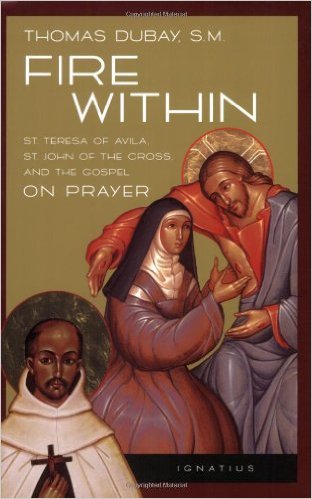
That brings us to God’s perspective in prayer: the perspective of a loving Father. If we’re not only supposed to focus in prayer on our wants and desires, but also on God’s, what is it that God wants and desires? In this regard, listen carefully to this extended quotation from Saint Teresa of Avila, writing to her nuns about the words of the Our Father:
“What person, however careless, who had to address someone of importance, would not spend time in thinking how to approach him so as to please him and not be considered tedious? He would also think what he was going to ask for and what use he would make of it, especially if his petition were for some particular thing, as our good Jesus tells us our petitions must be. This point seems to me very important. Couldst Thou not, my Lord, have ended this prayer [that is, the Our Father] in a single sentence, by saying: ‘Give us, Father, whatever is good for us’? For, in addressing One Who knows everything, there would seem to be no need to say any more.
“This would have sufficed, O Eternal Wisdom, as between Thee and Thy Father. It was thus that Thou didst address Him in the Garden, telling Him of Thy will and Thy fear, but leaving Thyself in His hands. But Thou knowest us, my Lord, and Thou knowest that we are not as resigned as wert Thou to the will of Thy Father; we needed, therefore, to be taught to ask for particular things so that we should stop for a moment[,] to think if what we ask of Thee is good for us, and if it is not, should not ask for it. For, being what we are and having our free will, if we do not receive what we ask for, we shall not accept what the Lord gives us. The gift might be the best one possible—but we never think we are rich unless we actually see money in our hands.”
“Now the good Jesus bids us say these words, in which we pray that this Kingdom may come in us: ‘Hallowed be Thy Name, Thy Kingdom come in us.’ Consider now, daughters, how great is our Master’s wisdom. I am thinking here of what we are asking in praying for this kingdom, and it is well that we should realize this. His Majesty, knowing of how little we are capable, saw that, unless He provided for us by giving us His Kingdom here on earth, we could neither hallow nor praise nor magnify nor glorify nor exalt this holy name of the Eternal Father in a way befitting it. The good Jesus, therefore, places these two petitions next to each other.” “Hallowed be Thy Name. Thy Kingdom come.”
“To me, then, it seems that, of the many joys to be found in the kingdom of Heaven, the chief is that we shall have no more to do with the things of earth; for in Heaven we shall have an intrinsic tranquility and glory, a joy in the rejoicings of all, a perpetual peace, and a great interior satisfaction which will come to us when we see that all are hallowing and praising the Lord, and are blessing His name, and that none is offending Him. For all love Him there and the soul’s one concern is loving Him, nor can it cease from loving Him because it knows Him. And this is how we should love Him on earth, though we cannot do so with the same perfection nor yet all the time; still, if we knew Him, we should love Him very differently from the way we do now.”[1]
[1] St. Teresa of Avila, The Way of Perfection, Chapter 30.
 Reflections on the Sacred Liturgy